Pitufa’s Top Ten Dinghy Safety Essentials for Reef and Snorkel Trips
Long-term cruisers Birgit Hackl and Christian Feldbauer share the ten essentials that belong in every dinghy before a reef or snorkel outing.

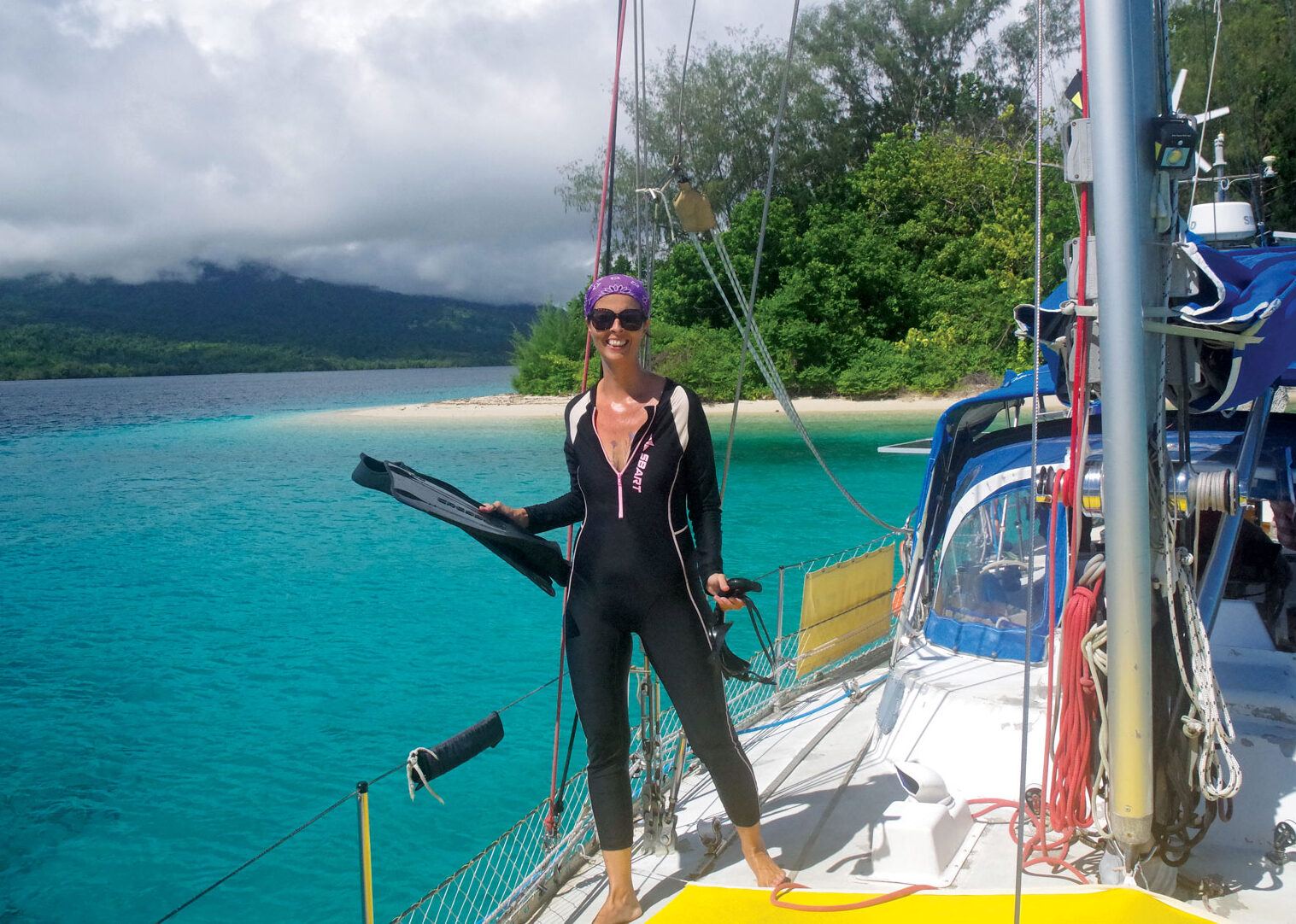
We love coral and watching fish, so we spend hours in the water whenever we’re near a lively reef. Living aboard a floating home, we think of our dinghy as our “car.” And just like people ashore don’t consider driving particularly risky, we tend to forget the hazards involved in hopping into a small boat.
But especially in remote locations, a casual snorkel trip can quickly turn from a relaxing outing into a life-threatening emergency—if the outboard fails or conditions change. Here’s our top ten list of items that should always be in the dinghy, whether you’re heading out to explore a reef or embarking on a longer ride.
Before every reef or snorkel trip, ten essentials belong in the dinghy — backup propulsion, basic first aid, a way to climb back aboard, and a means to call for help if a remote outing goes wrong. Here is the full checklist at a glance.


















Dinghy Safety Essentials at a Glance
| Essential | Why it belongs in the dinghy |
|---|---|
| Oars | Backup propulsion if the outboard quits |
| Water | Hydration on a hot, remote outing |
| Mobile phone or VHF radio | Call for help |
| Vinegar | Treats jellyfish and coral stings |
| Dinghy anchor | Hold position over the reef |
| Long anchor line | Enough scope for deep reef anchorages |
| Shoes | Protect feet from coral and urchins |
| Dinghy ladder or rope loops | Climb back in from the water |
| Outboard repair kit | Fix common failures on the spot |
| EPIRB | Summon rescue in a real emergency |
Oars.
A no-brainer—but still easy to forget after a passage, especially if the dinghy’s just come off the deck. Whether your outboard fails, refuses to start, or you find yourself in water too shallow to motor (a common problem when the low sun turns the sea’s surface into a glittering mirror), oars are your backup propulsion. Plus, they’re a great way to use human power instead of fuel.
Water.
Rowing under the hot sun without hydration is asking for trouble. Always toss in a water bottle—ideally more than one.
Mobile Phone or VHF Radio.
Depending on where you are, bring one or both in a drybag. Make sure your phone has the local emergency number saved—you don’t want to be Googling for help with zero bars of signal. Calling a friend to relay a Mayday is far less effective than contacting someone directly.
Vinegar.
An effective first-aid remedy for jellyfish stings. Pour liberally over the affected area (don’t rub or rinse with freshwater). And be sure to clearly label the bottle—vinegar looks suspiciously like drinking water. We’ve made that mistake. Once.
Dinghy Anchor.
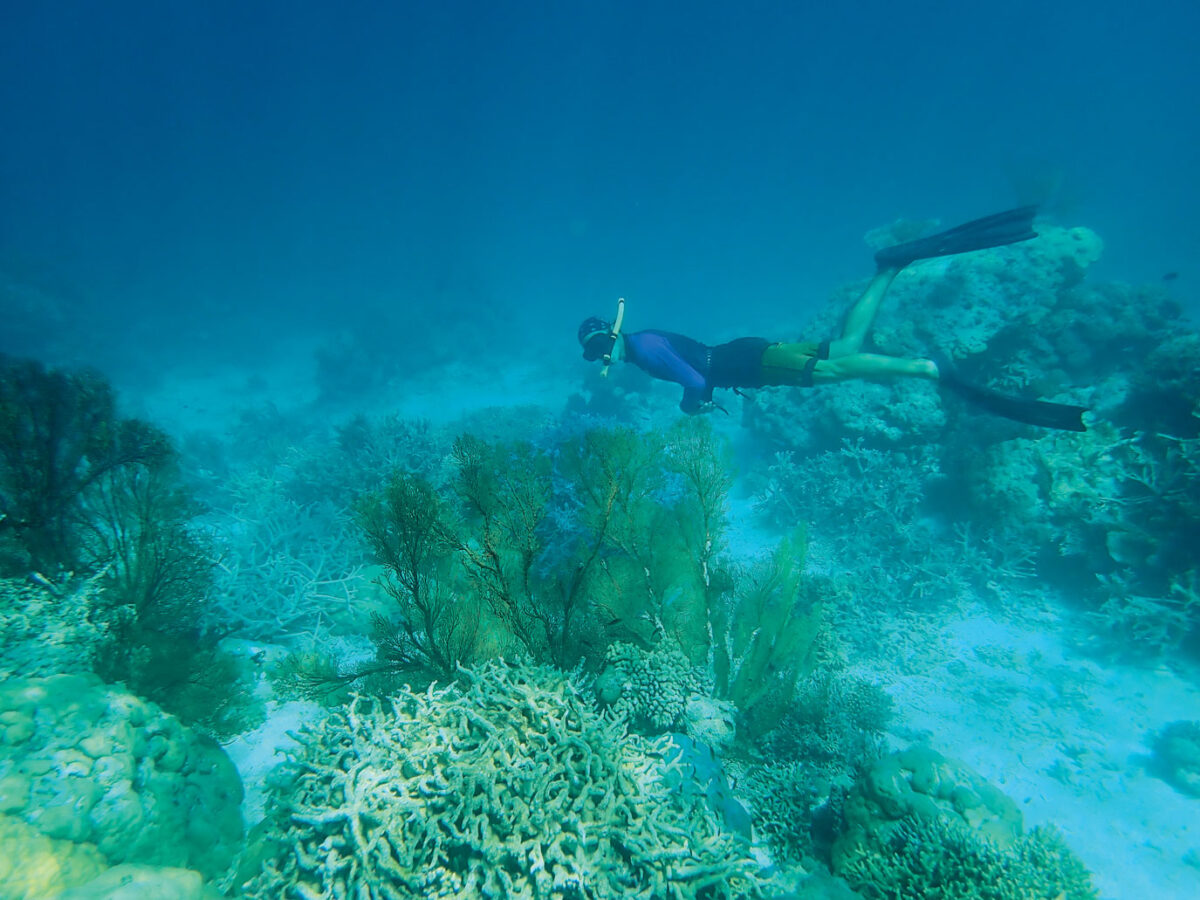
If the wind’s blowing or current is ripping and your outboard dies, you’ll be glad to have one. A simple anchor keeps you from drifting into deeper water or out to sea.
Long Anchor Line.
A great anchor is useless if it can’t reach the bottom. Carry plenty of line to ensure you can set the hook even in deeper water.
Shoes.
You should never step on coral—period. But if you do get stranded on a reef or need to drag the dinghy over a shallow patch, you’ll want sturdy soles. Sharp coral and sea urchins are not kind to bare feet.
Dinghy Ladder or Rope Loops.
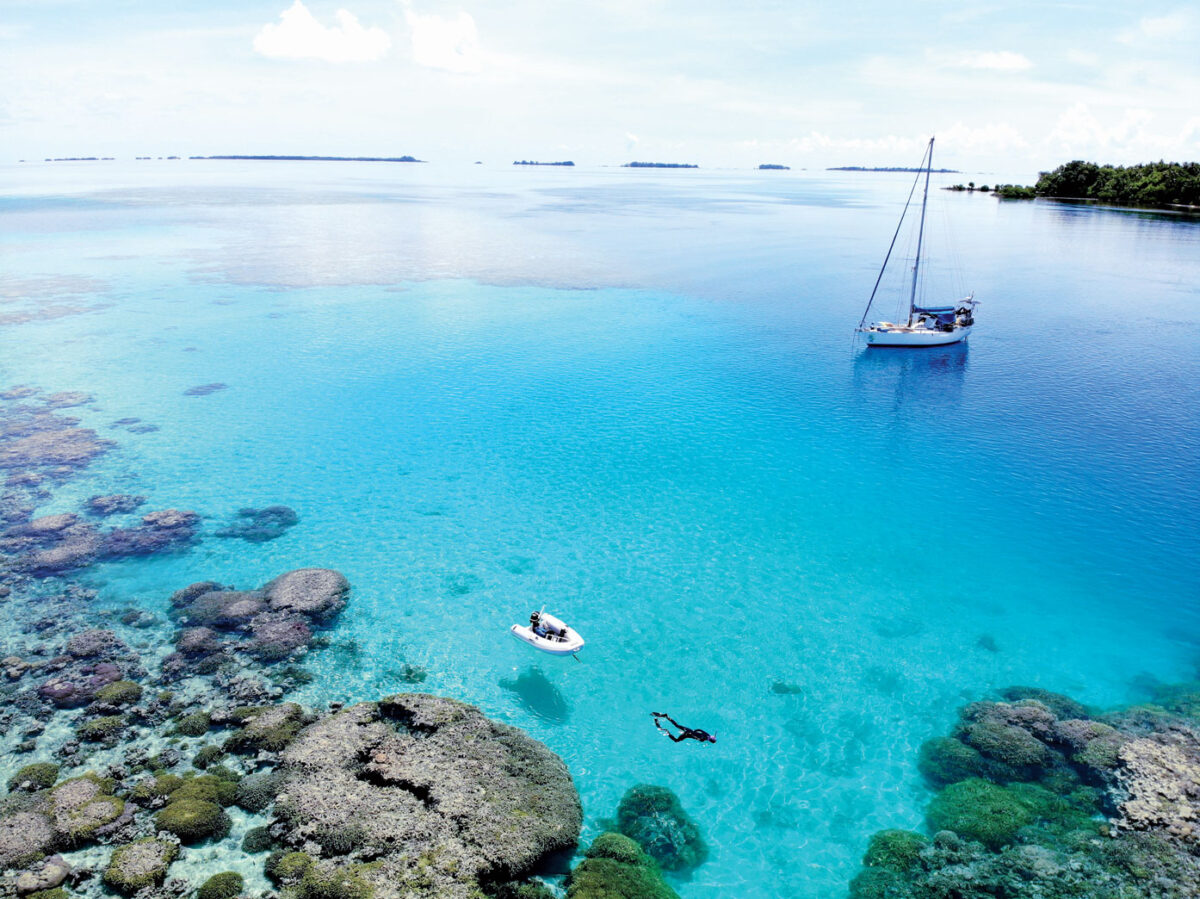
Reboarding the dinghy after a swim can be awkward—or impossible—if you’re tired, cramping, or stung. A basic ladder or rope sling makes it easier and safer to climb back in. Test it beforehand so you know it works.
Outboard Repair Kit.
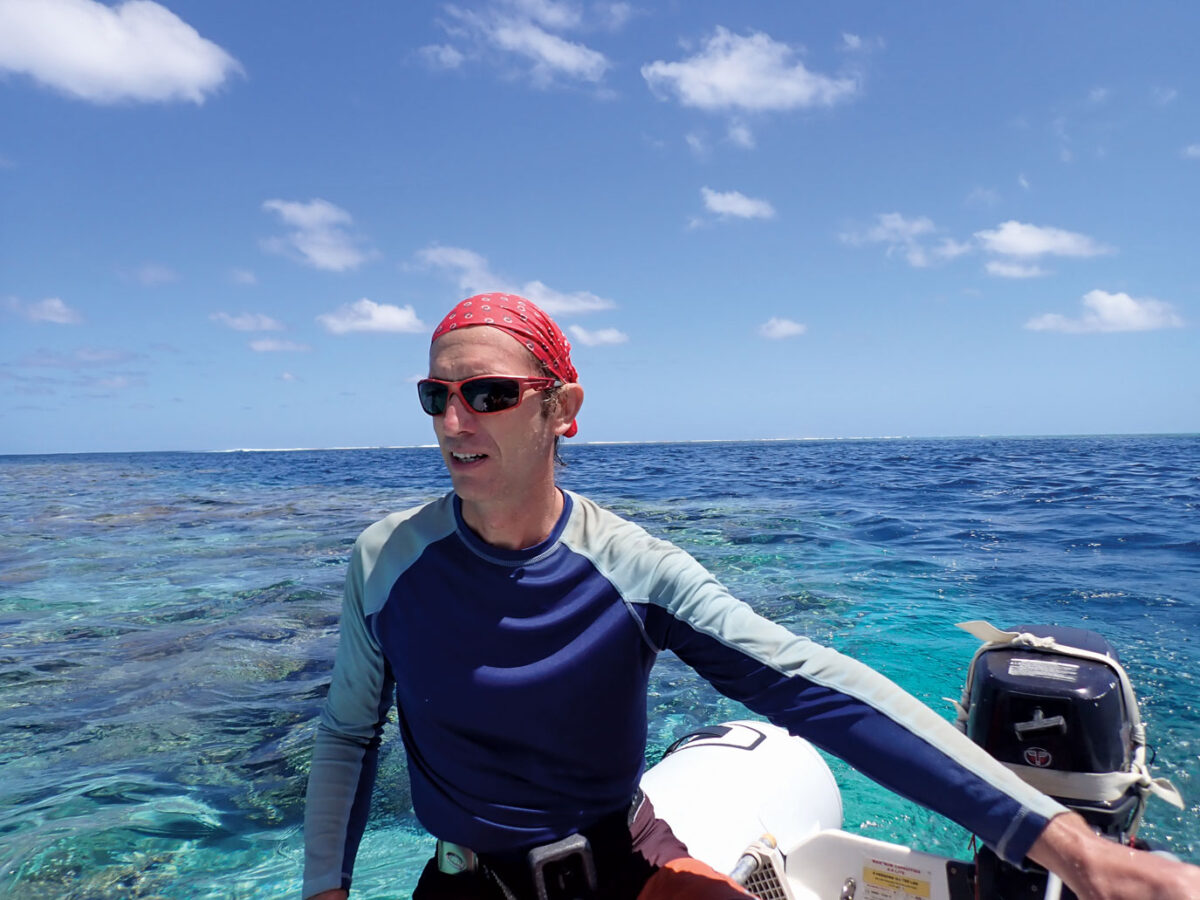
We don’t take this on every snorkel trip—but we sure wished we had it the day our outboard died two miles from the boat. We were outside the atoll, in current, hungry, and had to swim-tow the dinghy all the way back. It took two hours, with breaks anchored mid-current. Lesson learned.
EPIRB.
If you’re venturing to truly remote places with no other yachts around and no cell coverage, consider taking an EPIRB. Strong trades and a failed engine can turn an afternoon snorkel off the Leewards into an unplanned crossing to Nicaragua—1,300 miles downwind. Ask Captain Bligh how that turned out.
Bonus Tip:
Keep a checklist laminated near the dinghy davits or dock lines. It’s easy to forget things in the excitement of a sunny day and clear water.
Birgit and Christian have been snorkeling and dinghy-adventuring their way from the Mediterranean through the Caribbean and across the Pacific aboard their S&S 41, Pitufa. Follow their journey at www.pitufa.at or find their books Sailing Towards the Horizon, On Velvet Paws Towards the Horizon, and Cruising Know-How on Amazon.
Birgit Hackl has written for ALL AT SEA since 2012.
Worth your time?
Thanks — noted.