



















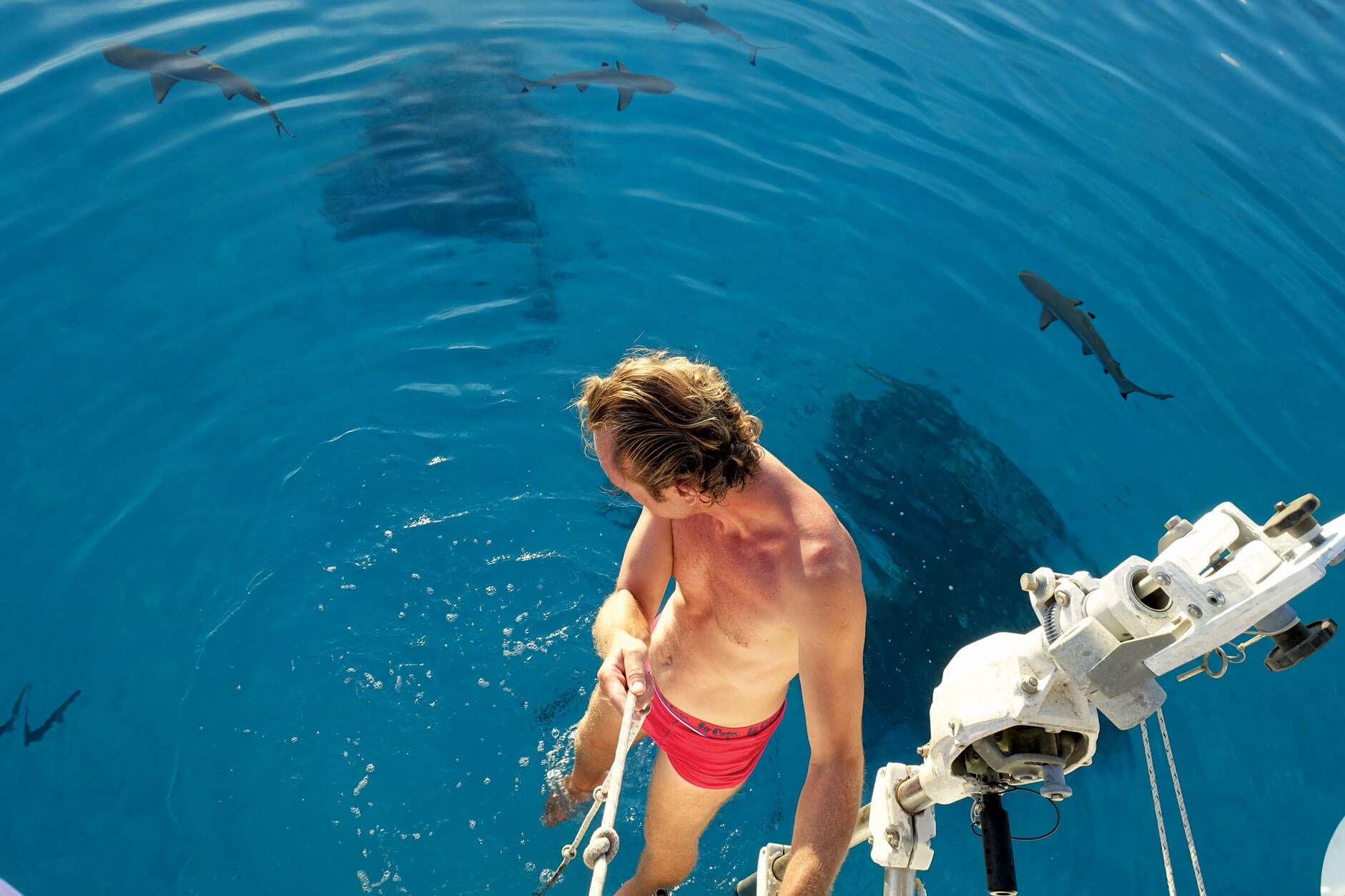
Fearless Encounters: How to Safely Swim with Sharks
Discover how to overcome fear and safely swim with sharks in the Caribbean. Learn about shark behavior, species you may encounter, and tips for safe interactions.

Most people have a deep-rooted fear of sharks–especially those who have never encountered one. Maybe it’s an instinctive, irrational dread of the monsters that we imagine lurking underneath the glittering surface of the ocean, this alien, hardly explored world that covers more than 70 percent of our otherwise cultivated and “tame” planet. Or maybe it’s simply because the stupid “Jaws” films thoroughly wrecked their image.
Cruising clear Caribbean waters is a wonderful opportunity to meet these majestic predators and watch their behavior. Most shark species don’t see creatures as big as humans as prey anyway and those who are theoretically big enough to take a bite are still unlikely to turn aggressive against snorkelers or divers. Here are a few facts about sharks and tips on how to behave to have fearless, stressless encounters with a wow factor.
Sharks have been roaming the oceans for more than 400 million years, so they have seen the dinosaurs come and go and have survived five global mass extinctions. They are a critical part of many ocean ecosystems and play a key role in maintaining food chains. As apex predators they regulate other species’ population thus ensuring biodiversity. They keep diseases from spreading by consuming weak and sick fish. Despite their important role in the ecosystem people are relentlessly pursuing sharks. An incredible number of 100 million sharks are killed each year (while sharks kill 5 humans per year worldwide), most for their fins, others as by-catch that then end up in dog or cat food or as cheap burgers. As sharks have a slow reproduction rate such numbers are simply not sustainable and most species are by now close to extinction or at least considered vulnerable.
Avoid risky times and circumstances
Most shark species spend their days leisurely cruising, but go into hunting mode at dusk, so it makes sense not to go swimming or snorkeling with the sun already low in the sky or during the night (unless you go for a night-dive with a reputable and knowledgeable dive operator). They can get agitated and aggressive at any time of the day though when there’s blood in the water, so people who go spearfishing are at risk of drawing the attention of potentially dangerous sharks. If you’re just a peaceful snorkeler you should still avoid areas where others are spearing fish and/or cleaning fish.
River mouths tend to have murky water and may attract predators due to food scraps or offal they (sadly) carry in some areas. The same goes for bays with fish factories or abattoirs ashore where any kind of water activities is unwise.
What species are you likely to encounter
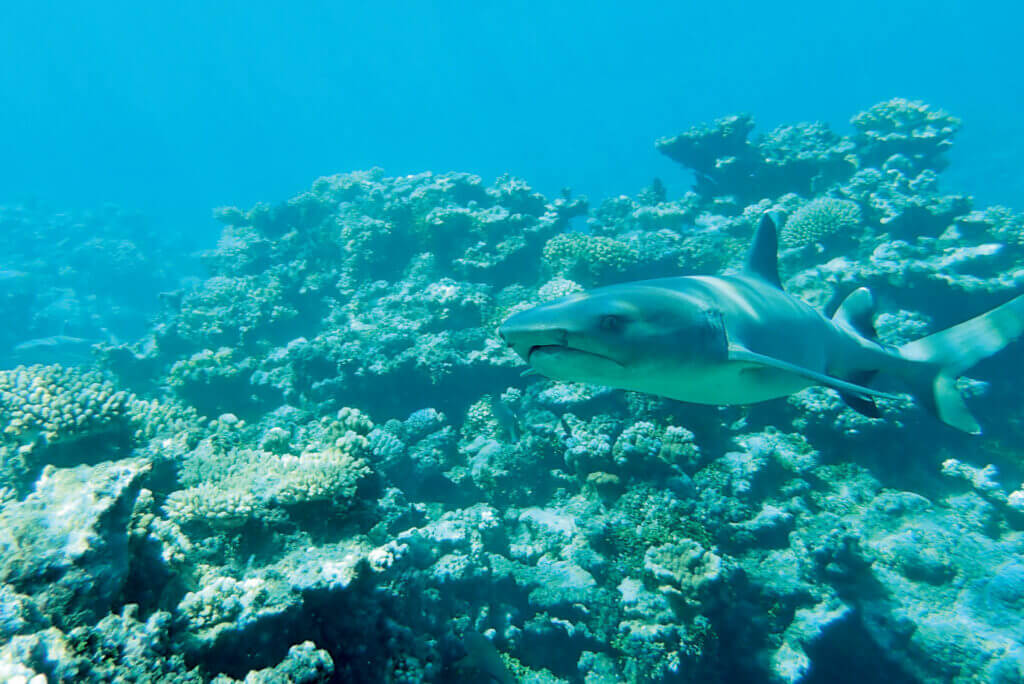
In most lagoons and on reefs close to shore you will mainly meet reef sharks: white-tip reef sharks and black-tip reef sharks are easily identified due to their name-giving fins, gray reef sharks look rather similar to a black-tip just without the tip. They are small (hardly ever bigger than 6 feet) and curious by nature. They may well make close passes to check whether you have a fish for them, want to play or if they can startle you by swimming right at you. If you swim straight at them in turn and/or thrust a camera in their direction they scuttle off in a hurry.
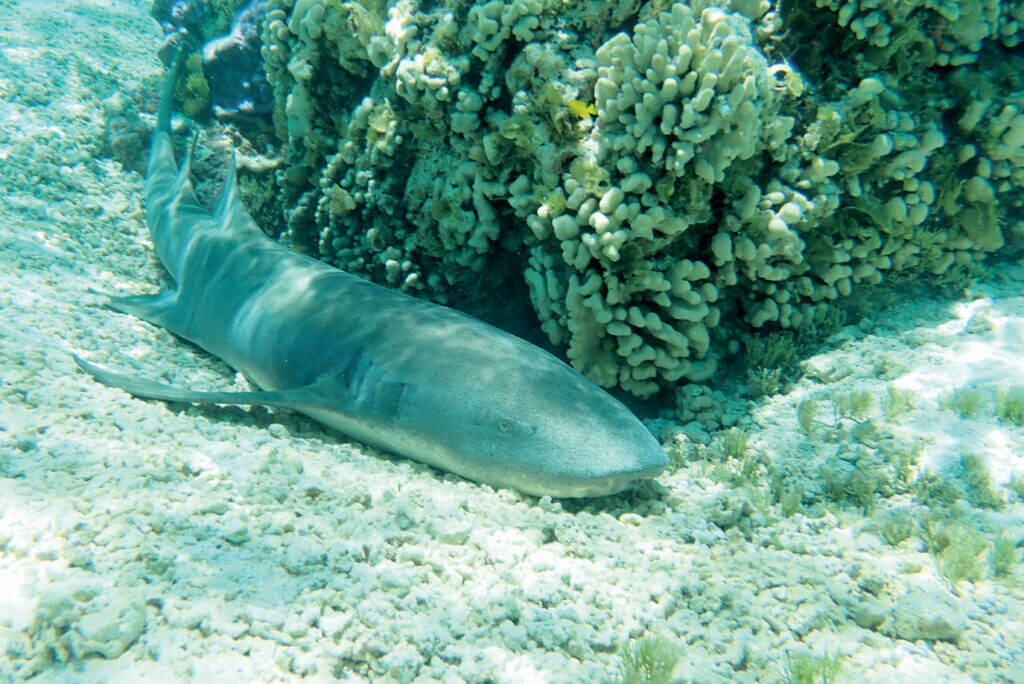
Nurse sharks are short-sighted, peaceful creatures that spend their days sleeping on sandy patches. They will bite a diver, but only if you step on them or harass them on purpose.
Lemon sharks, silky sharks and hammerheads usually roam outer areas of reefs and you are less likely to see them. They are potentially dangerous, but mostly shy and not known to be especially aggressive towards divers.
Caution is called for in interactions with big pelagic species like tiger sharks, bull sharks, great hammerheads and oceanic white-tips.

How to behave when you meet a potentially dangerous shark
Don’t panic if you see a large silhouette in the water. Stay calm and confident: don’t try to hastily swim away, that would only let you appear as prey. Most shark attacks are on swimmers or surfers as they splash about noisily and don’t see what’s happening underneath the surface. If you have a mask and fins on (preferably in dark colors), you’re moving quietly and can see whatever creature is approaching you and act accordingly.
Watch the behavior of the shark: if it’s just cruising past, there’s no need to worry. Enjoy the encounter!
Look out for sudden, jerky movements, rapid movement of the tail and bursts of speed. An arched back, emphatic side-to-side movement of the head and tail and pectoral fins in a vertical position are all signs of agitation, same as rapid depth changes, zig zagging or erratic swimming.
If a shark behaves this way, it’s time to be extra careful:

• Remain quiet and keep eye contact with the shark.
• Go into a vertical position: Upright you have a more dominant profile in the water, and not what the shark is expecting, causing it to remain wary and hesitant.
• If you are with other people, get closer together to appear less vulnerable.
• If there’s a reef or a rock close by, back up against the reef wall, or sink to the bottom and crouch down among the coral.
• Keep an object like a camera or a go-pro stick between you and the shark.

• If the shark gets uncomfortably close, hitting it on the nose with a camera or stick should chase it off.
I remember well when we saw our first shark in the Caribbean, we were nervous, didn’t know how to identify the species or what to expect from them. Doing some research and reading helped us gain confidence. In the meantime we’ve dived with hundreds of sharks over the years, never had a negative experience and still relish each encounter!
Birgit and Christian have been sailing and snorkeling around half the world for 13 years. Check out their blog www.pitufa.at for more info or read their books “Sailing Towards the Horizon” and “Cruising Know-How” (available on Amazon).
Birgit Hackl has written for ALL AT SEA since 2012.
Worth your time?
Thanks — noted.