On Books, Boats, and Bilge Rats
I found Suzanne Heywood’s Wavewalker highly intriguing. Why? Because I, too, had been raised aboard. Because I’m on my 65th year of living aboard—55 of those with my loving wife Carolyn.

I don’t normally do book reviews—especially of ‘mommy dearest’ style tell-alls or books that, however benignly, attempt to shine a spotlight into the dark corners of raising a child aboard. In fact, a large part of my personal and professional life has been singing the praises of liveaboard families.
A dozen years ago, I enthusiastically penned the introduction to a book called Voyaging with Kids (A Guide to Family Life Afloat). Many of my articles and in-person seminars are as much about the love, respect, and admiration I have for my wife Carolyn and our child Roma Orion—as the boring mechanics of cruising offshore.
Yet I found Suzanne Heywood’s Wavewalker highly intriguing. Why? Because I, too, had been raised aboard. Because I’m on my 65th year of living aboard—55 of those with my loving wife Carolyn. Because our grandkids and foster grandchildren currently sail with us nearly every other weekend. And finally, because we raised our beloved daughter Roma Orion aboard for the first 18 years of her life.
Sailing isn’t just an occasional hobby with me—sailing is my life. And I’ve experienced much joy as a liveaboard child, teenager, adult, circumnavigator, marine scribe, husband, father, retiree, and grandfather.
Thus, the subject of kids and boats is one that is extremely dear to my heart—something I feel passionate about.
But times change. In the ‘50s when I grew up there were very few liveaboards, fewer families, and almost no children. I used to report with pride that I’d never met a boater who was a thief—no longer. I also used to believe that raising a kid aboard (except a posh teenager unwillingly yanked from their peer group) was all positive.
Not true—well, not in all cases. There was a party-hearty, rum-gulping, ganja-sucking cruising couple in Vieques, who raised two ‘wild child’ kids aboard an old wooden yawl—up to the point where one drowned off the bow and, 18 months later, the other was discovered dead on the bottom, directly under the transom. But what are you gonna do, right? Sh*t happens. What’s the option except to take another swig of 151, shake your head ruefully, and forgitaboutit already?















There was also a good ole boy in St. Croix who considered himself a bit of a marksman. For amusement while drunk, he used to toss his wife in the harbor and take potshots at her—seeing how close he could come. When I confronted him and implied that this game might not be considered PC-appropriate, he seemed confused.
“Damn, Fatty,” he said. “I don’t shoot her; I just shoot around her. Maybe you should mind your own business?”
Or the crackhead guy who progressed from sleeping in dinghies, to sleeping aboard unattended yachts. Then he got a tad too ambitious by deciding to open a floating whorehouse—about 25 feet in front of my forehatch. When I complained, he circled my vessel (with my wife and child cowering inside) informing us that he’d soon sink our vessel when we were ashore; if not today, tomorrow. (Luckily this ended well—someone killed the guy before I was forced to, thank you Lord!”
My point is that once upon a time boaters were special—a rare breed of gentle adventurers. No more. Especially now, with many of the ‘van life’ folks who are tired of hearing The Knock, deciding to stretch their sea legs.
How do I get off on these tangents?

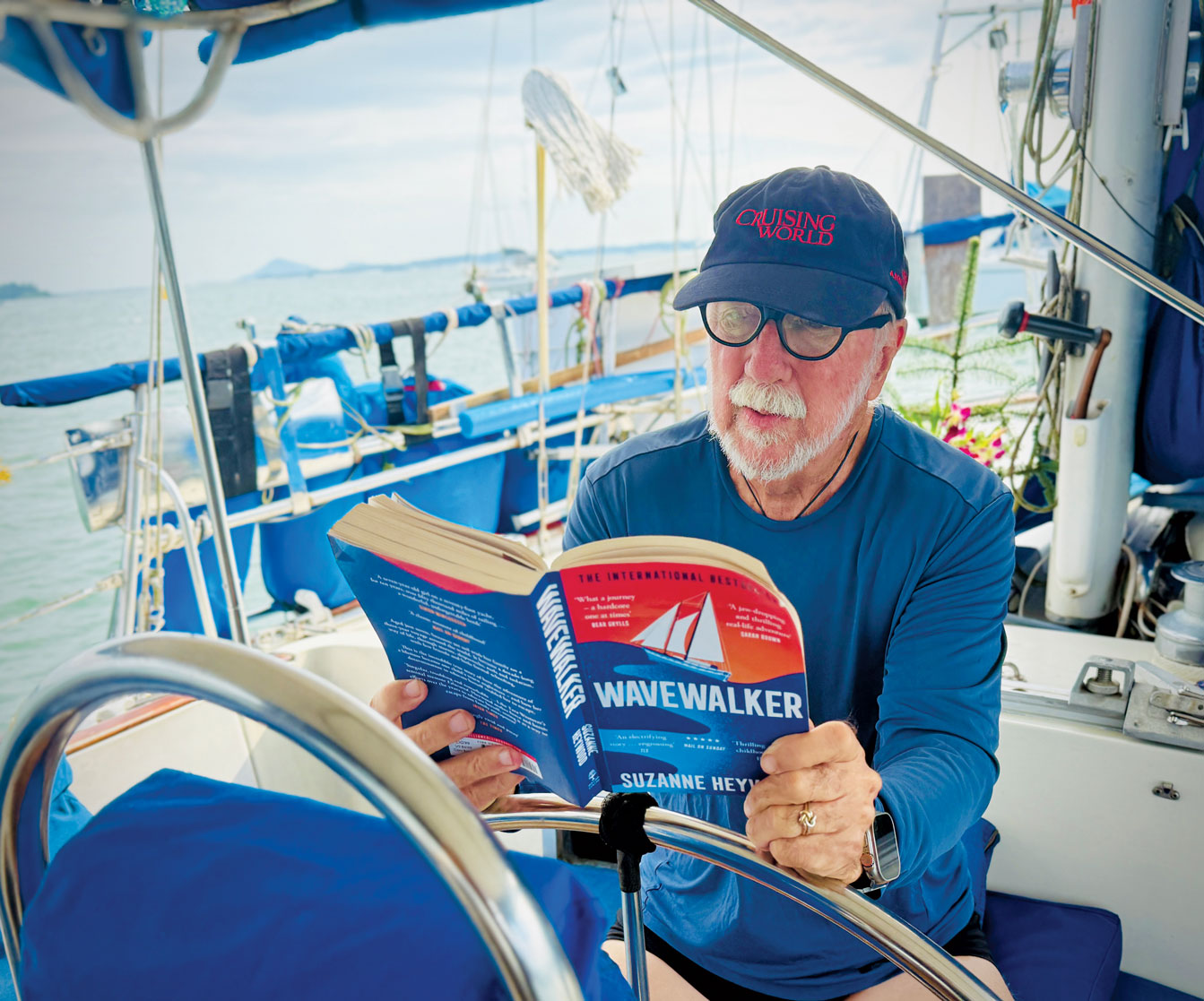
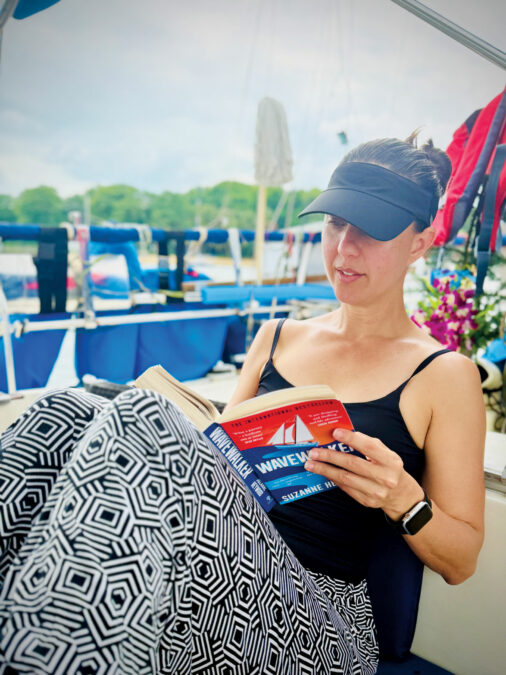
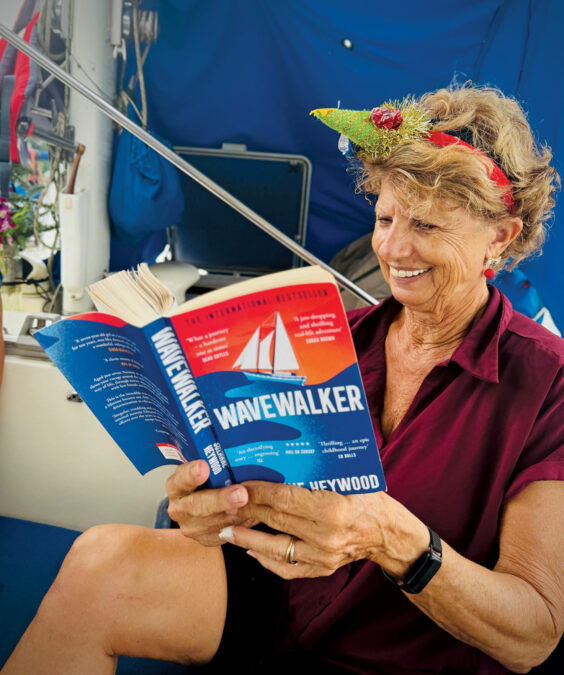
Let’s begin again: I’m a writer and nearly all writers like to read. I read for hours each day, and last week I read a book entitled Wavewalker by Suzanne Heywood. She spent ten years (and 50,000 nautical miles) of her youth as a liveaboard child—nearly the entire time plotting her escape. Not only did she feel trapped aboard the boat and confined by the constant foreign travel—she also was deprived of the one thing she wanted above all else—an education.
Her parents couldn’t have cared less. Their focus was the horizon, not their complaining child.
Eventually Suzanne convinced her parents to allow her (spasmodically) to study via a correspondence course. Only they wouldn’t sail to the pick-up/drop-off mail ports, often complained of the postage, and were horrified when her schoolwork interfered with her boat work.
Regardless, our life stories as ‘boat kids’ are so parallel and so bloody similar—despite our different circumstances, opposite objectives and contrary conclusions.
Her goal was to become a respected member of society—to get a PhD, to work for an international company, to have a brood of landlocked children, and to pen a fascinating book that would (deservedly) appear on various bestseller lists. (I highly recommend the book—it’s a fine read—and about as opposite to my Chasing the Horizon as could be.)

She succeeds at her literary endeavor by chronicling her dreary childhood of being “…trapped in someone else’s dream.”
I, on the other hand, desired to not be trapped ashore—to never subjugate my will for the will of others nor for the cheap opiate of the Yankee dollar. I felt that not having to attend school was a wonderful bonus of the cruising lifestyle! My entire life has been, rightly or wrongly, in two modes —1. preparing to go to sea and 2. being at sea.
I rejected dirt-dwelling—with just as much passion as Suzanne embraced it.
Yet here we are—both happy, (somewhat) well-adjusted adults with loving families that took the same watery road to achieve almost diametrically opposite existences.
Even stranger, I’m impressed by some of her father’s achievements—by the very same traits that horrified her.
No, he couldn’t swim—yes, he managed to sail 50,000 miles to windward on a wholly unsuitable, high-maintenance vessel that required additional crew—constantly figuring out imaginative ways to keep the wooden Wavewalker in antifouling paint.
He chartered. He landscaped. He lectured. He exploited James Cook—and solicited funds in his name. He banged nails and told lies and broke promises and skipped out on loans—whatever it took. His weirdest trick was to toss long-term charter guests (who offended) ashore without returning their money—surely not charter-yacht-industry-approved behavior.
I’m not condoning any of this—only saying I understand the pressure the father was experiencing.
Suzanne’s mother was a different kettle of fish. She wavered between slightly disliking her daughter—and really disliking her. And she had a tart tongue. One of few things her parents agreed upon was Suzanne’s selfishness, especially when it came to schoolwork.
“Don’t be so selfish—there are other people aboard this vessel, not just you!” was the mantra of the two people who made 100% of the decisions in Suzanne’s difficult life.
There’s a touch of Cinderella in the book. Her wicked stepmother is constantly demanding Suzanne fetch this, do that, and find this… while all Suzanne wants to do is study and/or escape… which is viewed by the powers-that-be as mere laziness.
Worse, when Suzanne regularly awakes in terror from the PTSD dream of The Wave that almost killed them all in the middle of the Indian Ocean—she gets no sympathy, only cold instructions she refocus on her varnish brush.
…there’s a lot of ‘stiff upper lip’ in this quintessentially British missive.
But the sections that touched me deepest were about a bewildered girl who constantly meets other children ashore… children with every-single-thing she so desperately craves… just long enough to be ripped from them, tossed back aboard, and forced to cross yet another scary ocean.
During one terrifying incident while visiting an orphanage, she doddles while leaving her newfound girlfriends. So, father, mother, brother, and ship sail away for a few days to teach her a lesson. And it does. She learns despair. And she realizes that both possibilities will be equally difficult—they will return or they won’t.
What does Leo Tolstoy say about ‘each family being unhappy in their own unique way?’
Another plot twist rears its head late in her detailed missive. After getting her PhD from Oxford, years after the forlorn Wavewalker is wrecked on a lonely reef and left for dead, Suzanne returns to the Pacific to stoically search for the boat’s bones and her own watery roots.
She returns to the scene of the crime.
Curious. And more than a little telling.
She ends up with Wavewalker’s compass—a sacred totem to steer her through the rest of her uncharted life.
I, too, have life-long recurring nightmares of Elizabeth—that some good Samaritan reading this publication has purchased her and hauled her out… and now expects me to stop my life to rebuild her yet again; endlessly and to little purpose.
No thanks.
Suzanne’s book is thought-provoking, which is high praise indeed. It dredged up memories I’d prefer to forget—that I had conveniently forgotten. Plus, I read it at the same time as my daughter Roma Orion—both of us seeing both the positives and negatives of our own family experience reflected in Suzanne’s tear-stained pages.
Suzanne is to be commended for being so revealing—both intentionally and not.
Roma thinks that Suzanne’s problem wasn’t so much with living aboard as with being forever transient, especially with parents who seemed to rub people the wrong way. And how funny it was that they clashed within minutes of setting out—on a ten-year journey. And how the parents always professed to be following James Cook’s route—while almost never doing so.
But Roma’s favorite part of the book was when the over-played Bob Dylan tape is thrown overboard—YES!
Ed Balls of the Mail on Sunday calls the book, “Thrilling! An epic childhood journey.” Other reviews gush with, “An electrifying story” and “…hardcore at times” and “A jaw-dropping real-life adventure.”
I agree—and I hope that you, dear reader, will as well.
Cap'n Fatty Goodlander has written for ALL AT SEA since 2005.
Goes straight to Fatty. ALL AT SEA takes nothing.
Worth your time?
Thanks — noted.