Grenada’s Traditional Workboats – A Race Towards the Future
We usually have 15 to 20 workboats race in the Grenada Workboat Regatta each year. This year, we only had 6, and it’s because many of them, in Grenada, Carriacou, and Petite Martinique, were damaged from the hurricane last year

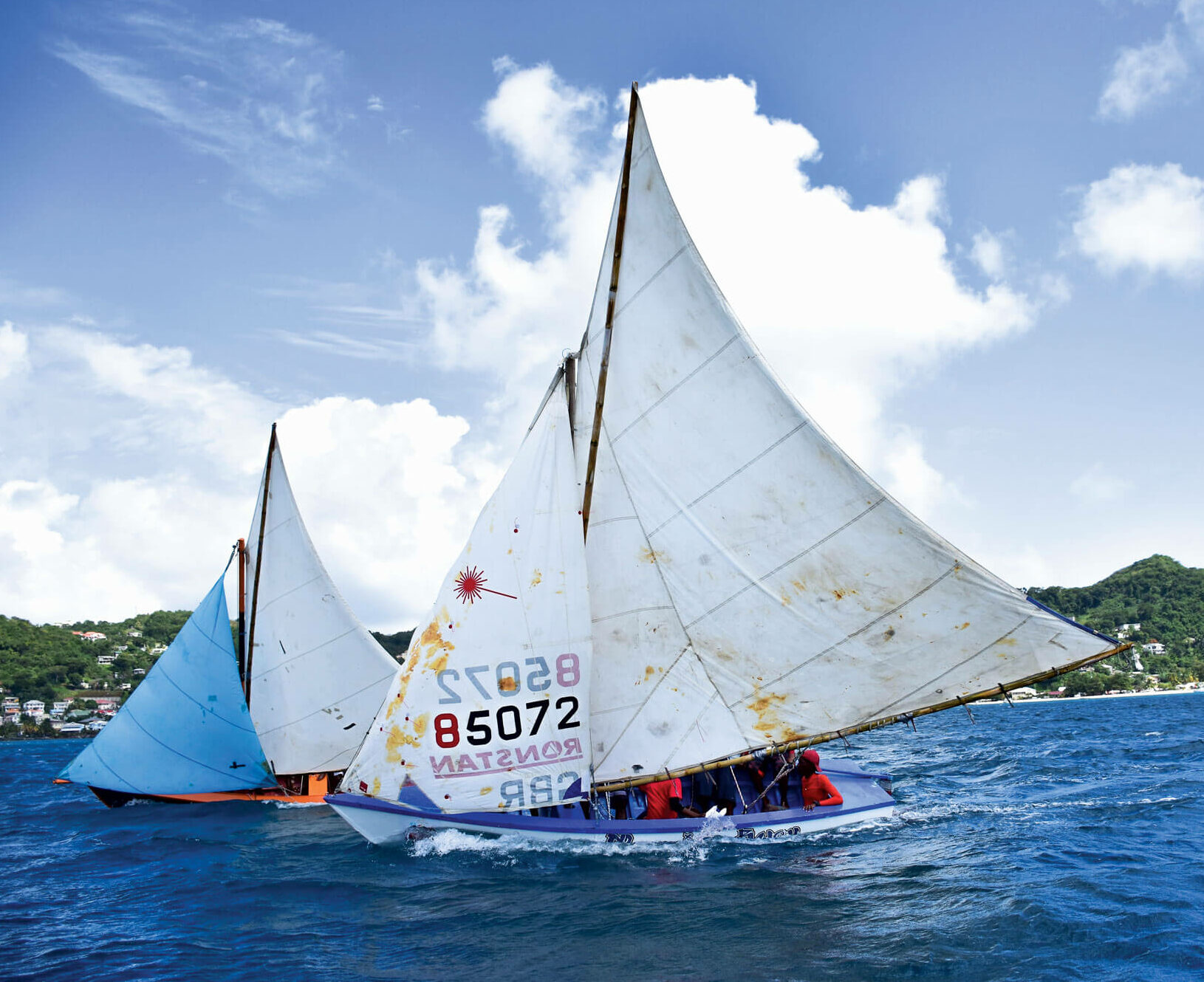
Only six traditional boats were able to sail in the Grenada Workboat Regatta, held in March off Grand Anse Beach. It wasn’t due to a lack of interest or enthusiasm. This tri-island nation is famous for its stunning, swift-sailing sloops and double-enders, and racing has been, and continues to be, a community-wide event for nearly 70 years, attracting visitors from around the world. Instead, many of these vessels are still undergoing or awaiting repairs from last summer’s devastating Hurricane Beryl. One of the community members working to raise funds to restore this time-honored fleet and assure future generations of Grenadians have an opportunity to keep this tradition alive, is Kevin Banfield.
“We usually have 15 to 20 workboats race in the Grenada Workboat Regatta each year. This year, we only had 6, and it’s because many of them, in Grenada, Carriacou, and Petite Martinique, were damaged from the hurricane last year,” says Banfield, who, with Raisa Pierre, co-directs this annual regatta.
A Storied Past

Wooden boatbuilding is a centuries-old practice in Grenada and its smaller islands to the north, Carriacou and Petit Martinique. Legend says that it was sailors from Glasgow, Scotland, who were shipwrecked off Carriacou in the 1790s, who were the first to build the ancestors of present-day workboats. These single-masted vessels were renowned for their speed and sturdiness, making them indispensable for inter-island trade, fishing, cargo hauling, and even illicit activities such as smuggling. In 2023, the Grenada Tourism Authority announced that the tradition of boat building in Carriacou and Petite Martinique had been officially inscribed on the UNESCO Intangible Cultural Heritage list. It’s an achievement that recognizes this time-honored tradition, which has become part of the island’s culture and rich history.
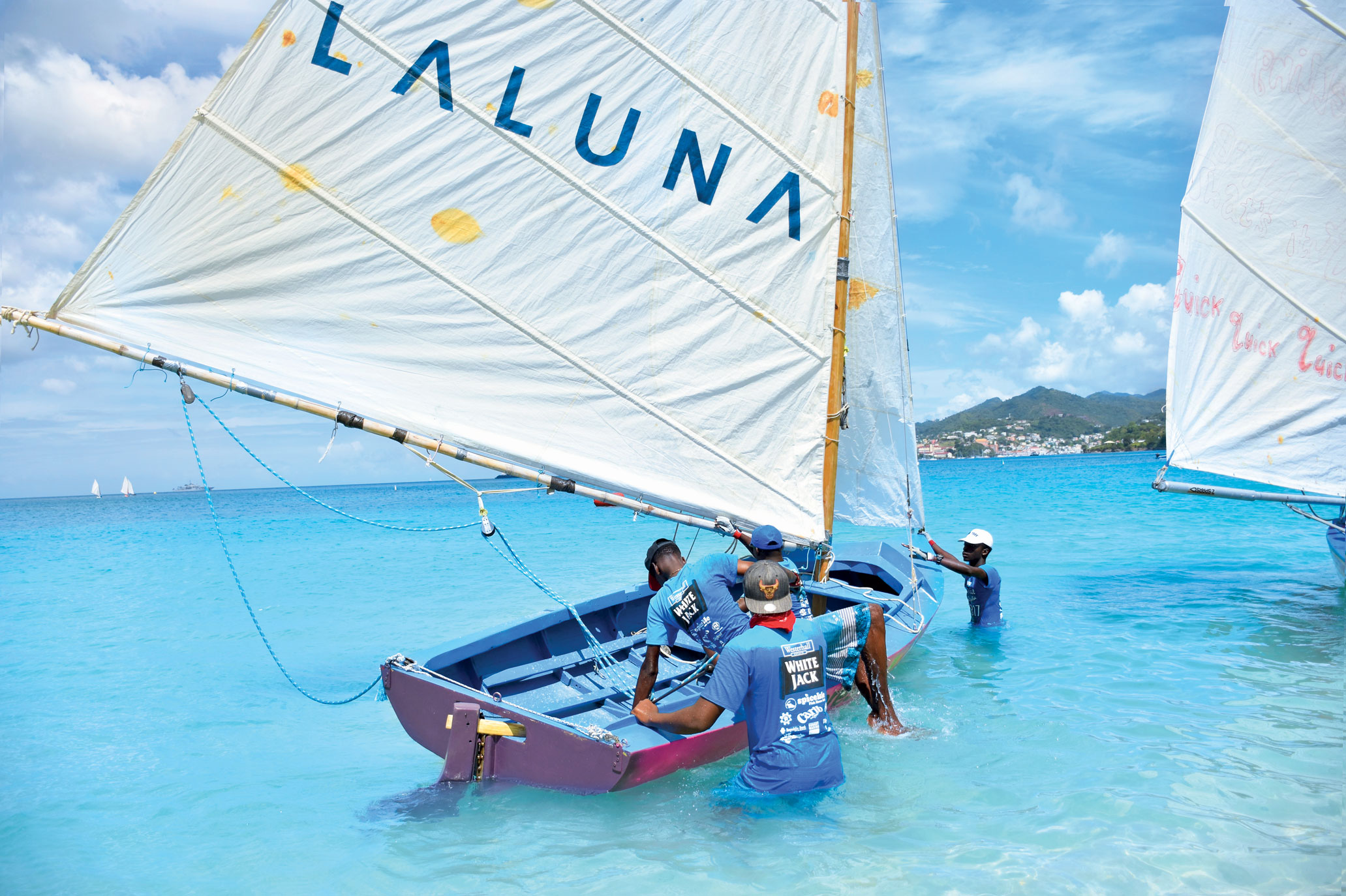
Forget factories, fiberglass, and carbon fiber. The island’s talented shipwrights continue to build these boats. In place of blueprints is the hands-on, time-tested knowledge passed from generation to generation. Boats are built outside, near the beach, to make for a convenient launch when complete. Age-old rituals are all part of the process. For example, there’s selecting the correct type of wood, often West Indian white cedar. It can only be cut during a particular moon phase. A ceremonial sprinkle of rum and water marks the beginning of construction. Launch day, following four to six weeks of work, is a community-wide effort. There’s a blessing, children take part in revealing the boat’s name, women prepare a meal of local favorites and cake to celebrate, and the men work collectively to roll the vessel on logs and splash it into the sea. Nowadays, boats are built specifically for racing and cared for like a thoroughbred. One modern concession is the use of aluminum masts and booms in place of wood. To build, each boat costs, on average, between US $2,500 and $3,000. A full set of sails adds an additional US $1,500 to $2,000 to the price.
Nearly Year-Round Racing
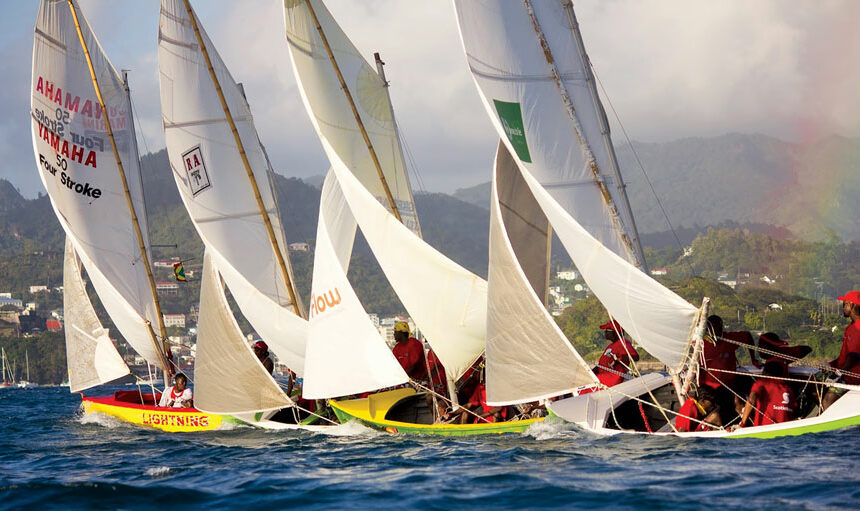
The Grenada Workboat Regatta, held in February or March, and the Carriacou Regatta Festival, which started in 1965 and is held from late July to early August, are two of the best-known events for traditional workboat racing. However, there are many more held around key holidays: Easter, Whitsuntide, Fisherman’s Birthday (June 29), Thanksgiving (October), and Christmas. There are even more small local regattas that take place in communities throughout Grenada.
In general, like production boat racing, courses are typically windward-leeward, triangles, or sausages, depending on the venue and wind conditions. What’s different is the start. Two markers are set up on the beach. A countdown ends with a horn blast, and crews run to push their boats into the water and jump in.
“The boats race in classes based on design and size,” says Banfield. “The big double-enders like the 15-foot boats come from Carriacou. We have the double-enders, such as the 10-foot boats that come from Gouyave and various communities around Grenada, including Sauteurs and Woburn. We refer to the 18-foot boats from Woburn as the Woburn sport boats and the Woburn traditional boats. Also, they have similar designs in Petit Martinique as in Carriacou.”
Banfield, who sailed Optimists and then Lasers as a member of the Grenada Sailing Team, set up youth sailing clubs in his home community Gouyave as well as Woburn, and in 2018, traveled to the UK National Training Center in Dorset to attend a 6-week World Sailing Scholarship Training for Coaches, looks optimistically to the future.
“It’s always been customary that the older guys on the traditional boats invite the junior sailors to come to join them, learn how to sail the boats, and race in the different regattas. That’s how I learned. In many regattas, there is a certain time for a juniors-only race in the workboats. At events like the Grenada Workboat Regatta, it’s village against village. So, as a junior, you must learn the boats to represent your village well to see who the best boat racing village is in the country. We can’t lose that,” says Banfield.
How to Help
“There are six to eight boats that are still down from the storm, says Banfield. “A lot of young people who have the boats from generations don’t have the funds to rebuild the boats properly. We’re trying to change that by seeking sponsors. Westerhall Estate Rum and Budget Marine are aboard, but we need more help.”
Specifically, there are two boats in Woburn in need of repairs, two Gouyave sloops, and two Sauteurs sloops. Overall repairs are needed, especially on the hulls and sails.
“We would love most of the boats to be branded by company logos and individual brands,” says Pierre.
For more information, please contact Pierre at [email protected] or WhatsApp at (473) 534-9321.
Carol Bareuther has written for ALL AT SEA since 2004.
Worth your time?
Thanks — noted.