Whale Strikes, Orca Attacks & Safer Offshore Sailing
Learn how sailors can reduce whale strike risks, report marine mammal encounters, and respond to growing orca attacks offshore.

Key Questions Answered:
- How common are whale strikes at sea?
- What should sailors do if they hit a whale or marine mammal?
- Where are orca attacks happening on sailboats?
- How can cruisers reduce the risk of marine mammal collisions?
What should sailors do during an orca encounter?
- Disengage autopilot
- Keep hands clear of spinning wheels
- Reduce speed and move toward shallow water
- Avoid sudden maneuvers
- Report the encounter afterward
Marine mammal strikes are becoming a growing concern for offshore sailors, especially during Atlantic crossings and Caribbean cruising seasons. New data from the Marine Mammal Advisory Group (MMAG) reveals the scale of the issue while offering practical guidance for cruisers, rally participants, and offshore passagemakers.
More than half of all reported vessel strikes at sea involve marine megafauna—whales, sharks, sunfish, and other large marine species—according to data from the Marine Strike Log, the most comprehensive record of sailing-sector collisions worldwide. Of these strikes, over 50% result in injury or death to marine life, 45% cause serious vessel damage, and 3% lead to crew injury. Yet experts agree these numbers represent only a fraction of what truly occurs.
“Current global databases underrepresent the full scale of vessel strikes due to the lack of reporting,” explains Damian Foxall, Co-Founder of the Marine Mammal Advisory Group (MMAG). “We created the Marine Strike Log to fill that gap so that the sailing community could help document, understand, and ultimately reduce these incidents.”
From Firsthand Experience to Global Initiative
The MMAG’s creation and launch in January 2023 stemmed from deeply personal experiences. Sailors had witnessed marine mammal strikes firsthand. These collisions often left both the animal and the vessel damaged. Sailors realized there was little data or guidance available.
“We started as sailors looking for answers, as there was no central place to report, no shared learning, and no pathway to prevention,” says Foxall.
Today, MMAG’s mission extends well beyond data collection. The group supports open, anonymous reporting mechanisms that encourage honest submissions from all types of marine traffic, especially sailing yachts.
“Sailors are out there every day in the same waters marine mammals inhabit,” Foxall adds. “That makes our community one of the most valuable eyes-and-ears networks on the ocean.”













The Caribbean: A Seasonal Hot Spot
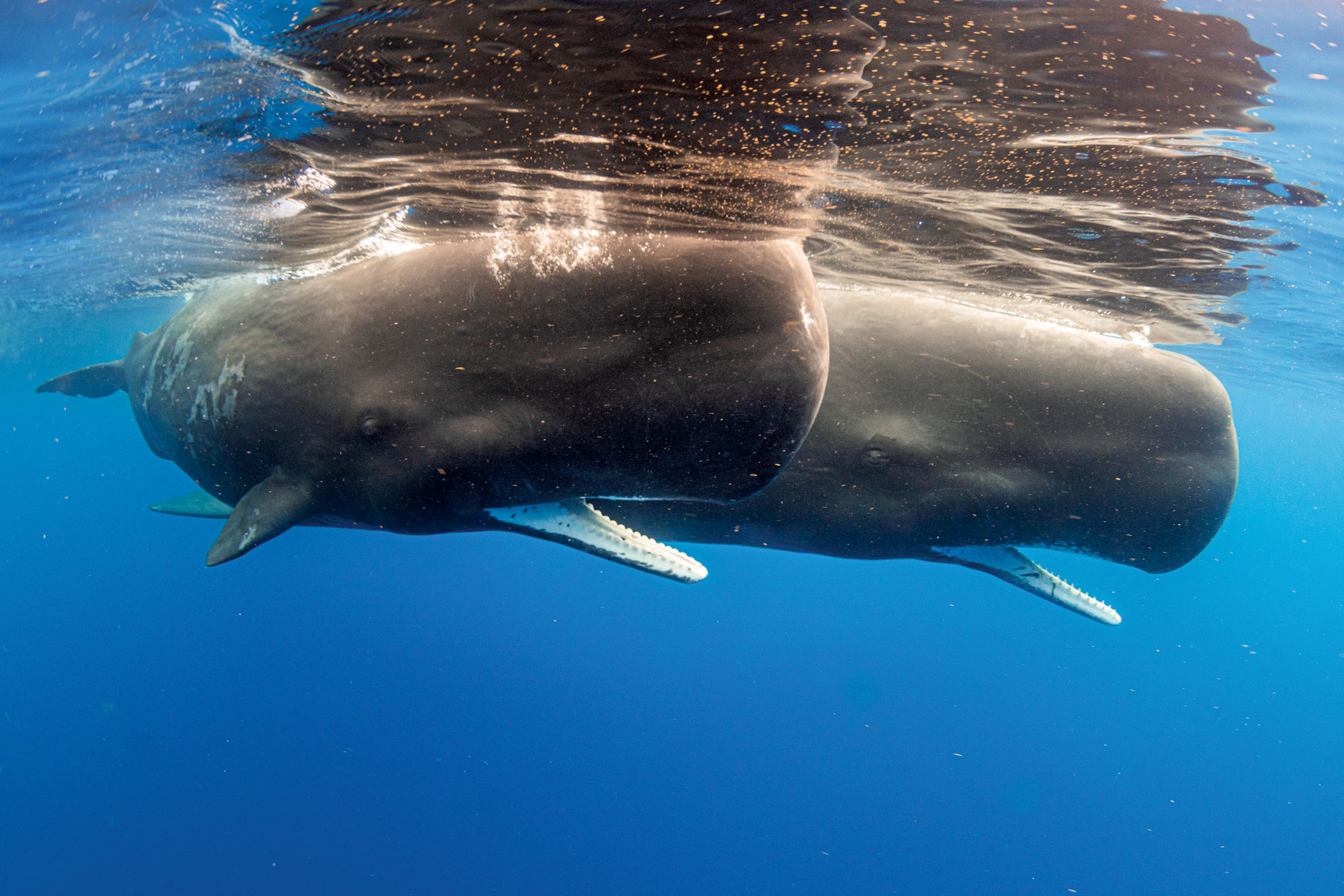
While strikes are reported worldwide, the Caribbean remains a region of concern, particularly during whale season from late winter into early spring, when many species breed and migrate.
“The Caribbean is a key breeding ground for humpbacks and other marine mammals,” says Foxall. “Unfortunately, that coincides with the region’s busy cruising and regatta season.”
Sailors crossing the Atlantic—whether arriving from the Canary Islands or down the U.S. East Coast—should be alert for migrating mammals along their routes. Important Marine Mammal Areas (IMMAs) and Marine Protected Areas (MPAs) are clearly defined on the IMMA e-Atlas and MPA Atlas (mpatlas.org), offering sailors vital tools to plan passages with awareness.
Six Pillars of Prevention
MMAG promotes a six-pillar strategy to mitigate strike risk: Source & Share Information, Risk Assessment, Live Reporting, Technical Solutions, Education & Outreach, and Collaboration.
“Good seamanship is still the best protection,” says Foxall. “Keep a sharp lookout, especially in known migration corridors, and slow down if you spot marine life nearby.”
To support real-time awareness, sailors are encouraged to use the Whale Alert App (www.ifaw.org/international/campaigns/whale-alert), a free, global platform that allows users to report sightings or strikes and view whale activity in their area. Some crews are also adopting advanced onboard tools such as forward-facing cameras (like SEA.IA systems) and drones for aerial scouting.
Local collaboration strengthens the cause. Yacht clubs and regattas across the Caribbean are integrating educational outreach, such as the Caribbean Multihull Challenge’s fund-raising events for the Caribbean Cetacean Society. “Sailors can be true citizen scientists,” says Foxall. “Every report, every sighting, every conversation helps build a safer ocean.”
If a Strike Occurs
In the event of a collision, MMAG stresses that crew and vessel safety come first.
“Secure your team, check for injuries and boat damage, and then by promptly reporting the encounter, we provide near live hazard information to other vessels in the area,” advises Foxall.
Key details to note include GPS coordinates, animal condition, and species (if known), and any photographs or videos. These should be reported immediately through the Whale Alert App and to local authorities, such as the island coast guard on VHF Channel 16 or the Caribbean Cetacean Society.

What’s Next: New Global Guidelines
Looking ahead, MMAG is taking its mission to the international stage. Working with World Sailing, the sport’s governing body, MMAG recently launched the official “Marine Megafauna Guidelines” (Fall 2025). These provide sailors and event organizers with practical steps, references, and risk-reduction measures tailored to racing, cruising, and transoceanic passages.
“Sailing has always been about harmony with nature,” says Foxall. “By applying these guidelines and sharing real-world data, we can reduce the harm caused by human activity and make every voyage part of the solution.”
Sailors who have previously experienced a strike are asked to contribute to the Marine Strike Survey (mmag.world/marine-strike-log-survey) to help expand historical data sets. For live reporting, download the Whale Alert App before heading offshore and be ready to log any interaction, large or small.
As Foxall puts it, “Awareness leads to action, and action leads to change. Together, the sailing community can help ensure our oceans remain safe for both people and the incredible creatures that share them.” mmag.world
________
WHAT TO DO WHEN ORCAS ATTACK
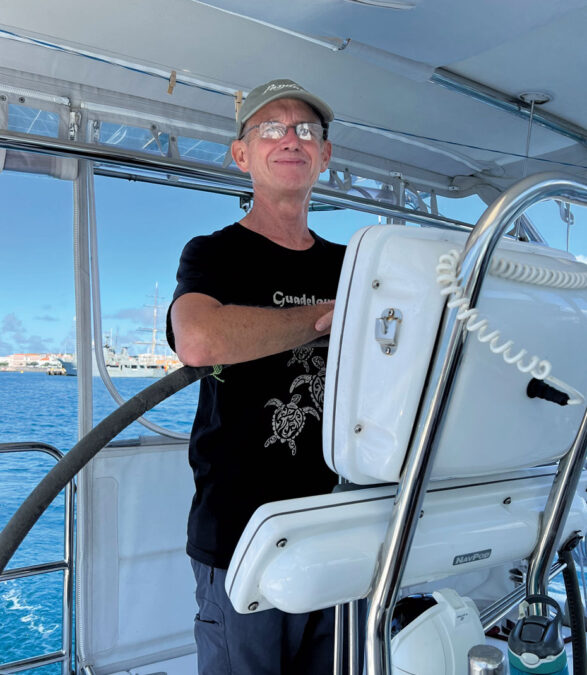
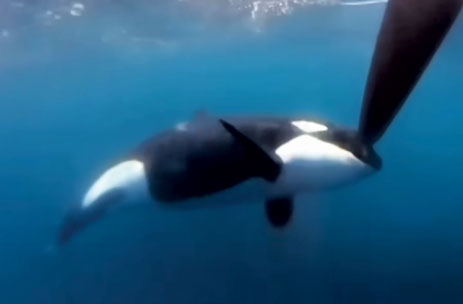
Bob Osborn, past president of the Salty Dawg Sailing Association (SDSA) and veteran leader of five Caribbean Fall Rallies to Antigua, set off on a new adventure this past summer aboard his Aerodyne 47, Pandora. Joining a dozen boats in the SDSA’s first-ever Azores Rally, Osborn and his wife, Brenda, were drawn by the chance to explore new waters and fulfill a dream of his late father—to sail to Gibraltar on Pandora. He achieved both goals, though the voyage also brought an unexpected and unnerving encounter: an orca attack.
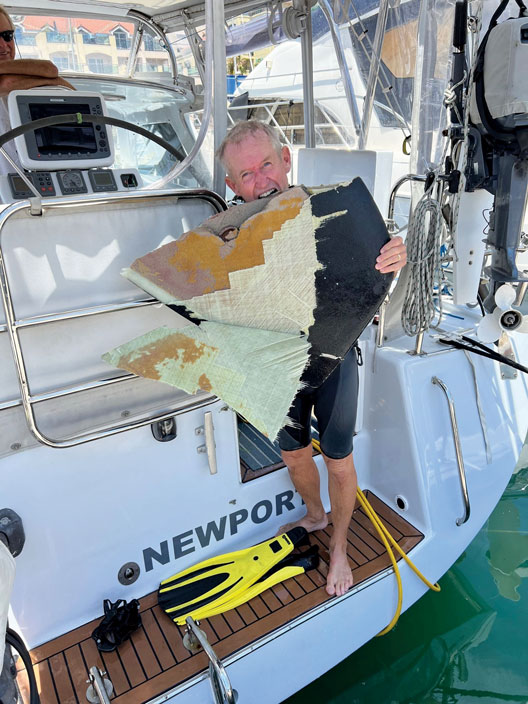
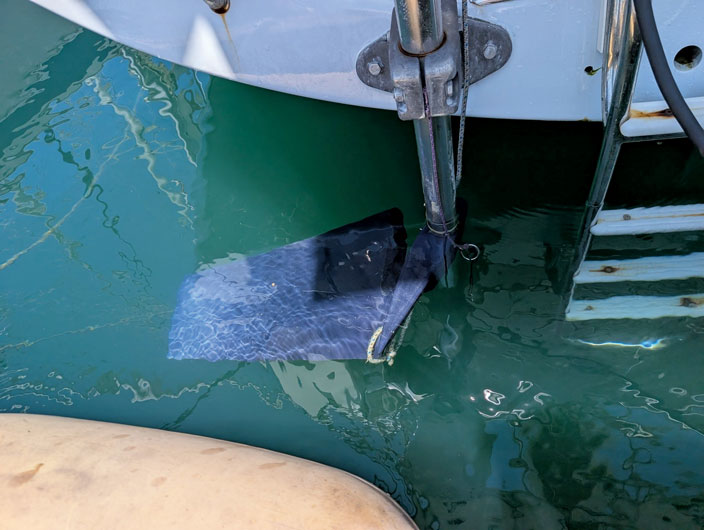
As Pandora neared the Strait of Gibraltar, she was making over 10 knots with the current when the wheel suddenly spun violently. Moments later, a pod of four or five orcas appeared beneath the stern, ramming the rudder. “It was terrifying,” recalls Osborn. “I feared the rudder post would snap or the hull would crack open.” Though Pandora’s carbon fiber rudder post held, half the rudder was torn off, and the Hydrovane auxiliary steering was severely damaged. Once safely docked, Osborn donned a wetsuit and used a saw underwater to remove the remaining broken section, a tense ending to what had begun as a smooth passage through one of the world’s busiest straits.
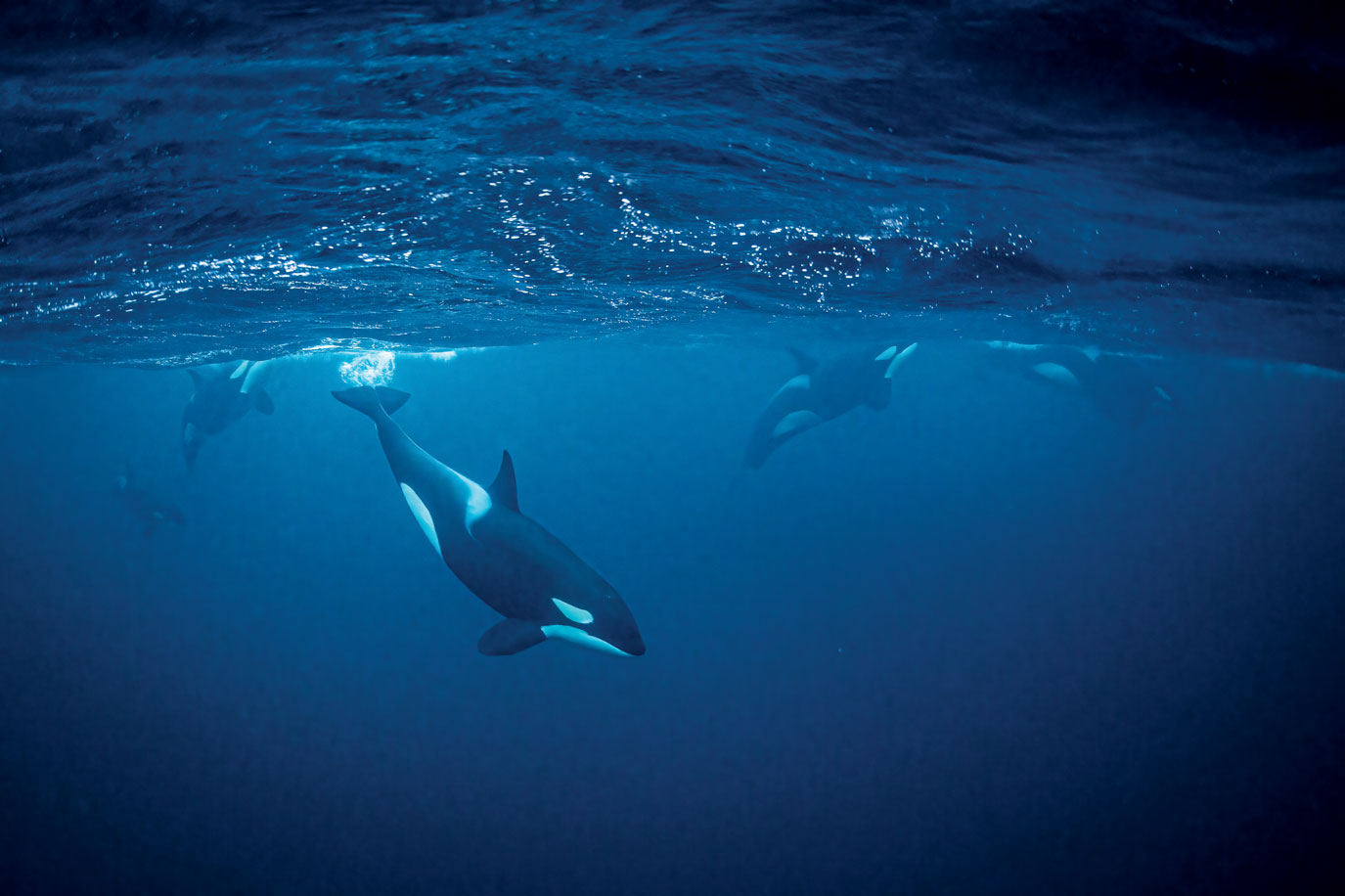
For sailors, the idea of being attacked by whales, which are the largest members of the dolphin family, still feels surreal. Yet for those cruising between Portugal and Gibraltar, orca encounters have become an unsettling reality. Each season, dozens of boats are struck as the whales follow migrating tuna north and south.
“Would I do it again? Yes, but I’d plan differently,” says Osborn. “Instead of worrying about making Gibraltar on schedule, I’d hug the coast and worry less about crew plans.” He later learned that most strikes occur in depths of 20 to 1,000 meters—the same range favored by hunting orcas. “Had we been just a few miles closer to shore, we might have avoided the encounter,” he reflects.
Today, Osborn advises sailors to consult the orcas.pt website for real-time maps of sightings and attacks, stay within the 20-meter contour, and, if orcas appear, disengage the autopilot, keep hands clear of the spinning wheel, and head for shallower water. “Hindsight is 20/20,” he adds, “but next time, I’ll give the orcas their space.”
What This Means for Cruisers and Offshore Sailors
As offshore sailing traffic increases globally, sailors are spending more time in migration corridors used by whales, dolphins, and other marine megafauna. While many encounters remain harmless and unforgettable, collisions can have devastating consequences for both marine life and vessels.
What makes this issue especially important is that most strikes are believed to go unreported, limiting the industry’s ability to understand patterns and improve prevention strategies. Organizations like the Marine Mammal Advisory Group are working to change that through education, live reporting tools, and collaboration with the sailing community.
For cruisers, awareness and seamanship remain the strongest defenses:
- Slow down in migration corridors
- Maintain visual watchkeeping
- Use reporting apps and current sighting data
- Understand local marine mammal hotspots before passage planning
What to Do Next
- Download the Whale Alert App before offshore passages
- Review IMMAs and MPAs along your route
- Monitor marine mammal reports during crossings
- Report all strikes or sightings to help build global data
- Review orca interaction guidance before sailing near Gibraltar or Portugal
Carol Bareuther has written for ALL AT SEA since 2004.
Worth your time?
Thanks — noted.