










Triumph of Trimarans: From Ancient Polynesian Voyages to Today’s Caribbean Cruisers
From Polynesian voyaging canoes to modern trimarans like the Corsair 880 and Neel 43, explore the rich history and cutting-edge design of these ultimate Caribbean cruising boats.

The history of multihulls stretches back to the very roots of maritime exploration, beginning with the Polynesians—masters of the sea—who were among the first to use double-hulled vessels for long-distance voyages. These boats carried them across thousands of miles of ocean, allowing them to establish settlements across the Pacific. Polynesian catamarans and outrigger canoes were prized for their speed, stability, and ability to handle rough seas—traits that remain central to multihull designs even today.
Fast forward to the late 19th century, when multihulls made their entrance into Western sailing with the launch of Nathanael Herreshoff’s revolutionary catamaran Amaryllis in 1876. Herreshoff’s boat blew the sailing world away with its speed, winning races at the Centennial Regatta in New York. It was so fast, in fact, that it was immediately banned from further competition. The Amaryllis proved that multihulls could easily outpace monohulls, ushering in a new era of sailboat design that prioritized speed, innovation, and stability.
The Golden Era: The 1960s and 1970s
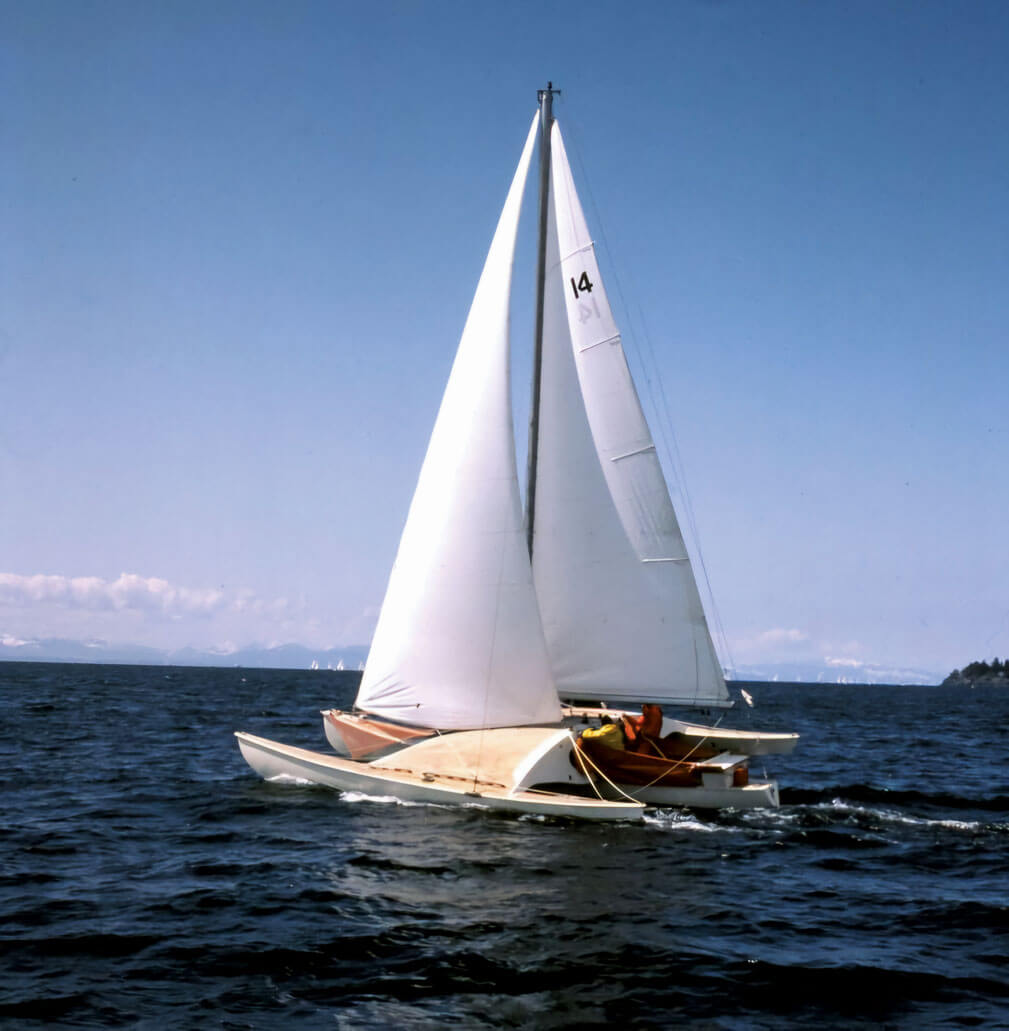
The 1960s and 1970s marked a turning point for multihulls, especially trimarans, with pioneering designers like Arthur Piver, Jim Brown, and Norman Cross at the forefront. These designers created trimarans that combined speed with stability, offering a platform for cruising and racing that appealed to a new generation of sailors. In fact, many enthusiasts of the time built their own trimarans at home, driven by the dream of high-seas adventure.
Among the most influential designs of this era was Arthur Piver’s Nugget—a 24-foot trimaran accessible to home builders. Simple yet sturdy, the Nugget gave aspiring sailors a way to experience the thrill of multihull sailing on a budget. Piver’s designs were pivotal in popularizing trimarans during this period, and his work sparked a wave of DIY boat-building that introduced multihulls to a global audience.
The Newick Revolution: The Legendary Val
While the 1960s saw the rise of affordable home-built trimarans, Dick Newick took a different approach. He focused on refining performance and seaworthiness—especially for ocean racing. Newick’s boats became icons of multihull sailing, blending simplicity with speed and durability.
The legendary Val, a 31-foot trimaran, is perhaps Newick’s most famous design. Val gained widespread recognition after finishing first in her class during the 1976 OSTAR (Observer Single-Handed Trans-Atlantic Race). What made Val stand out was her perfect balance between lightweight construction and incredible seaworthiness, making her ideally suited for Caribbean waters. With Val’s fine hulls that minimized drag and her lightweight design, she could easily handle tricky passages between islands, making her a favorite among Caribbean cruisers.
The Modern Masters: Nigel Irens and Chris White
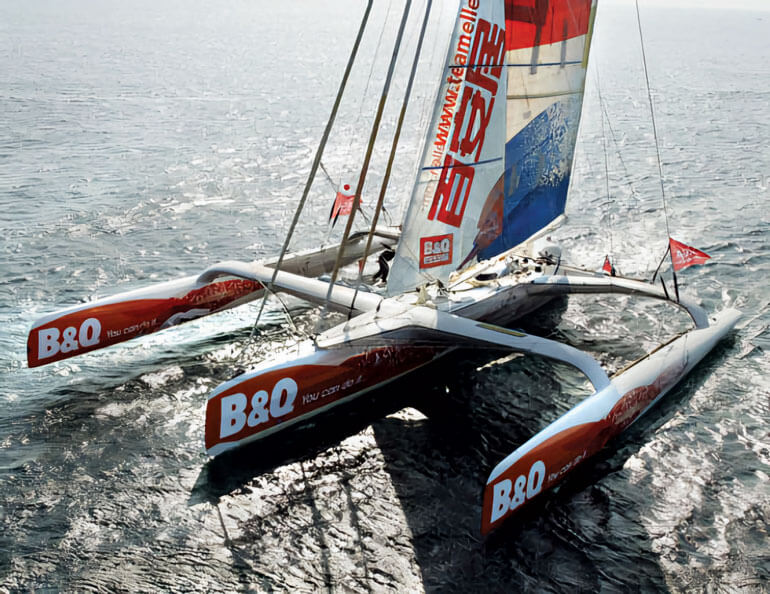
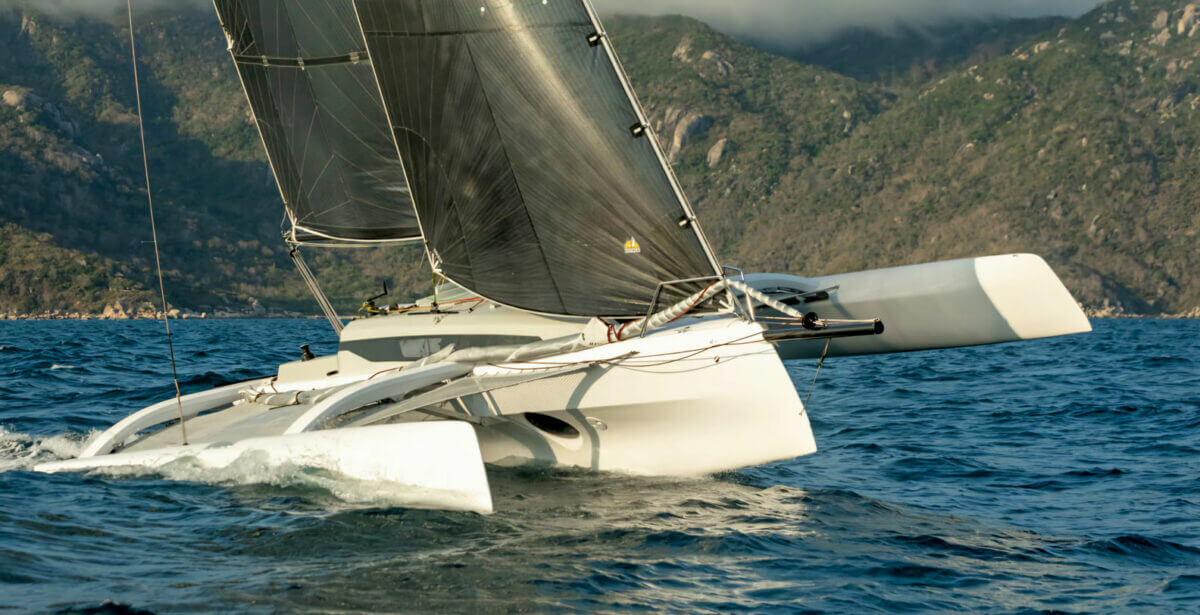
As multihull design progressed into the 1980s, designers like Nigel Irens and Chris White pushed the boundaries of trimaran performance even further. Irens, famous for his record-breaking racing trimarans like B&Q/Castorama (sailed by Ellen MacArthur), showcased just how fast and efficient multihulls could be, thanks to lightweight materials like carbon fiber.
While Irens focused on speed, Chris White developed designs that catered to those seeking comfort without sacrificing performance. His Atlantic series trimarans, such as the Hammerhead, combined spacious living areas with the performance expected of a racing boat. This blend of livability and speed made White’s designs particularly attractive to long-term cruisers. The Hammerhead 54, for instance, could cover long distances at pace while providing the space and comfort needed for extended stays aboard—ideal for cruising the Caribbean.
Modern Cruising Trimarans: The Corsair and Neel Trimarans
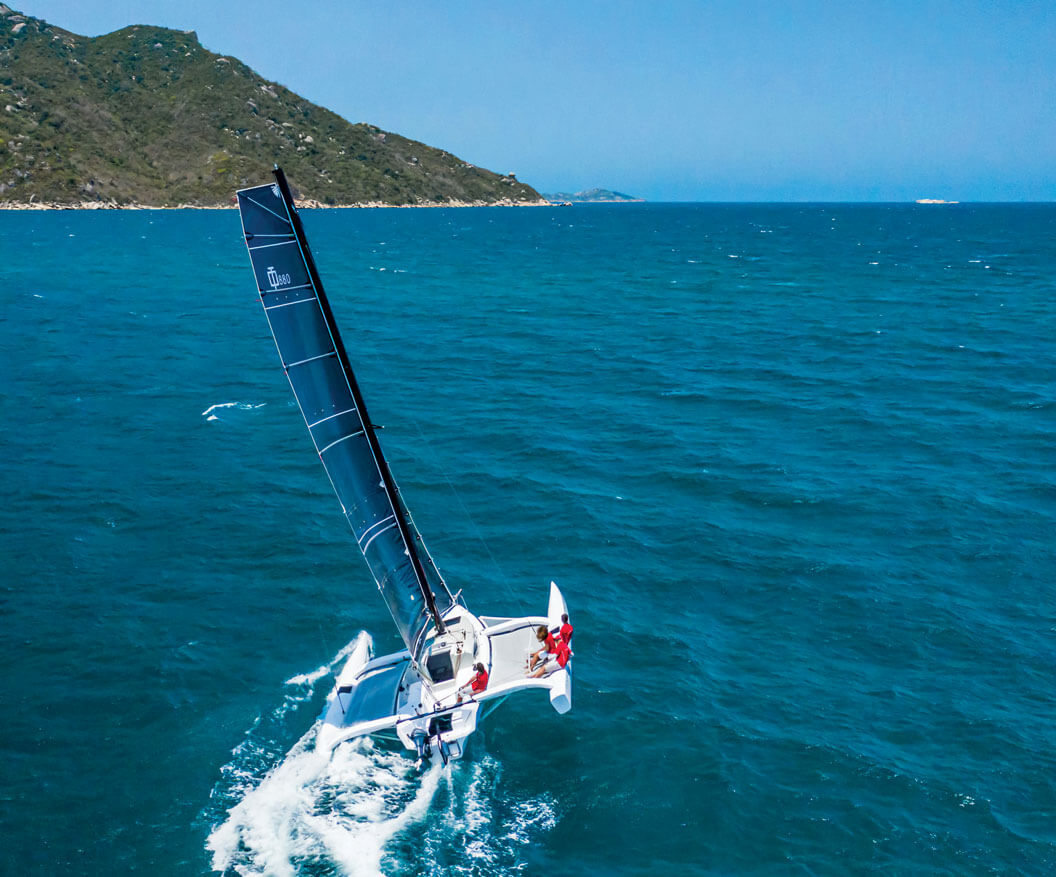
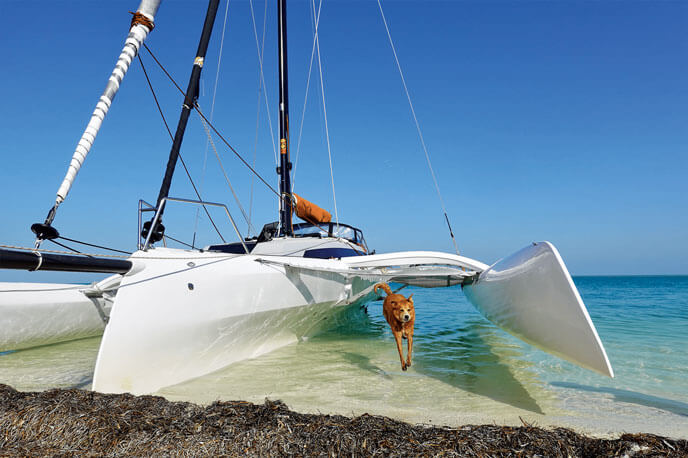
Today, modern cruising trimarans like the Corsair 880 and the Neel 43 are setting new standards for versatility and comfort. The Corsair 880 is a compact yet spacious trimaran, designed for easy transport and storage. It offers impressive living space for its size and can sail at speeds well above 10 knots, making it a great option for sailors exploring the Caribbean’s shallow waters and close islands.
On the larger end, the Neel 43 takes trimaran design to a luxurious new level. At 43 feet, it offers spacious cabins, a full galley, and ample lounging areas. Yet, despite its size, the Neel 43 can still reach speeds of 15 knots or more, providing a smooth ride even on long passages. Its superior upwind performance gives it an edge over catamarans when navigating the Caribbean’s varied conditions.
Conclusion: Trimarans—The Ultimate Caribbean Cruising Boat
So, why choose a trimaran for Caribbean cruising? The answer lies in their perfect blend of space, comfort, and performance. Trimarans provide the large platforms and stability of a catamaran, but with better upwind performance and speed. In the Caribbean, where trade winds often blow strong from the east, this upwind ability makes a big difference in how fast and comfortably you can move between islands.
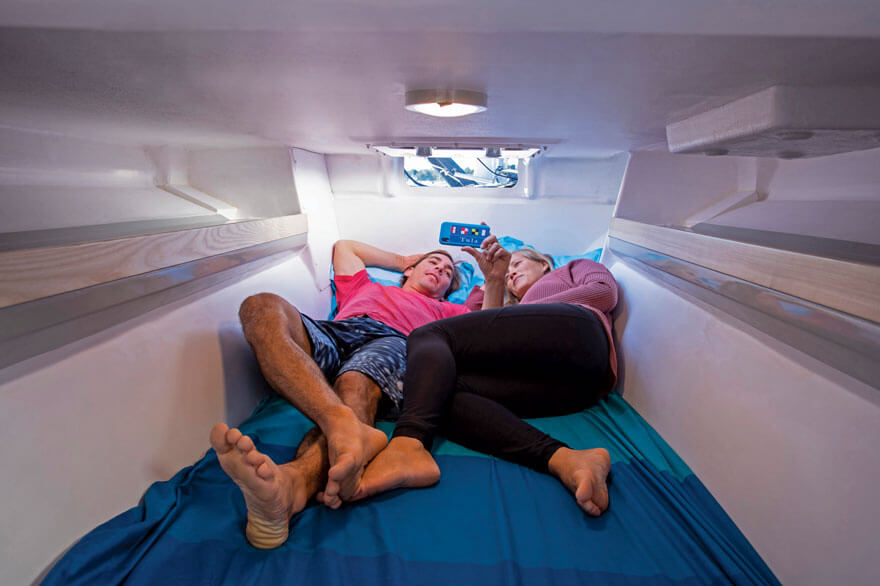
When anchored in a calm bay, a trimaran’s stable platform gives you ample room for relaxing, entertaining, or prepping gear for water activities. And when it’s time to set sail, the trimaran’s speed and maneuverability make for quick and comfortable island hops.
From the days of Polynesian voyaging canoes to today’s sleek, high-performance designs like the Corsair 880 and Neel 43, trimarans have evolved into the ultimate cruising machines. If you’re looking for the best of both worlds—space and speed—you’ll be hard-pressed to find a better option for Caribbean cruising.
Chris Burke is a broker with BVI Yacht Sales, based in Barbados, and specializes in getting boats sold across the Caribbean. Contact him at [email protected]
Chris Burke has written for ALL AT SEA since 2024.
Worth your time?
Thanks — noted.