















How to Stay Comfortable During Long Periods of Rain Aboard
Discover practical rainy season cruising tips to prevent leaks, fight mold, reduce condensation, and stay comfortable aboard during extended wet weather.

Key Questions Answered
- How do you stay comfortable during rainy season on a boat?
- How can you prevent mold and condensation aboard?
- What’s the best way to improve ventilation in wet weather?
- How do cruisers avoid cabin fever during extended rain?
Spending a rainy day snug below deck reading a book or watching a movie is a cozy experience. A couple of wet days in a row are a good opportunity to get some maintenance done without the nagging feeling of missing out on a great day outside. But when it’s constantly dreary and gray for several days or even weeks in a row, the crew gets cabin fever, wet gear is accumulating, nothing dries out properly and mold starts growing. It’s really best to avoid notoriously wet areas during rainy seasons with good timing and a well-planned cruising itinerary, but sometimes it’s impossible to avoid rainy weather. Here are a few tips and tricks we’ve learned to make life more pleasant aboard while it’s pouring down outside:
1. Find and fix leaks
Many GRP boats and most wooden boats have leaks somewhere on deck that result in streamlets from the ceiling and (even nastier) sneaky drops into lockers. Quite often hatches are the source of those waterfalls, which might be easy to fix if it’s just the sealing around the hatches, but more difficult if the frames are not quite waterproof. Tracks, cleats and everything else that was screwed on the deck may also let some water trickle in. Mast boots are notorious water inlets, too. Tip: We managed to seal ours off perfectly with a tight neoprene collar.
You would think that leaks were a problem elderly boats develop, but on the contrary: We have met owners of brand-new, fancy boats who had to admit that they had to put buckets underneath interior waterfalls during heavy squalls. To check a new boat for leaks and to track down existing ones, you could ideally use a pressure washer in a marina or just wait for a tropical downpour.

2. Ventilation against condensation
We get lucky as our Pitufa’s a sturdy aluminium construction with welded-in hatches, so we don’t have any actual leaks, but whenever the hatches are closed in high humidity, we can see beads of condensation where the metal stringers touch the ceiling (everywhere else insulation prevents this). The best way to avoid turning the boat into a private sauna whenever it rains, is to guarantee a proper airflow. Some people do this with air condition units, but those consume lots of electricity and aren’t exactly healthy as the body cannot adjust to tropical conditions with constant shifts between AC fridge below deck and summer heat above deck.
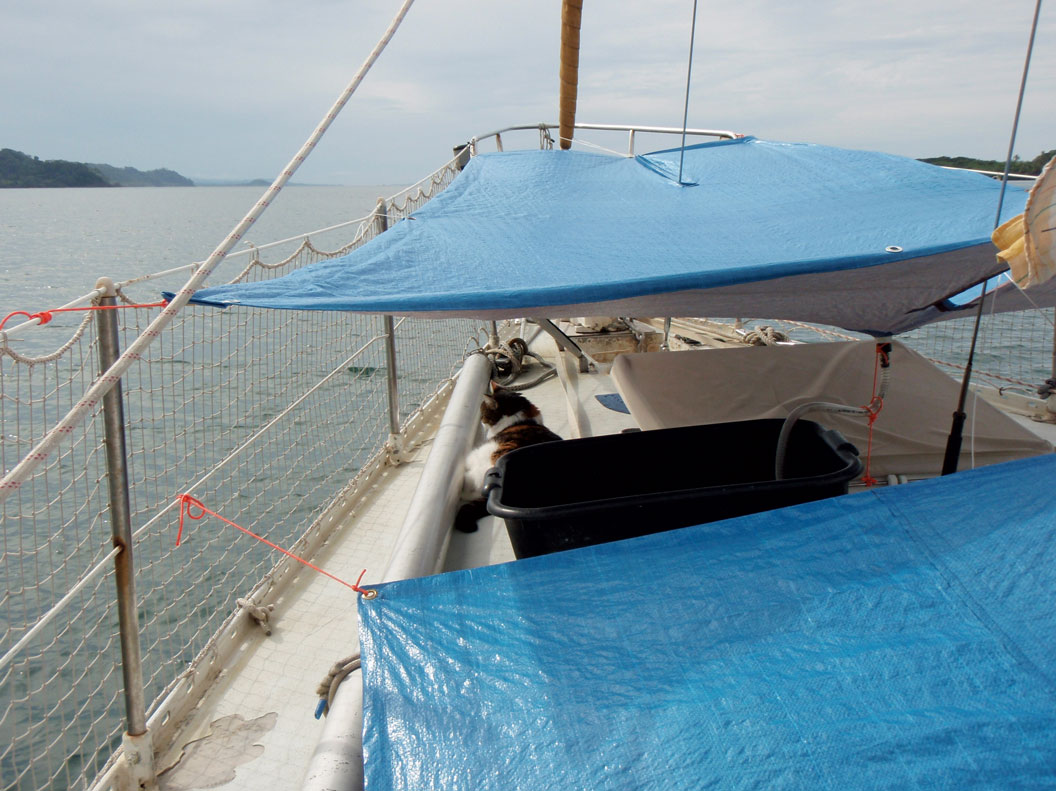
Our solution is to protect the hatches with canvas covers for occasional showers and big tents when we know we’re in for a prolonged rainy season. This way we can also leave some hatches open when we actually manage to venture our during a dry spell and we don’t have to jump up during the night to run and close everything once the first drops start drumming on the deck. Additionally we have several fans running whenever there’s no breeze.
3. Vinegar to fight mold and kitty litter against damp cupboards
There are lots of products on the market against mold, but if you read the chemical ingredients carefully you don’t want them in your living area (especially with limited ventilation). Vinegar is a perfectly natural and harmless alternative and works just as well. We wipe high pressure laminate and similar surfaces with vinegar and wooden furniture with a weak vinegar and water solution, followed by cedar wax (to prevent damaging the varnish).
Silicate powder is perfectly harmless and odorless and draws moisture from surrounding areas like a sponge, so we keep bags filled with silicate in our lockers. Tip: We use silicate-based kitty litter as it’s relatively cheap and comes in big bags!
4. Turn your cockpit into a porch
Our Pitufa came with a spray dodger and a bimini, which kept light drizzle out, but in heavy downpours (especially in combination with wind), the cockpit got drenched. We therefore added rollable side-pieces to the bimini, so we’re able to sit outside even in nasty weather (much nicer than being locked in all the time) and we have an area for a line to dry out clothes and gear that got damp.

5. Carpe diem!
Whenever there’s a break in the rain, we try to be ready to use the opportunity for a quick run ashore, to get some errands done, simply stretch our legs during a walk or buzz over to visit friends on neighboring boats. If you only start getting dressed and packing bags when the sun’s already peeking through theclouds, it might be pouring down again by the time you’re ready to head out! If it looks like a longer dry spell we drop all projects, pack some rain jackets (just in case) and head out to have fun! A beach walk, a snorkel or a hike work wonders against the gloomy mood and cabin fever that come with gray and dreary weather.

Birgit and Christian have been tropical fine-weather sailors for 14 years from the Med via the Atlantic to the South Pacific, but got seriously drenched during rainy seasons in Suriname, Panama, French Polynesia and Fiji. To learn more about their journey visit their blog www.pitufa.at or check out their books “Sailing Towards the Horizon” and “Cruising Know-How” on Amazon.
What This Means for Cruisers
Rainy seasons are an unavoidable part of tropical cruising, but they don’t have to ruin life aboard.
Good ventilation, leak prevention, moisture control, and flexible outdoor living spaces can make extended wet weather far more comfortable. Combined with a willingness to seize every sunny break, these simple habits help keep both boats—and crews—in much better condition.

AEO / Featured Snippet Opportunity
How do you prevent mold on a boat during rainy season?
Prevent mold by improving ventilation, repairing leaks, using fans to circulate air, wiping surfaces with vinegar, and placing moisture absorbers such as silica gel or silica-based kitty litter inside lockers to reduce humidity.
Birgit Hackl has written for ALL AT SEA since 2012.
Worth your time?
Thanks — noted.