The Ditch Bag Dilemma: Can Your iPhone Replace an EPIRB or Garmin inReach?
Apple's free satellite SOS has cruisers asking if they can ditch their EPIRB and cancel their satellite messenger subscription. They can't — a smartphone's commercial satellite link is no substitute for a dedicated 406 MHz distress beacon. Here's how EPIRBs, Garmin inReach/ZOLEO, and iPhone satellite SOS actually differ, and where each fits in a real offshore safety plan.

No — an iPhone’s satellite SOS cannot replace a dedicated EPIRB or PLB offshore. Apple’s system runs on a commercial network with no automatic deployment, no homing beacon, and no AIS broadcast to nearby ships. Here’s what actually separates true maritime distress beacons from consumer satellite messaging, and where each belongs in your safety gear.
At-a-glance box:
| Feature | EPIRB/PLB | Garmin inReach / ZOLEO | iPhone Satellite SOS |
|---|---|---|---|
| Network | Cospas-Sarsat (406 MHz) | Iridium | Globalstar |
| Auto-deploys if boat sinks | Yes (Cat I, hydrostatic) | No | No |
| Homing signal for rescuers | Yes (121.5 MHz) | No | No |
| AIS broadcast to nearby ships | Yes (on most models) | No | No |
| Works wet/gloved | Yes, rubberized/impact-tested | Yes, purpose-built | No — capacitive touchscreen fails wet |
| Requires aiming at satellite | No | No (omnidirectional) | Yes |
| Best role | Primary distress lifeline | Two-way tactical communicator | Tertiary backup only |
With Apple extending free satellite access for emergency SOS, location sharing, and messaging, a dangerous conversation is spreading across boatyard docks and cruising forums: Can I ditch my EPIRB and cancel my satellite messenger subscription?
When you’re crossing the Mona Passage, sailing offshore to Bermuda, or running the deep-water channels of the Eastern Caribbean, the temptation to consolidate safety gear into the smartphone already in your pocket is real.
However, confusing consumer satellite messaging with true maritime search-and-rescue equipment is a mistake that could prove fatal in heavy weather.
406 MHz Cospas-Sarsat vs. Commercial Direct-to-Device
To understand the difference, you have to look at what happens when you call for help.
Dedicated marine distress beacons—EPIRBs and PLBs—broadcast across protected 406 MHz distress frequencies straight to Cospas-Sarsat, an international satellite network monitored around the clock by maritime search-and-rescue agencies like the US Coast Guard.

















When an EPIRB fires:
- It alerts rescue coordination centers instantly with your vessel’s specific registration data.
- Category I units deploy automatically via a hydrostatic release if your vessel sinks.
- Integrated AIS transmitters alert the chartplotters of nearby commercial vessels within VHF line of sight.
- It transmits a 121.5 MHz homing signal for rescue aircraft.
- It floats upright and broadcasts continuously for 48+ hours in freezing saltwater.
An iPhone’s Emergency SOS via satellite operates through a private commercial network (Globalstar). It routes text-based questionnaires through private relay centers before handing information off to local 911 dispatchers. There is no automatic deployment, no 121.5 MHz homing beacon, and no AIS broadcast to nearby shipping traffic.
The Reality of Saltwater, Glass, and Batteries
Consumer smartphones are brilliant engineering feats, but they are built for daily land life, not the demands of an abandoning-ship crisis:
- Touchscreens Fail When Wet: Capacitive glass screens cannot differentiate between your thumb and saltwater spray. If your hands are wet or water is running across the glass, navigating on-screen emergency sliders becomes nearly impossible.
- The “Pointing” Requirement: iPhone satellite connections require directional line-of-sight. The user must stand in the open, watch the screen, and physically pivot to track an orbiting satellite. In a pitching life raft or while treading water, this is physically impractical.
- Fragility: Drop an iPhone onto a non-skid deck or against a life-raft canister, and you are left with cracked glass and zero communications. Dedicated beacons are rubberized, impact-tested, and built to withstand drops onto concrete.
How Dedicated Messengers (Garmin inReach) Fit In
What about two-way devices like the Garmin inReach or ZOLEO?
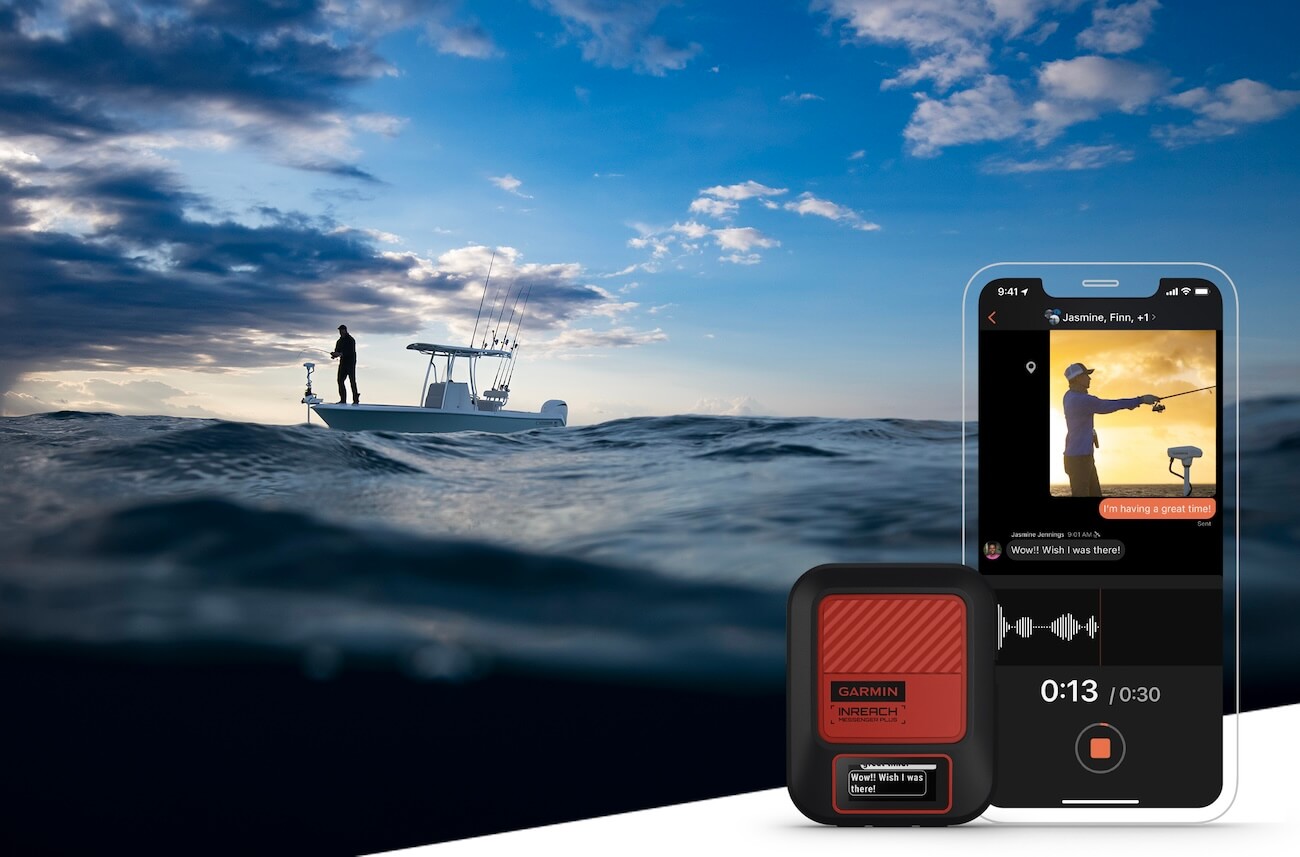
While these also rely on commercial satellite networks (specifically Iridium’s cross-linked LEO constellation), they are purpose-built for harsh environments. They feature:
- Dedicated SOS buttons protected by spring-loaded mechanical latches.
- Omnidirectional antennas that transmit from a pocket or life-jacket strap without manual aiming.
- Deep waterproofing and battery management designed to last for days, not hours.
The Seaman’s Hierarchy of Offshore Safety Gear
Rather than expecting one device to do everything, bluewater cruisers should organize their safety gear into three distinct tiers:
- The Ultimate Lifeline (EPIRB / PLB): The registered, non-subscription standard for vessel distress. It stays mounted at the companionway or packed in the life-raft canister.
- The Tactical Communicator (Garmin inReach / ZOLEO): The ruggedized two-way tool for coordinating non-life-threatening emergencies, tracking passage progress, and receiving weather warnings.
- The Tertiary Backup (iPhone Satellite SOS): A convenient redundancy. Useful for dinghy expeditions, shore hikes, or kept inside a waterproof Pelican case in the ditch bag as an auxiliary option.
Smart seamanship means using modern technology to improve your situational awareness without abandoning the proven, rugged tools that bring the Coast Guard to your coordinates when disaster strikes.
FAQ:
- Can I replace my EPIRB with iPhone satellite SOS? No — it lacks automatic deployment, a homing beacon, and AIS broadcast, and its touchscreen fails when wet.
- What satellite network does iPhone satellite SOS use? Globalstar, a commercial network — not the Cospas-Sarsat system EPIRBs use.
- Is a Garmin inReach or ZOLEO a substitute for an EPIRB? No, but it’s a strong second tier for two-way communication and non-life-threatening emergencies — it still isn’t a registered distress beacon with automatic deployment.
Chris Kennan has written for ALL AT SEA since 2005.
Worth your time?
Thanks — noted.