

















Boat Security Afloat: A Cruising Couple’s Guide to Deterring Thieves
Cruisers Birgit Hackl and Christian Feldbauer share hands-on ways to secure a dinghy, lock up, and rig alarms to deter thieves while cruising.

Keeping an eye on info sources for cruisers like magazines, noonsite, internet forums and regional facebook groups for boaters, hardly a week goes by without some crime reported against yachties somewhere. Most of these incidents are mere opportunistic thefts, but some are premeditated break-ins when the crew is ashore—or worse—asleep aboard and a few even involve violent bodily attacks. Some islands are known to be high-risk and boats either avoid them or take special precautions when visiting, others are considered generally safe, but no matter if you cruise a high-risk zone or a laid-back island nation, it generally pays off to exercise caution and to deter would-be thieves with some simple measures.
Securing the dinghy
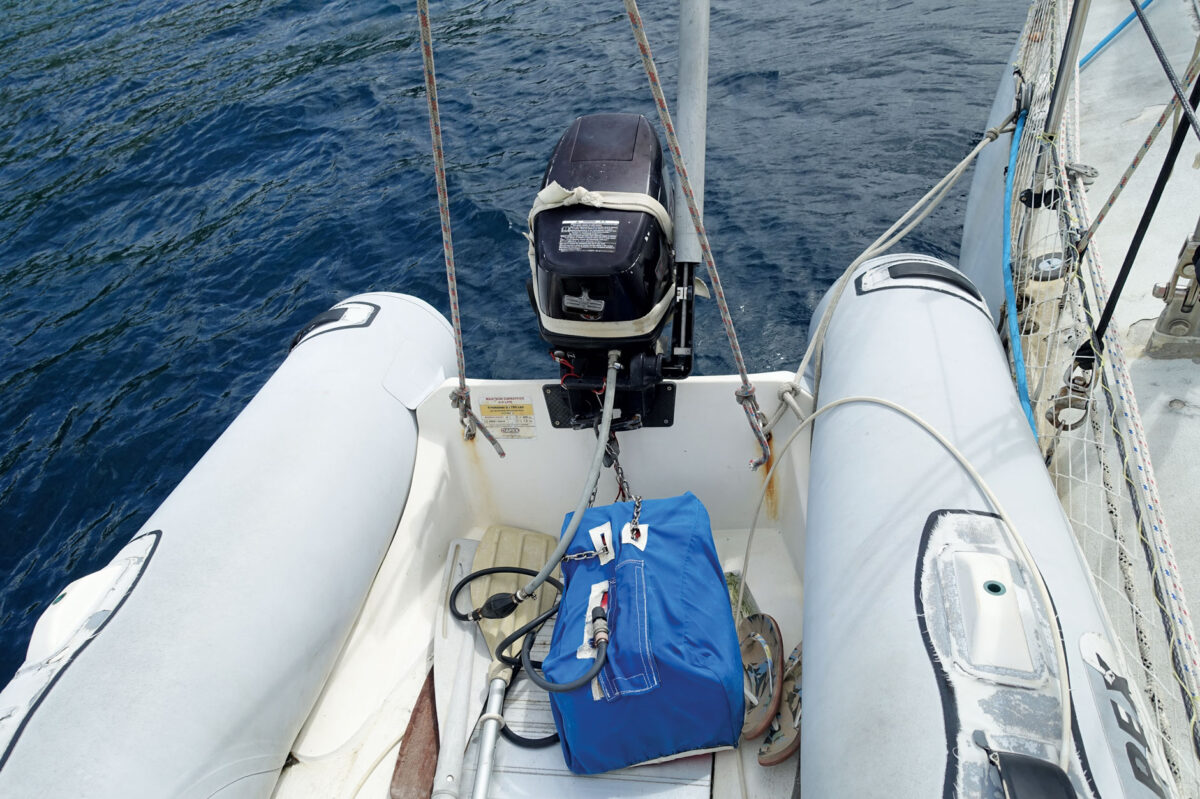
Dinghy and outboard thefts are among the most common incidents. Pulling the dinghy up either on davits or alongside is the most effective way to keep the tender safe at night. Our outboard is secured with a padlock and the fuel tank chained to the outboard. In risky areas we tend to ask around among other cruisers which docks are considered safe and tie up the dink with chain and padlock when leaving it alongside while going shopping or running other errands ashore. Especially on very poor islands leaving shoes or snorkel gear in the dinghy is an invitation for people who don’t own such precious items, but would love to.
Tidying up the decks
Our boat’s not quite big enough for all the stuff the two of us have accumulated over the years and so we tend to leave all kinds of odds and ends like jerry cans, shoes, paddles, buckets etc. on Pitufa’s aft deck. That’s okay on most islands, but when cruising in a risky area we try to tidy up, store small items safely away and secure big ones (like jerry cans) with a steel wire and padlock.

Always lock up
We have made it a general rule to always lock up the boat when we leave her—even if it’s just for a short snorkel or a quick run to another boat in the anchorage. That may seem excessive, but wouldn’t you kick yourself if you left the boat open just this one time only to get home and find laptops and cameras missing? Putting in washboards and a padlock only takes a few moments, blaming yourself afterwards may have a lingering effect of several months (or years) depending on how attached you were to whatever went missing.
In very high-risk areas where nightly visits of machete men have been reported, we also lock the companionway from the inside during the night.
Prevent break-ins
Some types of hatches could easily be cracked open, others would need heavy equipment to make them dodge. If yours are of the former kind, you may consider looking into options to reinforce them. Our hatches are quite heavy-duty, but we have added metal bars across nevertheless, so we can leave them open for ventilation when we leave the boat to go ashore or when we close up for the night. We have also fortified the wooden washboards with metal plates, so burglars would need to bring heavy gear and can’t just kick the companionway open.
Lights and alarms
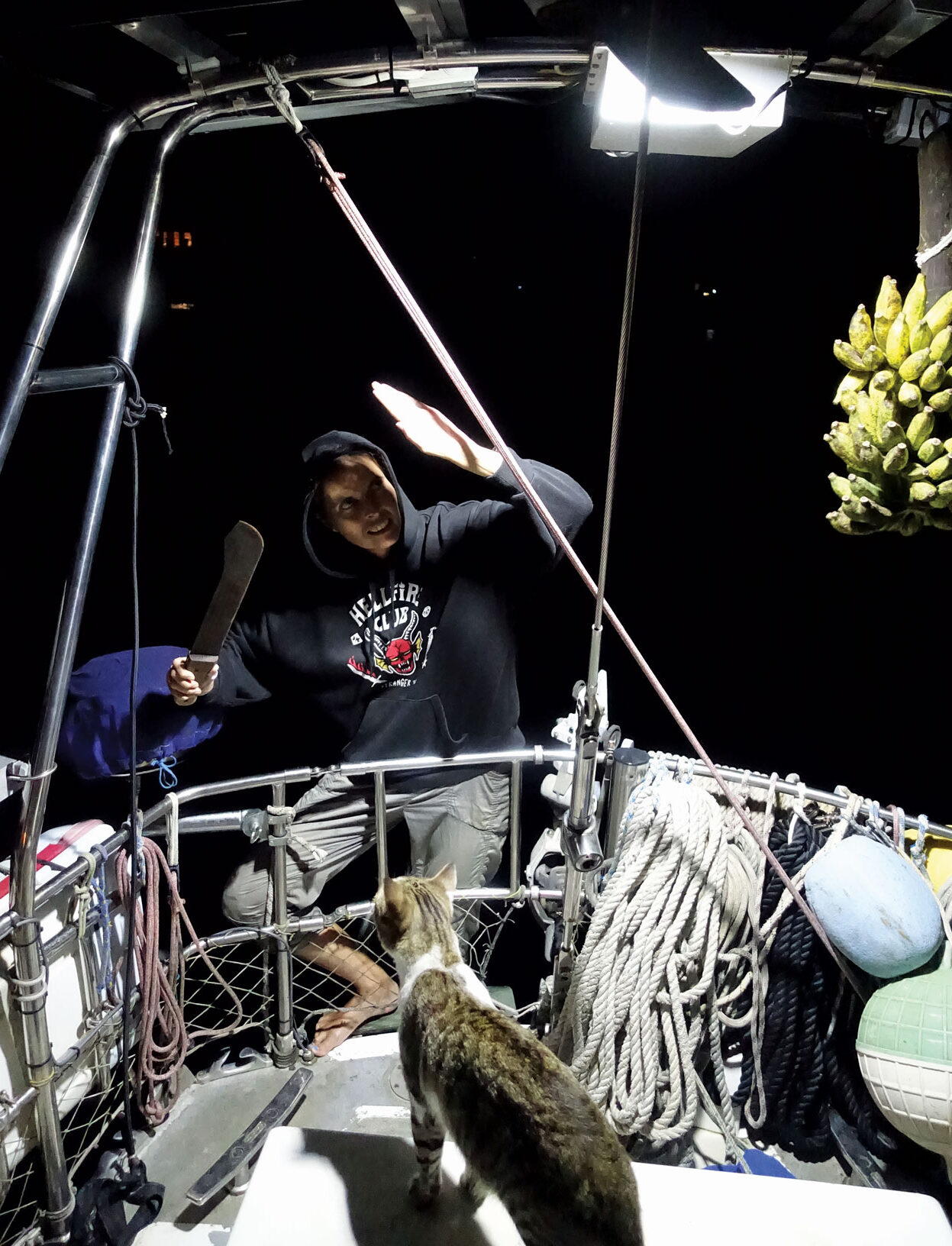
Our first attempts at burglar alarms consisted of self-made tripping wires made from fishing lines crisscrossing the cockpit, which were then connected to empty beer cans. Imagine the constant racket during a breezy, rolly night. We didn’t get any sleep and ripped them off bleary-eyed at 3 in the morning. In the meantime we have installed motion sensors on the radar arch and on the mast, so automatic lights come on when somebody climbs up on the aft deck or over the sides. Fellow cruisers have added sirens that go off on motion sensors as well, but you want to make sure that those are very unlikely to get triggered by harmless moving objects like sheets in a breeze, a flapping hatch cover or the kitten on nightly deck patrol. There’s nothing like the adrenaline rush of a false alarm kicking you out of the bunk in the middle of the night.
Cameras and intruder alarm systems
If you’re into high-tech gadgets you can of course install a fully-automatic burglar alarm system for the boat just like for a residence ashore. We have seen yachts with surveillance cameras that blue-tooth to a laptop and record video footage—very handy when you can show the local policeman a video of last night’s burglar, but of course such systems come at a hefty price. Dummy cameras are cheap in comparison and may also do the trick of deterring thieves—especially when installed prominently with blinky lights drawing attention.
Most countries are very strict about weapons aboard, so make sure to check regulations beforehand if you decide to arm yourself against potential intruders. A little can of pepper spray may also be quite effective in a worst-case scenario of an aggressive intruder and its use is less regulated by authorities. The wisest course of action is certainly to simply avoid confrontations by not leaving anything on display that may attract unwanted eyes. Opportunity makes the thief!
Christian and Birgit have been cruising on their S&S 41 “Pitufa” since 2011. Visit their blog www.pitufa.at for more info and photo galleries or check out their books for travel reports, DIY tips, tricks and anecdotes. “Sailing Towards the Horizon”, “On Velvet Paws Towards the Horizon” and “Cruising Know-How” are available on Amazon!
Birgit Hackl has written for ALL AT SEA since 2012.
Worth your time?
Thanks — noted.