Marquesas or Gambier? Two Gateways Into French Polynesia From Panama
Every cruiser bound from Panama for French Polynesia defaults to the Marquesas — but the Gambier archipelago, 23 degrees south and off the beaten track, is a real alternative landfall. Birgit Hackl and Christian Feldbauer, who spent nine years cruising the region, break down the passage, anchorages, supplies, and activities for both.

The Caribbean is a great, diverse cruising area, but many cruisers are at some point tempted to go through the Panama Canal to explore the vast Pacific. So much indigo blue water, so many destinations, but where to start? The puddle-jumper fleet heads to the mountainous island chain of the Marquesas each year and most sailors don’t even know that there is another starting point to explore French Polynesia. Further south and off the beaten track lies the Gambier archipelago that combines mountainous islands and low lying islets (motu) within one protected lagoon.
THE PASSAGE
Marquesas
Most boats sail towards the Marquesas between March and May in order to reach French Polynesia at the end of the cyclone season in May. At this time of the year the sail to the Marquesas (located between 8 and 10 degrees south) is supposed to be a broad reach in steady tradewind conditions, but boats still encounter squalls and rough conditions as well as calms depending on the location of the ITCZ. Most yachts take about 3 weeks for the 2.900 nautical miles. Atuona (Hiva Oa) is the port of entry in the southern group, Taiohae (Nuku Hiva) in the northern group.
Gambier
The Gambier archipelago lies at 23 degrees south on the fringe of the tropics and experiences proper seasons, so it is advisable to head there early in the year to enjoy the islands before cold winter weather sets in (June to October). Rikitea, the main town on the biggest island Mangareva, is a port of entry. The distance to the Gambier is almost the same as to the Marquesas, but the route is considered to be more challenging as the wind is mostly on the beam and when depressions move by in the south, fronts with strong winds and high swell are not uncommon. Easter Island and Pitcairn are tempting stop-overs south of the direct route from Panama or Galapagos, but getting there requires sailing even closer to the wind.

ANCHORAGES
Marquesas
The eight mountainous islands of the Marquesas don’t have lagoons and the swell enters most anchorages unhindered, so a stern anchor is recommended against the constant rolling. During the high season (May, June) many anchorages are crowded and you may have to anchor far out in deep and/or unprotected waters in some places. Dinghy landing can be difficult when the southerly swell is up, but watching the waves break on the steep volcanic shores is quite impressive.
Gambier
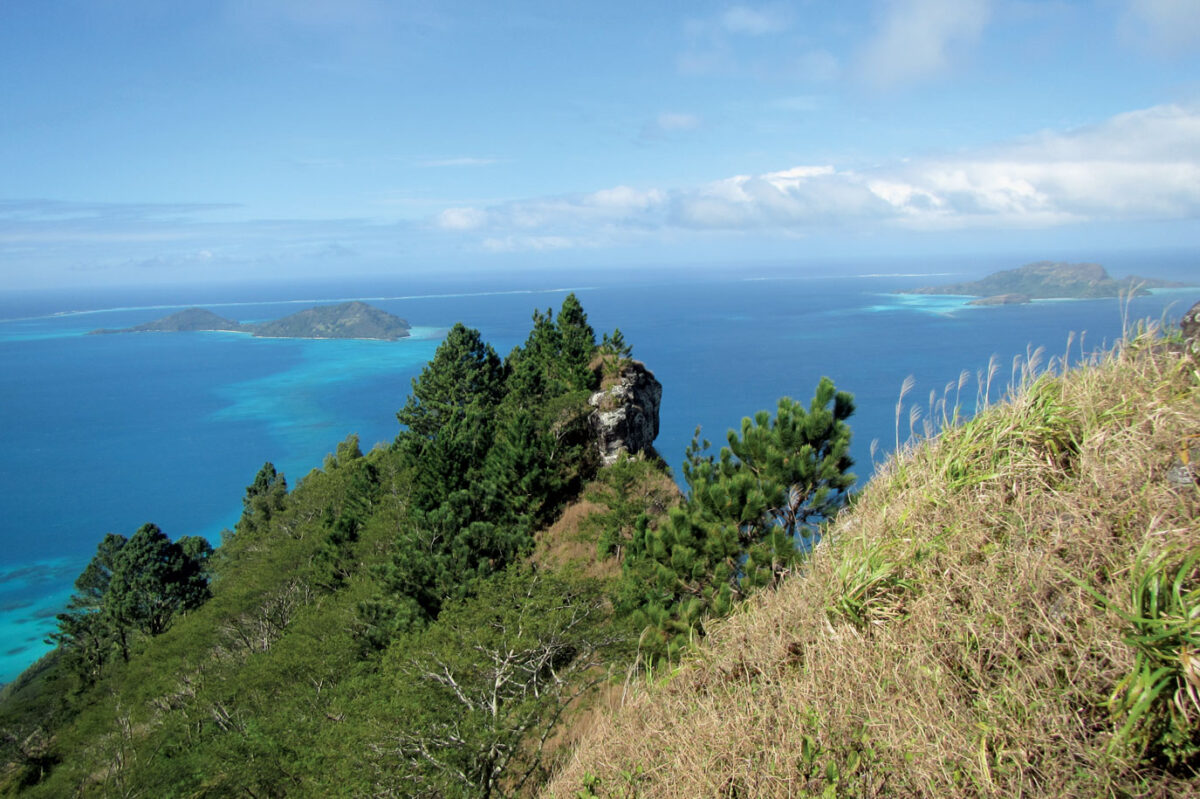
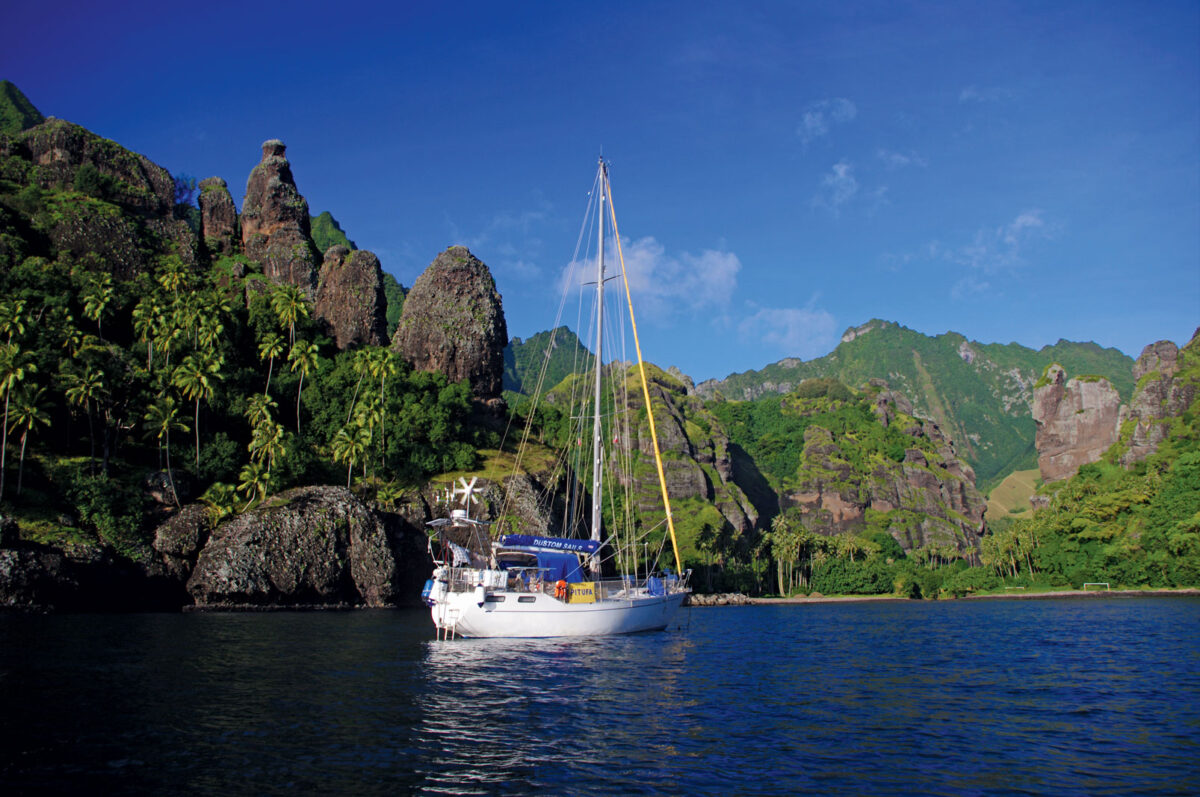
The whole archipelago is surrounded by a barrier reef that keeps out most of the swell. The anchorages around the high islands get additional protection from fringing reefs. The bottom in these bays is mainly muddy sand, so the holding is excellent, but especially after strong rainfalls the water can be quite murky. There are also countless turquoise anchorages off the motu on the barrier reef, foreshadowing the Tuamotu experience, but with the extra of a breathtaking panorama of the mountainous islands in the background.
SUPPLIES
Marquesas
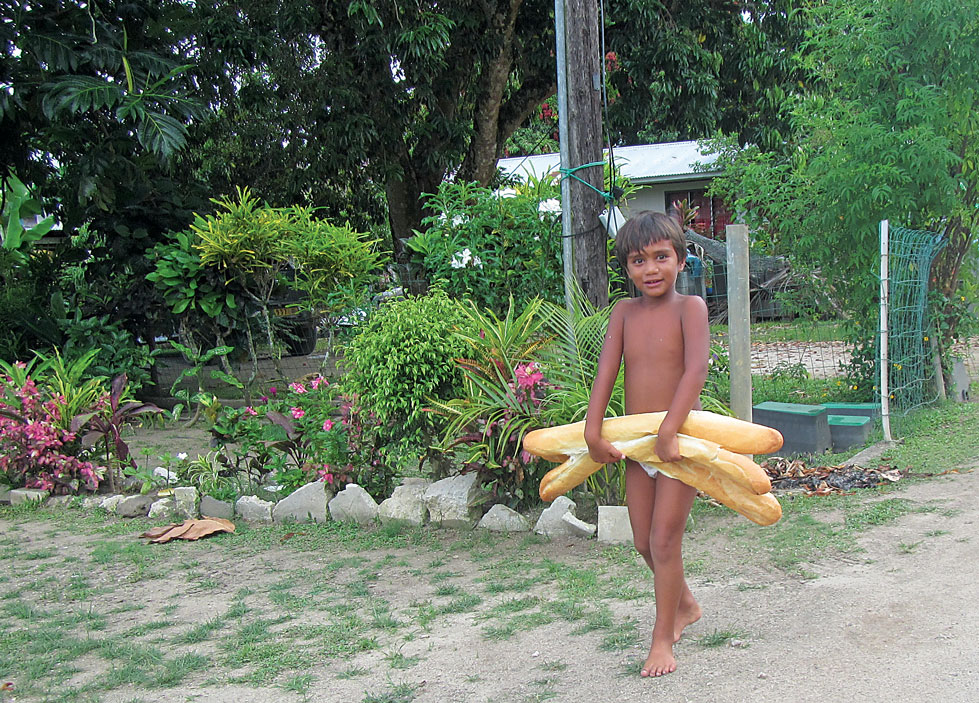
You find well-stocked supermarkets on Nuku Hiva, Hiva Oa and Ua Pou and small shops on the other islands. The daily veg and fish market in the capital Taiohae (Nuku Hiva) offers a wide range of produce. On the bigger islands restaurants and ‘roulottes’ (snack vans) serve lunch and dinner. Fuel can be bought at the gas station on the main dock in Taiohae, at the station in Atuona harbor, or directly from supply ships.
Gambier
The tiny shops in Rikitea have a range of basic supplies, but fresh things are quickly sold out after the arrival of the long-awaited supply ship. There is no vegetable market, but it’s possible to get local produce from friendly locals. Apart from a little ‘Snack’ and a Pizza takeaway (weekends only) in Rikitea, there are no restaurants. Diesel is only available directly from supply ships, gasoline can be bought at one of the minimarkets. Surprisingly enough in modern times there is still no ATM in the Gambier, but most shops take credit cards by now.
ACTIVITIES
Marquesas
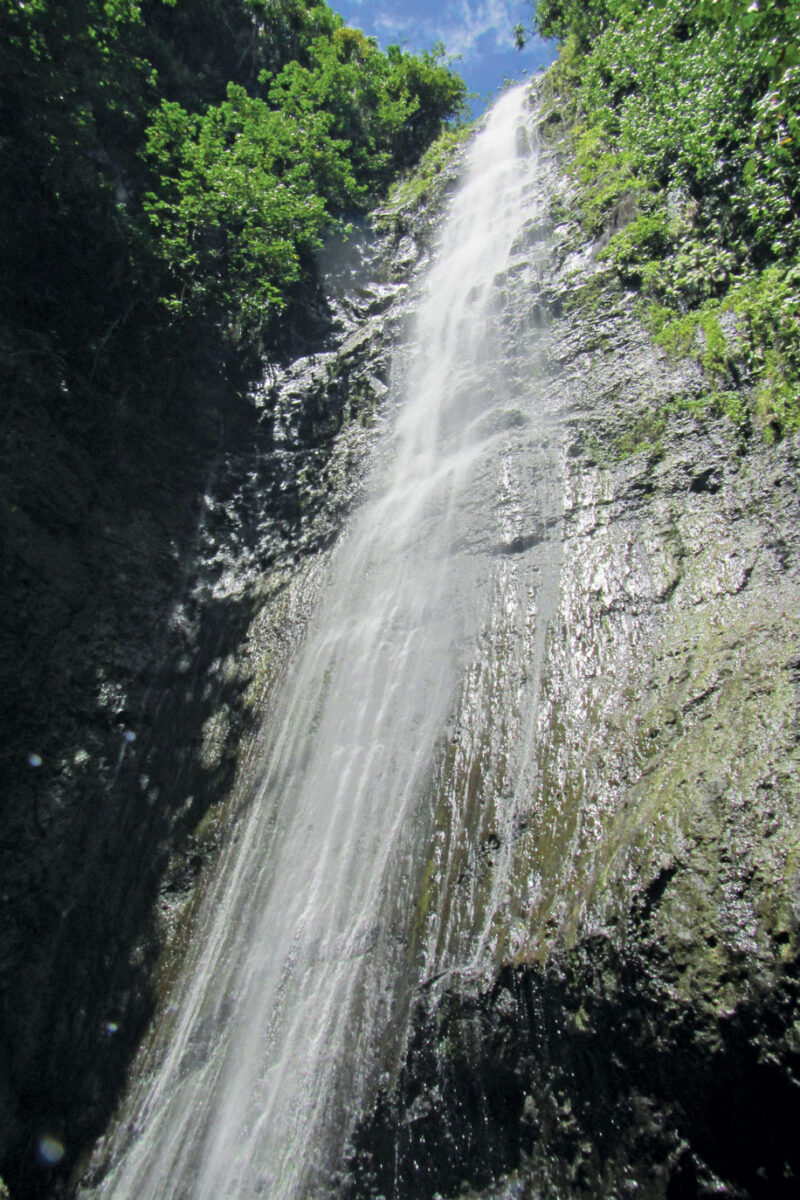
The volcanic mountains with rugged peaks and spectacular pinnacles are a hiker’s delight. Tracks lead through lush, tropical vegetation to waterfalls and high up the mountains where the climate is cool with almost alpine landscapes. Signs point to ancient ritual sites with tikis (figures carved from wood or stone). It is advisable to put on a layer of insect repellent combined with coconut oil before venturing ashore, because swarms of nonos (tiny, biting flies) and mosquitos await the unprepared tasty cruiser, but the generosity and hospitality of the locals makes up for their bloodthirsty bugs. There are few beaches around the islands and the dark, usually murky water is not very appealing for snorkeling.










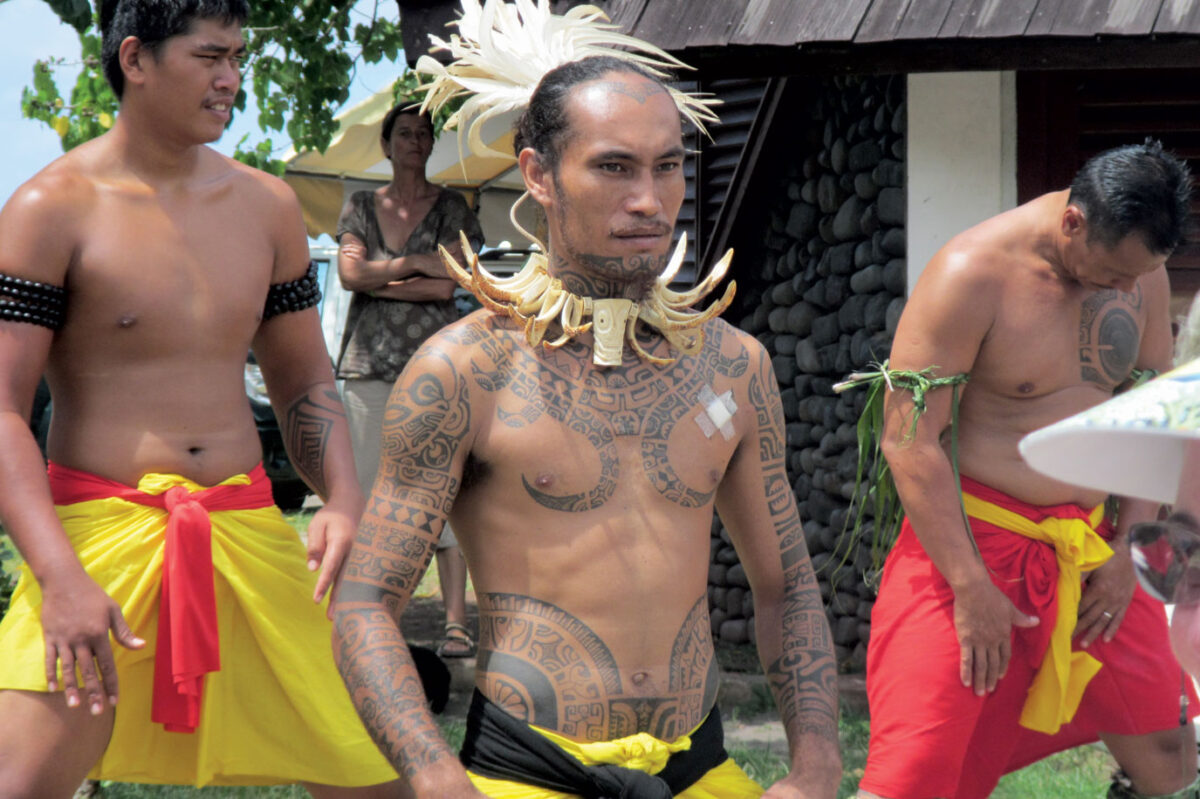
During the 1980s the Marquesas experienced a revival of their culture that had almost been wiped out during the years of colonialism and missionary work. Every second year in December a cultural festival takes place on one of the islands, a must-see if you’re in the area! Large parts of the population arrive from the other islands and foreign visitors are welcome to experience the powerful culture of the Marquesas with singing, dancing, drumming and traditional handicraft.
Gambier
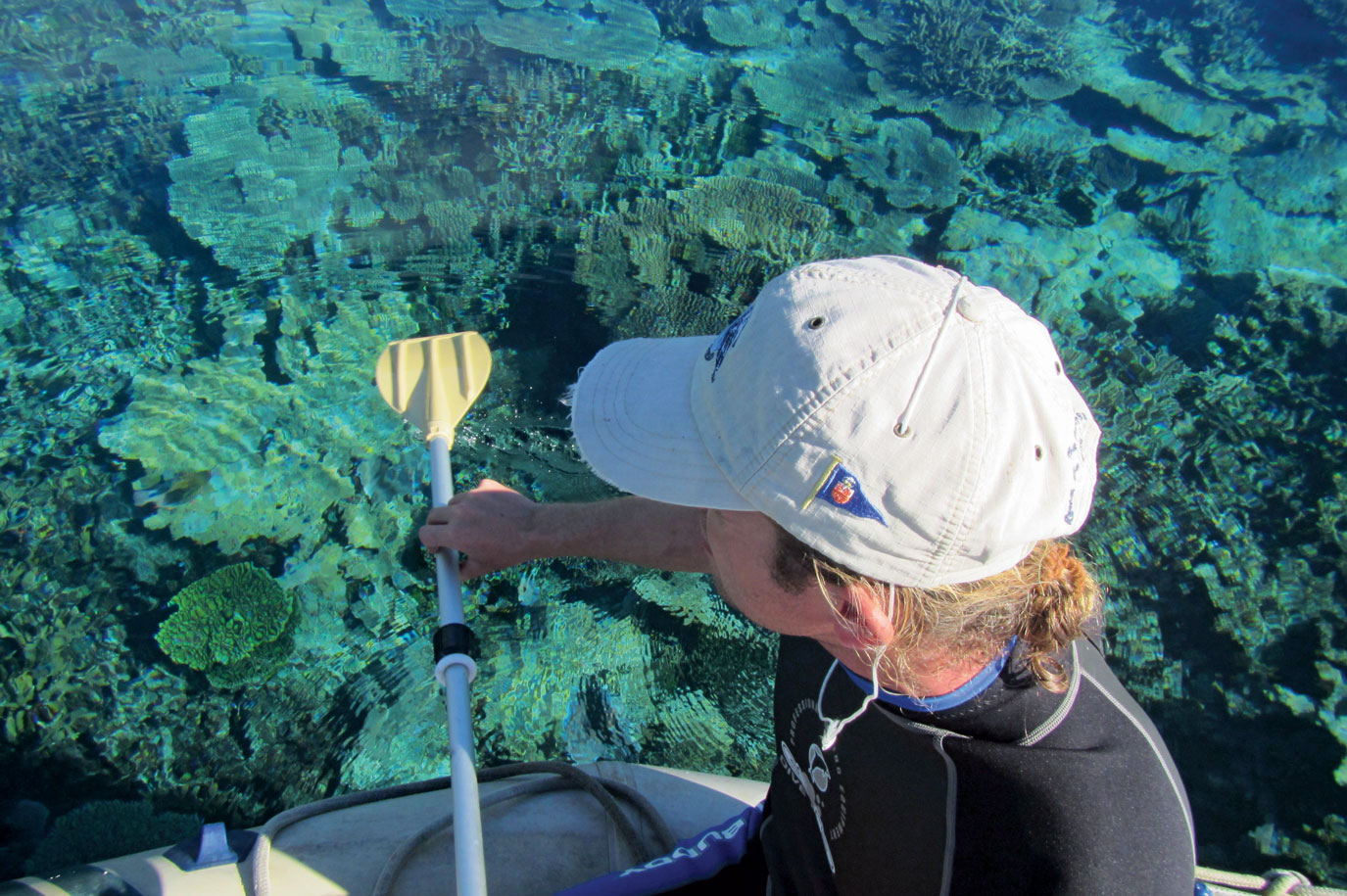
Hikers find tracks up the pine-forested slopes of the main island Mangareva, on the other high islands a machete is necessary to clear your own path to be rewarded with spectacular views of the turquoise lagoon. Pristine coral teeming with colorful fish in crystal clear waters make the islands a perfect spot for snorkeling or diving. Around the high islands and on the outer motus white, golden, and dark beaches invite to collect shells or have a beach BBQ.
The famous black pearls are grown in the clear lagoon of the Gambier and then sold as ‘Tahiti pearls’. The pearlfarm buoys are a hazard to navigation in the lagoon, but visiting a pearlfarm is an interesting opportunity to watch how the pearls are harvested.
Can’t decide? Get a long-term visa (apply ahead in your home country) and explore both island groups! Taking climate and seasons into consideration it makes sense to start early in the year with the Gambier, go up to the Marquesas next and then through the Tuamotus on to Tahiti and the Society Islands. Another option is of course to spend the relatively safe cyclone season in either archipelago.
Birgit Hackl and Christian Feldbauer explored French Polynesia thoroughly for 9 years, before continuing westwards. Cruising guides for the area can be found at www.pitufa.at. Check out their books on Amazon: “Sailing Towards the Horizon”, “Cruising Know-How” and “On Velvet Paws Towards the Horizon” are available as e-book, paperback or hardcover.
Birgit Hackl has written for ALL AT SEA since 2012.
Worth your time?
Thanks — noted.