NOAA Schedules Return of 72- and 96-Hour Offshore Surface Forecast Charts After Mariner Pushback
NOAA has scheduled the return of its 72- and 96-hour offshore surface forecast charts for September 30, six months after suspending them mid-hurricane-season. SSCA and mariners who pushed for their restoration say the products aren't back yet — just scheduled to be.

Offshore cruisers who lost a familiar passage-planning tool this summer have a return date. The National Weather Service has scheduled the Ocean and Tsunami Center’s (formerly the Ocean Prediction Center) 72- and 96-hour surface forecast graphics — suspended since June 1 — to resume Wednesday, September 30, 2026.
The Seven Seas Cruising Association (SSCA) welcomed the news in a September 24 statement, but was careful to note what it doesn’t yet mean: the charts remain offline until the scheduled date actually arrives. “The products have not yet been restored,” the organization said. “They remain suspended until their scheduled return on September 30.”
What Went Away, and Why It Mattered
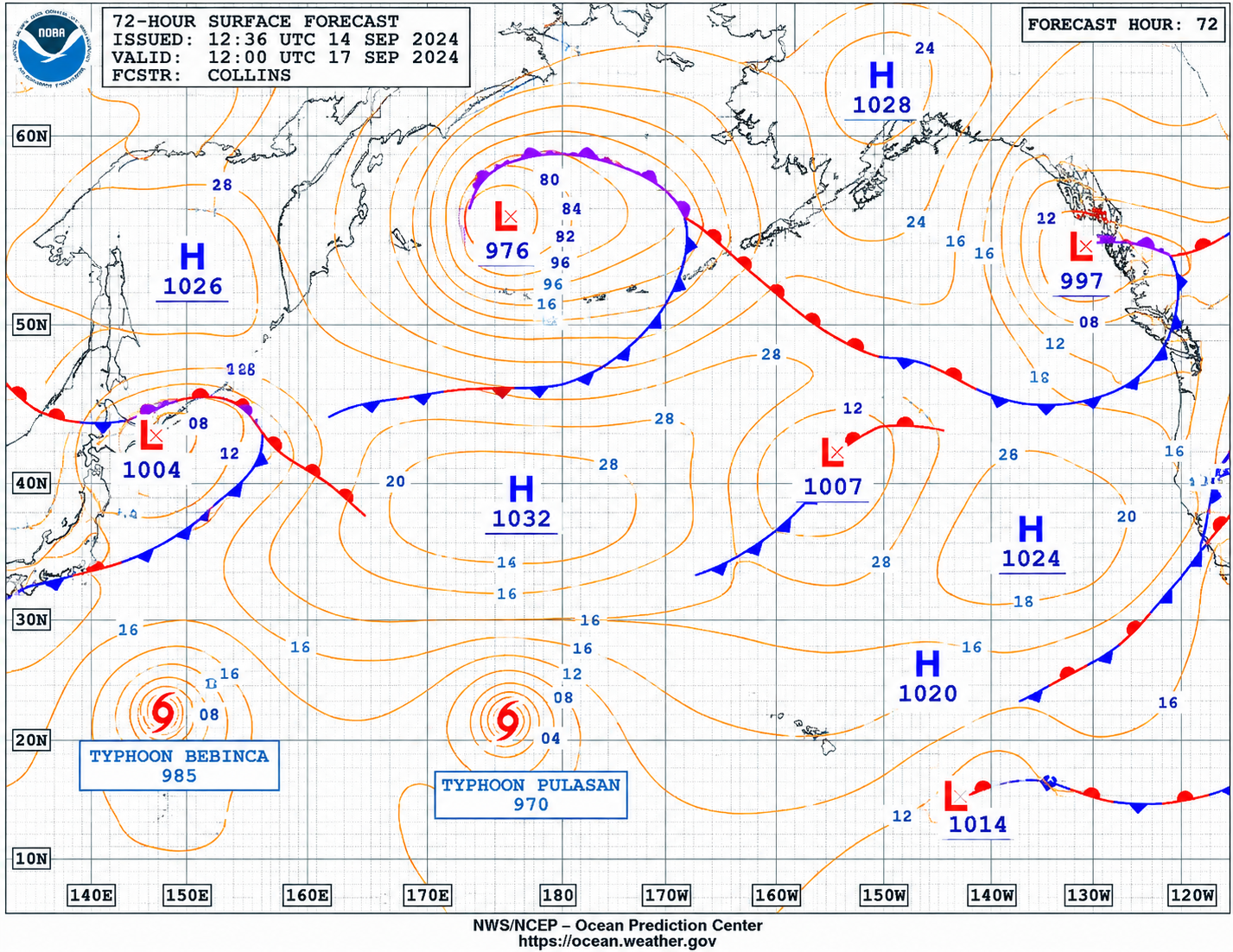
The suspended products were narrow but significant: forecaster-produced 72- and 96-hour surface charts covering the Atlantic, Pacific, and Alaska/Arctic regions — six graphics in total. These aren’t single-point forecasts or raw model output; they’re a trained meteorologist’s read on how pressure systems, fronts, and major marine weather features are expected to organize and move three to four days out, rendered as a chart a mariner can scan quickly during passage planning or heavy-weather avoidance.

Shorter-range OPC products, GRIB-based tools, and the National Digital Forecast Database’s wind, gust, and wave-height graphics stayed available throughout the suspension — this was a loss of the extended synoptic picture, not a blackout of marine forecasting altogether. But for boats already offshore or provisioning for a passage, especially those running on the low-bandwidth connections common at sea, that multi-day view of how a system will develop is exactly the piece a point forecast or a single GRIB field can’t replace. The timing compounded the problem: the suspension ran through the heart of the 2026 Atlantic and Pacific hurricane season and into the run-up to fall offshore passages.
According to NWS Public Information Statement 26-41, issued May 13 and effective June 1, the suspension was tied to “developmental improvements advancing seamless marine” services and “higher short-term organizational and stakeholder priorities.” That official explanation is distinct from an account that circulated among mariners: professional mariner and maritime instructor Jonathan R. Heesch said he was told by OPC staff that the suspension stemmed from staffing shortages, a claim echoed by posters on a Yachting and Boating World forum thread discussing the suspension, where one attributed it to federal staffing cuts. NOAA’s own published notice does not cite staffing as a reason, and that distinction is worth preserving rather than collapsing the two accounts into one.
Mariners and Advocates Pushed Back
SSCA says its leadership — President Joan Conover and Vice President Frank Smith — repeatedly contacted NOAA and the National Weather Service during the suspension, joined by SSCA members, arguing for the practical value offshore sailors place on comparing successive official forecasts and identifying safer departure windows before conditions deteriorate.
The concern wasn’t limited to SSCA. Heesch has said he discovered the missing charts while teaching an advanced weather course to future chief mates and masters and contacted OPC directly to object. On June 27, Professor of Marine Meteorology Nikos Mazarakis started a public petition calling for the charts’ restoration, arguing they’re essential to maritime safety, voyage planning, and the training of professional mariners. And on the YBW forum, sailors discussed missing the products and questioned whether “temporary” would hold.
NOAA has not attributed its decision to restore the charts to SSCA, Mazarakis’s petition, or any other individual voice — a point SSCA’s own statement makes explicitly rather than glossing over. What’s documented is more modest: NOAA suspended the products, a range of mariners and maritime professionals said so publicly and directly to the agency, and NOAA then announced a restoration date. Cause and effect beyond that isn’t something either side has claimed.
What Cruisers Should Do Between Now and September 30
Until the scheduled return date, SSCA is advising mariners to keep relying on the marine-weather products that stayed available throughout — NDFD wind, gust, and wave-height forecasts, shorter-range OPC products, and tropical forecasts — rather than assuming the extended charts are already back. Once September 30 arrives, the organization recommends confirming the six products are actually posting on schedule before folding them back into a passage-weather routine, and, as always, treating no single weather product as sufficient on its own for offshore decision-making.
captain has written for ALL AT SEA since 2020.
Worth your time?
Thanks — noted.