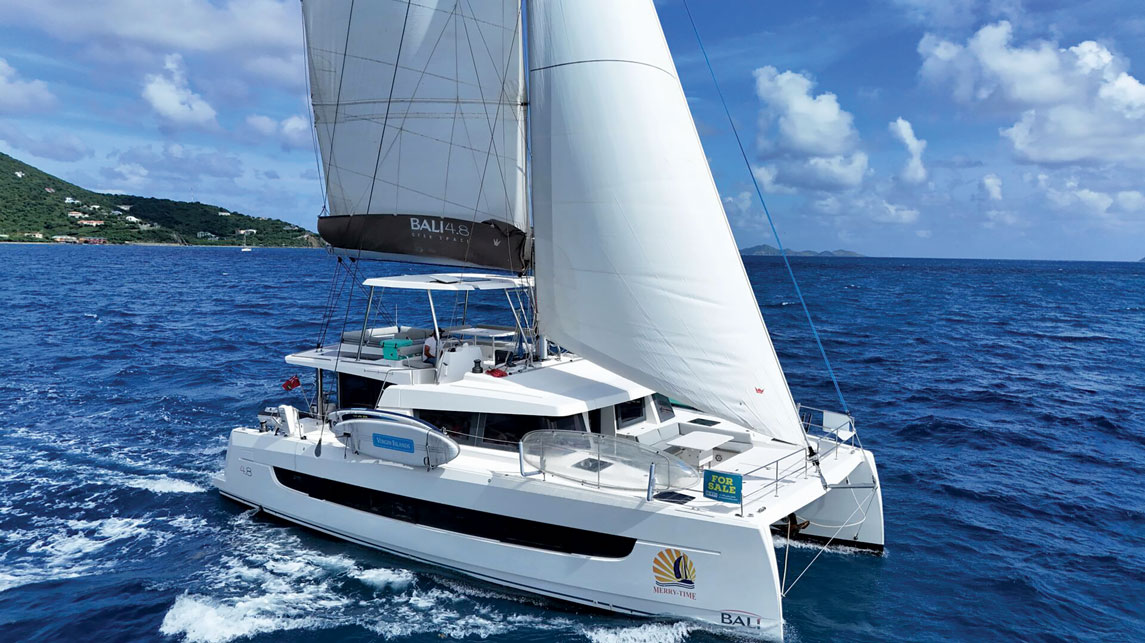
How to Sell Your Boat in the New Caribbean Marketplace
Learn how to sell a boat in the Caribbean market with smart pricing, strong presentation, and the right broker strategy.

Walk any dock from Grenada to the BVI and you’ll notice it — beautiful boats, clean and tidy, well looked after, and “For Sale” signs catching the breeze. The Caribbean market is busy. Listings are posting everywhere throughout the region. This has become one of the most active resale markets in the world. International buyers continue to travel here because Caribbean boats are often fully equipped, proven in bluewater, and priced free of import taxes or tariffs. In a time when the U.S. market is tightening and recent extreme tariffs as well as environmental regulations like the Lacey Act complicate sales or imports there, selling from the Caribbean remains one of the smartest moves an owner can make.
With fewer listings than the U.S. East Coast, it’s easier for buyers to identify great deals — and well-priced boats are still selling, and selling fast. The difference isn’t luck – it’s strategy. And strategy right now means understanding how the market has changed, what the new expectations are, and adjusting to it rather than waiting for the world to circle back to what it was. Selling the most boats in the Caribbean every year for almost 20 years,, I have perhaps the clearest idea of what these expectations are.
A few years ago, in the COVID heights, a clean and fairly priced boat might sell within days. Today, that same boat might take weeks or months — not because buyers have disappeared, but because the global workplace and buyer mindset changed. There was a buying rush then, an emotional one, when freedom felt fragile and people with the means to move decided they weren’t going to wait for permission. They bought boats, they went sailing, they took back control. That impulse pushed prices through the roof and cleared the docks. But those days have largely passed. Now a lot of those same owners have had to return to work, or to a new version of normal, and the boats they bought are back on the market. Add that to the annual discharge of ex-charter cats and the Caribbean has become a sea of listings, especially for catamarans. Inventory has grown, and buyers have leverage they didn’t used to have.



















Boats Group, a U.S.-based company with platforms selling mostly boats in the USA, reported in its 2024 Midyear Market Index that global used-boat sales dropped 12.4 percent in the first half of the year, while searches for boats fell 7.6 percent. Inventory went up. More boats, fewer buyers — that’s the current pattern, and you can see it walking down any dock. This is why the broker you choose matters more than ever.
The Caribbean works differently from other regions, and you need a broker who actually shares listings, co-brokers, and reaches buyers beyond one island. Co-brokerage isn’t optional; it’s essential. If your broker won’t share your listing, they’re cutting your exposure unfairly. I can’t emphasize this enough — if you ever want to know whether your broker co-brokers properly, contact me and I’ll check it with you live on a screen-share. We sell many of our boats through cooperating brokers from around the world because that’s how serious buyers find them. Brokers who refuse to co-broker are seen as untrustworthy — people who put their own goals ahead of their seller. Your boat should be on every major MLS, as well as on a strong private website from your broker. If your broker’s listings don’t have excellent photos, real data, and detailed specs — engine hours, rigging age, headroom, tankage, bunk lengths, all of it — then that’s how yours will look too.
The best brokers don’t just wait for buyers to stumble onto listings. They send newsletters, social posts, and international feeds, and they already know how to close deals with foreign buyers handling wire transfers and surveys remotely. That experience shortens timelines and reduces problems.
The first and most powerful tool in making that advantage count is presentation. Buyers don’t just buy a boat; they buy confidence — the vision of what life aboard could be on this boat being offered. A clearly-presented boat sells the belief that makes that dream become a goal. Clear decks, open lockers, bright cabins, maintenance records — those are what make a boat feel like a good-value buy. Excellent clear, bright, well-framed photography isn’t optional anymore; your main photo is the single most valuable image you’ll ever have. It decides whether someone clicks your listing or keeps scrolling. The additional photos can persuade a buyer to contact your broker. Combine that with the broker’s detailed inspection photo set, a 3D walkthrough, or a narrated video tour, and you’ll find that many buyers will make an offer before they ever visit. The more you show a potential buyer, the more confidence they have. Sellers have too often tried to hide negatives when listing boats — and this is the biggest thing you need to overcome. Be detailed, be transparent, and get sold. Keep the boat fresh and clean, batteries charged, hatches watertight, bilge dry. A drained battery, rust-stained deck, or mildew below says “neglect,” and that kills interest faster than anything.
Even with a perfect presentation, price decides everything. Pricing is the most decisive factor in whether your boat sells or sits. Buyers today are educated, cautious, and flooded with options. They’ve seen what sold and what didn’t. They know what similar boats went for last season. They don’t even let their feelings get started — they don’t even click on ads — if the prices next to that main photo aren’t in the real-value range. Serious sellers need to work from facts and data. Start with sold comps, not asking prices, and adjust for condition and equipment. If your boat is above average, price it at the average. If it’s average, price it below. That’s how you beat the competition. Buyers don’t want fair; they want a deal. The boats priced right at the start are the ones that move.
If you’re sitting six or eight weeks with no activity, you’re overpriced. Drop it ten percent in one move. Running costs have climbed too. Insurance, slips, and maintenance all cost more than they did. Buyers are factoring that into their offers. At the same time, buyers have evolved. They’re global now — comparing boats in BVI, the Med, and Florida side by side from a laptop in Canada or Europe. They expect spotless presentation, full data, and transparency. They consider the pricing of boats in different areas, and the cost to get it where they want, in their search. The good news is that the Caribbean has reach. Buyers from the U.S., Canada, Europe, the U.K., South America, Australia, and beyond all see your listing, and unlike the States, sales through most of the Caribbean stay tax-free and free of Lacey Act headaches. Plus, it feels safer to visit the tranquil island nations here than to navigate the heavy scene in the U.S. right now. That’s a real advantage when it comes to standing out — as we all know, a prime selling factor is location, location, location.
There are other factors you can’t ignore now — brand, location, and age matter more than they used to. Buyers of catamarans and many modern monohulls are showing a trend to stick with what they know, and what they see at boat shows and in charter fleets. Lagoon, Leopard, FP, Bali — those names dominate searches. Lesser-known builders, no matter how strong or fast, face an uphill climb. You can offset that with stronger presentation, better marketing, and sharper pricing, but you have to accept the bias exists.
Age plays into it too. A fifteen-year-old boat — heck, even a forty-five-year-old one — might still be excellent, but unless it’s been updated — rigging, sails, canvas, solar, lithium batteries, upholstery, decking, lighting — it feels dated.
People buy equipment and gear, even when the bones are the same, especially when buying away from home. Few buyers want to take on a refit far from home.
And here’s the thing sellers seem to lose sight of — time costs money. Every month your boat sits unsold, it costs you. Slip fees, cleaning, insurance, depreciation — private boats can lose five percent of value a year just sitting, and charter boats often depreciate ten percent a year. The longer it sits, the more buyers assume something’s wrong. Waiting for the “right” buyer is almost always more expensive than adjusting the price early and closing. Shift your focus from the selling price to your sold net price, with time to sell considered, and you’ll often see that the first offer is a winner. One key message- never ignore the first offer — it usually comes from the most serious buyer you’ll ever get. Time and time again we see the first offer refused by a seller who thinks “we only just listed, so let’s see if we get better,” and they end up selling for even less, even later on.
All of that makes the Caribbean one of the best places to sell right now. The U.S. is tightening under new import tariffs and timber restrictions while the Caribbean stays open and tax-free. Buyers can purchase here without worrying about additional duty or compliance nightmares, and more and more owners from the States are actually moving their boats south to list them here for exactly that reason. This region offers global visibility, lower costs, and faster transactions than anywhere else. If your boat is staged beautifully, photographed properly, priced accurately, and represented by a cooperative broker who pushes it worldwide, it will sell — and often faster than you’d think. The Caribbean is the world’s open market for cruising boats now. It’s generally tax-free, globally accessible, and attracts motivated buyers escaping to elsewhere. If you’re ready to sell, this is where to do it, and this is the moment to do it right. All serious sailors know preparation is key to a great sail, and we know its key to a great sale too.
What This Means
The Caribbean remains one of the strongest boat resale markets in the world, but success requires more than listing a boat and waiting. Competitive pricing, excellent presentation, complete transparency, and broad international exposure are what separate boats that sell quickly from boats that linger on the dock.
Brian Duff has written for ALL AT SEA since 2025.
Worth your time?
Thanks — noted.