


Beyond the Cell Tower: Why Your iPhone’s Offshore Satellite SOS Isn’t Starlink
Most cruisers assume Elon Musk's Starlink powers their iPhone's offshore Emergency SOS. It doesn't — that's Globalstar, backed by a $1.5 billion Apple investment and satellites built by Rocket Lab under contract to MDA. Here's how the ditch-bag lifeline actually works, and how it differs from the high-speed Starlink dish bolted to your arch.

Your iPhone’s offshore Emergency SOS, Find My, and Messages via satellite don’t run on Starlink — they run on Globalstar, a separate satellite network Apple has spent over $1.5 billion rebuilding. Here’s how it actually works, and why it’s not a substitute for a high-speed Starlink connection.
When cruising beyond the sight of land—crossing the Mona Passage, sailing offshore between the Virgin Islands and St. Maarten, or making the jump down to Antigua—the cellular signal on your smartphone drops to “No Service.”
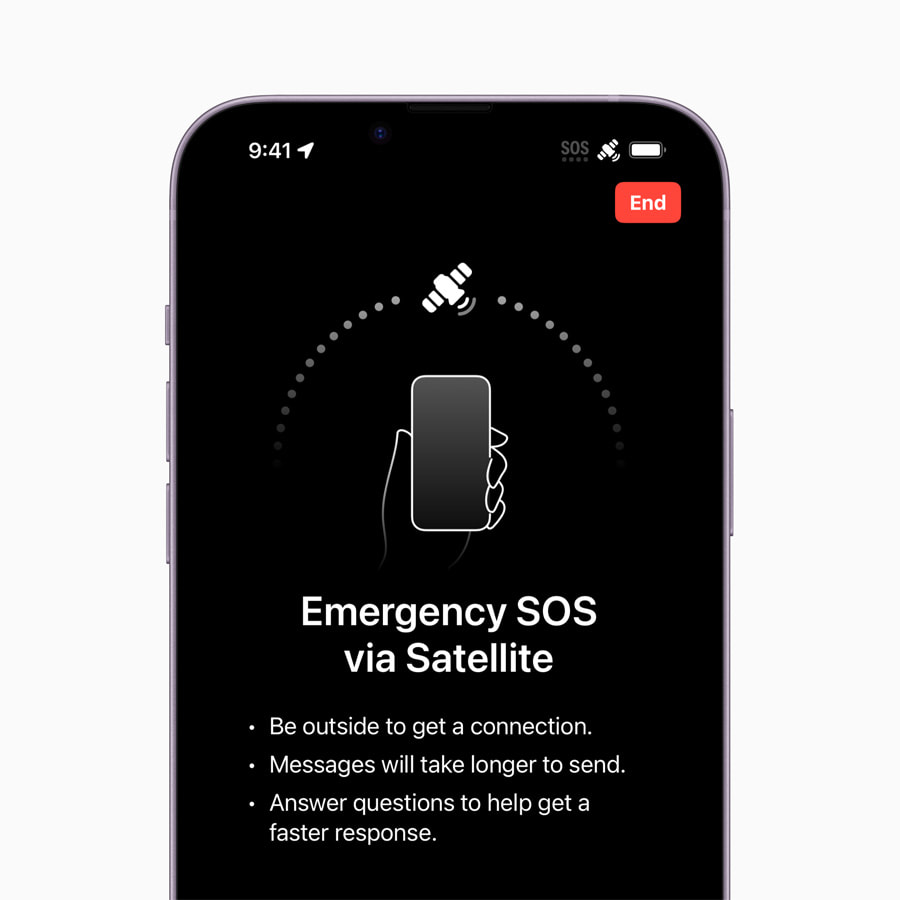
In this week’s product launch, Apple confirmed that its integrated satellite capabilities—including Emergency SOS, Find My, Roadside Assistance, and off-grid Messages via satellite—remain central to the iPhone ecosystem. More importantly for mariners, Apple has once again extended free access to these satellite features for an additional year for existing users rather than switching to a paid subscription model.

Ask most cruisers at the marina dock who powers that offshore connection, and the default assumption is Elon Musk’s Starlink.
The reality? Starlink has nothing to do with it.
The Secret Engine: Globalstar, Not SpaceX
The orbital network processing emergency texts from your cockpit is Globalstar. Apple effectively rescued and recapitalized Globalstar, committing over US$1.5 billion in infrastructure financing, prepayments, and equity.
The architecture works on a classic “bent-pipe” relay:
- Your handset communicates directly with orbiting satellites via low-bandwidth L-band and S-band frequencies.
- The satellite acts as an orbital mirror, immediately relaying the transmission down to an Earth station gateway.
- The ground gateway routes your distress coordinates or text directly to maritime rescue coordination centers (MRCC), local emergency dispatchers, or cellular carriers.
Unlike a high-speed satellite internet dish, this direct-to-device connection requires no heavy marine cables or 12-volt power draws. It operates directly off your phone’s internal battery.
Where Does Rocket Lab Fit In?
Aerospace manufacturer Rocket Lab ($RKLB) plays a crucial, behind-the-scenes role in this network—one layer removed from Globalstar itself. Globalstar’s prime contract for the new constellation, worth $327 million for 17 satellites, actually sits with MDA Space. MDA, in turn, awarded Rocket Lab a $143 million subcontract to build the satellite buses—the structural platforms that carry the transponders keeping Apple’s offshore safety features functional.
Rather than launching a consumer internet service to compete with Starlink, Rocket Lab is quietly building the hardware underneath one of the industry’s most important safety networks.
SpaceX is targeting a different architecture altogether. Through cellular partnerships with carriers like T-Mobile, Starlink is deploying direct-to-cell capabilities on its larger satellites. This system aims to connect unmodified cell phones over standard LTE bands without requiring proprietary satellite hardware chips.
Cockpit Broadband vs. Ditch-Bag Survival
For Caribbean cruisers, charter crews, and passage-makers, this technology defines a practical division in onboard safety:
- The Arch (Starlink): The high-speed workhorse. Bolted to your solar arch or spreader, it draws roughly 35 to 110 watts of continuous DC power depending on dish type and power conversion setup, to deliver high-resolution GRIB weather forecasts, passage routing, and marina-speed streaming.
- The Pocket (iPhone / Globalstar): The independent ditch-bag lifeline. It will not stream high-definition video, but if lightning disables the vessel’s electrical panel or water floods the battery banks, an independent handset provides verified emergency signaling.
Understanding the difference between recreational broadband and safety-critical satellite communications ensures your vessel remains both productive in the anchorage and safe underway.
At-a-glance box:
| Feature | Starlink | iPhone Satellite (Globalstar) |
|---|---|---|
| What it’s for | High-speed internet, streaming, GRIB downloads | Emergency SOS, Find My, off-grid texts |
| Power draw | ~35–110W continuous, needs boat power | Runs off phone battery alone |
| Speed | Broadband | Low-bandwidth, text/data only |
| Backup role | None if boat power fails | Works even if the boat’s electrical system is dead |
FAQ
- Does iPhone satellite SOS use Starlink? No — it uses Globalstar, a separate satellite operator Apple has invested over $1.5 billion in.
- Is iPhone satellite messaging free? Apple has extended free access for iPhone 14, 15, and 16 users through the next year as of its September 9, 2026 announcement.
- Will Starlink ever power iPhone’s built-in satellite features? Not currently — Starlink’s direct-to-cell approach (with carriers like T-Mobile) is a separate, competing architecture, not an Apple integration.
captain has written for ALL AT SEA since 2020.
Worth your time?
Thanks — noted.