Does the CSA Majors Trophy Redefine the Caribbean Racing Season?
The CSA Majors Trophy finally creates a season-long Caribbean sailing championship. But by defining what counts, does it also redefine the region's racing calendar?

The Caribbean Sailing Association has introduced something the region has talked about for years: a true season-long championship.
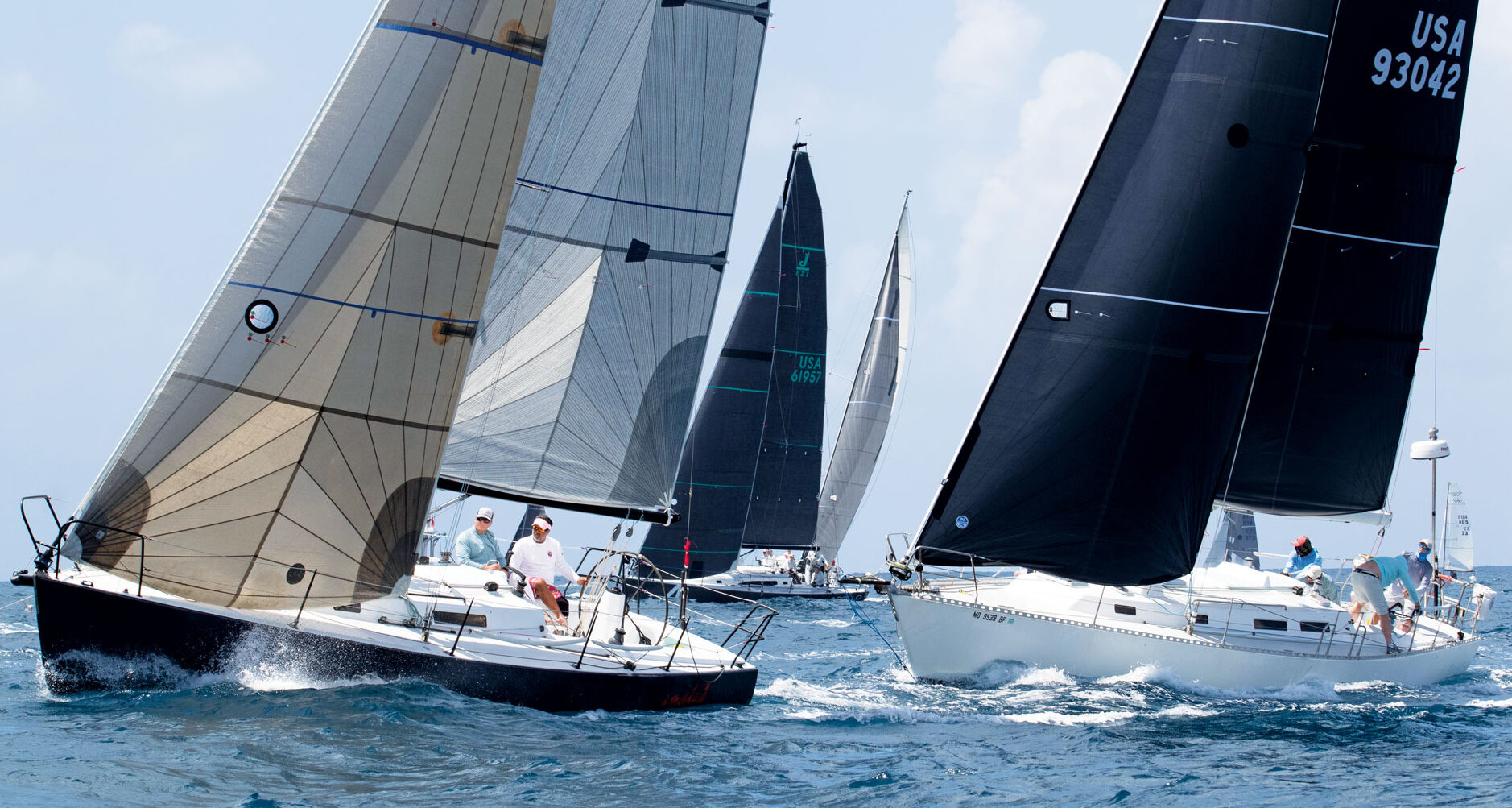
Beginning in 2027, the new CSA Majors Trophy will reward the yacht with the best cumulative performance across five premier regattas—the RORC Nelson’s Cup Series, RORC Caribbean 600, St. Maarten Heineken Regatta, Antigua Racing Cup, and the BVI Spring Regatta. Rather than celebrating a single event winner, the trophy is designed to recognize the campaign that performs best across an entire Caribbean season, with the overall champion crowned in Tortola.
On its face, that’s a welcome development.

A championship gives owners another reason to campaign, encourages boats to travel, and creates a season-long storyline that can build interest from race to race. Those are all good things.
But championships don’t just reward participation.
They create gravity.
Owners have finite budgets. Crews have limited vacation time. Sponsors have only so many dollars. Once a season-long title is on the line, calendars begin to organize themselves around the events that count.
That’s why the CSA Majors Trophy matters. It doesn’t merely recognize five regattas—it quietly tells the market which five matter most.
And that’s where the conversation gets interesting.
What Isn’t Included Matters, Too
Read the list again.
Then read it a second time.
What’s missing is every bit as interesting as what’s included.
St. Thomas International Regatta isn’t part of the championship.
Neither is Antigua Sailing Week.
That isn’t simply a matter of prestige. It’s a statement about what constitutes a championship campaign in the Caribbean.
The Caribbean’s Classic One-Two Punch
For decades, St. Thomas International Regatta and the BVI Spring Regatta formed one of international sailing’s classic back-to-back combinations.
Crews planned entire Caribbean campaigns around the pairing, shipping boats across oceans to race consecutive weekends in two very different venues connected by a memorable Drake Channel delivery. Those entry lists weren’t built on sentiment; they reflected the schedule’s success.
That pairing hasn’t disappeared.
It has been reordered.
And now a championship has been dropped into the middle of it.
In 2027, the BVI Spring Regatta concludes on April 4. St. Thomas International Regatta begins just four days later, from April 8–11.
The boats can still race both events. In fact, STIR continues to promote them together as two of the Caribbean’s premier regattas.
But one now counts toward the championship.
The other comes after the champion has already been crowned.
An Interesting Change in Messaging
There is another wrinkle.
In November 2025, the CSA announced dual CSA–IRC scoring across the circuit and described the participating events as “five major regattas.”
St. Thomas was one of them.
Less than a year later, the CSA has introduced a Majors Trophy.
St. Thomas is no longer on the list.
Whether that’s an evolution in strategy or simply a refinement of the championship concept is open to interpretation—but it illustrates how quickly the definition of a “major” can change.
Antigua Tells a Similar Story
The Antigua story may be even more significant.
For decades, Antigua Sailing Week served as the traditional finale to the Caribbean racing season. Running into late April and early May, it extended the economic impact of racing well beyond the early spring circuit, filling marinas, boatyards, hotels, restaurants, and charter fleets after many islands had already seen activity taper off.
Today, the championship includes the Antigua Racing Cup instead.
That choice makes sense.
The Racing Cup is designed as a focused, high-performance regatta, while Sailing Week has intentionally evolved toward a broader destination event that blends competitive racing with a wider sailing experience.
There’s nothing inherently wrong with that distinction.
But it does mean the championship season now effectively concludes in early April instead of extending toward May.
That changes more than a calendar.
It changes the rhythm of the Caribbean racing season.
A Championship—or a Definition?
The CSA Majors Trophy isn’t trying to identify the Caribbean’s five largest regattas.
Nor should it.
Instead, it defines a specific championship pathway—one centered on offshore racing and grand-prix competition. Judged on those terms, the series is coherent.
The question is whether that championship pathway will gradually become synonymous with the Caribbean racing season itself.
History suggests it might.
Owners organize campaigns around points.
Sponsors invest where championships are decided.
Professional crews prioritize the events that count.
Over time, championships don’t simply reward participation.
They shape it.
Looking Forward
None of this is criticism of the CSA for creating the Majors Trophy.
If anything, the opposite is true.
A season-long championship is something Caribbean racing has lacked for years, and it has the potential to strengthen participation, reward commitment, and create compelling storylines that extend beyond individual regattas.
The more interesting discussion is what happens next.
Will the trophy simply recognize excellence across five outstanding events?
Or will it gradually redefine what sailors, sponsors, and owners consider the Caribbean racing season?
Those aren’t necessarily the same thing.
And that may ultimately become the CSA Majors Trophy’s greatest influence—not the silver it awards, but the story it tells about what matters most.
Are we off base here? If you had to pick your all-time favorite regattas for the Caribbean Season, what makes your cut? Chime in below…
captain has written for ALL AT SEA since 2020.