How to Keep a Salt-Free Boat (So Your Cushions Finally Dry)
Clammy sheets, cushions that never dry: it’s usually salt, not humidity. Birgit Hackl and Christian Feldbauer share the habits that keep SY Pitufa dry.

Talking with fellow cruisers we often hear complaints about clammy sheets and clothes as well as constantly damp upholstery that won’t dry out despite all ventilation efforts and dehumidifiers. During the rainy season in tropical climates we all fight humidity aboard, but in many cases it’s salt that keeps fabrics from ever drying out completely. With a few tricks and habits it’s easy to keep a cruising boat salt-free, which increases not just the comfort of the crew, but also the lifetime of equipment in the long run.
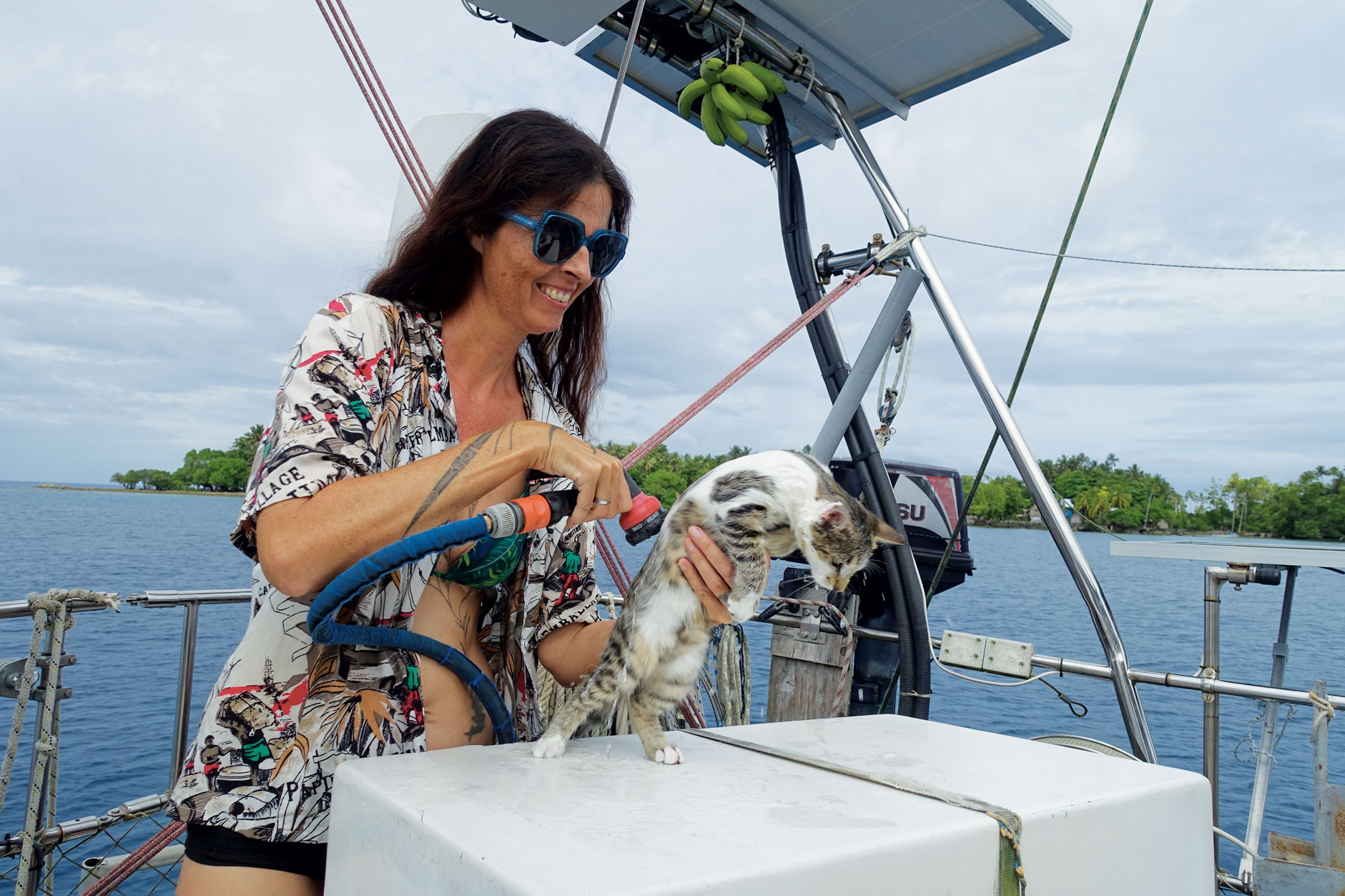
Visitor’s often react amused or astonished, when we ask them to rinse off their salty feet on the aft deck. I usually hold out the shower with a grin and an apologetic “We always rinse our feet before stepping into the cockpit, it’s just a stupid habit” as I would hate to offend anyone suggesting that they look too dirty to visit. And it’s true, we introduced this ritual of showering off salt and sand right after we bought the boat, initially to avoid getting our geriatric ship’s cat salty: cats tend to kidney problems when they get older and we didn’t want Leeloo to ingest too much sodium when licking her paws. After our ship’s cat passed away at the age of 21, we kept up the old habits, by then we had grown to appreciate the benefits of a salt-free boat. With a shower on the stern and a watermaker that runs every day we indulge in the luxury of rinsing off after each swim, no matter how often we jump into the water. Of course guests are encouraged to do the same—I wince in horror when I see holiday-makers on other boats splashing up the swimming ladder and straight below deck to their cabin without even drying off with a towel.
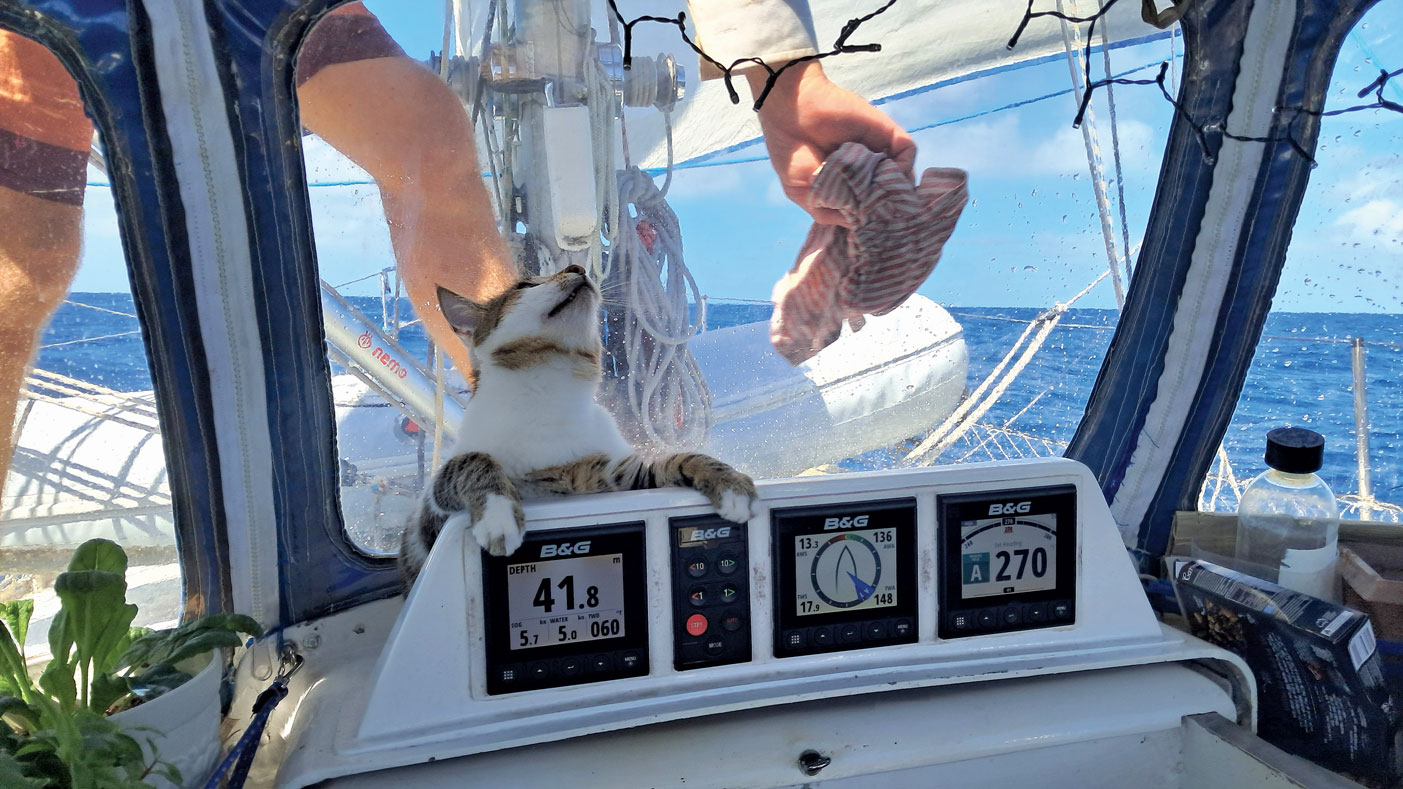
It might seem exaggerated that we even insist on a salt-free deck, but how often do you step out during the day and back into the cockpit? Once you’ve got salt on the soles of your feet it’ll get into the cockpit, from there to the salon floor and eventually onto sofas and bunks. With salty residue on your fingers you’ll get sensitive gadgets like cameras, laptops and other electronics contaminated as well. I used to race out to wash off the deck after each splashy passage before our feline princess could get her paws salty. Now I’m no longer in such a hurry, but we still do a round with a bucket and rag to clean off salt before the sun bakes them into a resistant glazing. We’ve found that salty grains get so deeply indented into the vinyl of the sprayhood windows after a day in the sun that it’s impossible to get those tiny dots off again even with vigorous scrubbing and after a few rough passages with plenty of spray in the air the windows get permanently opaque. Stanchions, terminals and other stainless soon develop rusty blotches underneath a layer of salt, so a quick rinse right after the passage saves some serious scrubbing and polishing later on.
Our cockpit is fairly dry on passages, thanks to a combination of sprayhood, bimini, side-flaps on the bimini and spray dodgers on the life-lines. But sometimes rogue waves still manage to spit in, then we try to immediately mop up splashes or (worse) sloshing water on the cockpit bench and wipe our feet on a damp rag before going below deck. Such measures may seem exaggerated and annoying when the crew is cranky already while sailing in rough conditions and feel free to call me a fussy control freak, but it only takes a second to wipe off salty feet and maybe five seconds to put a towel over the sofa before flopping down wearing foul-weather gear, while it takes a day to wash the sofa covers and a full week of sweating and swearing on the sewing machine to redo ruined sofa upholstery (yes, I’m talking from experience here).
Despite all petty precautions we’re sometimes overly careless on seemingly fine-weather passages and let deceivingly calm-looking seas lure us into opening some hatches to air the boat underway. We have paid the price for being too optimistic and trusting several times, when an especially inquisitive wave took the opportunity to take a splash through a hatch and usually straight on to the bed or the salon sofa. Getting a soggy mattress salt-free again is a major undertaking. We have a big, square bucket in which we soak the affected part or the whole thing (depending on the size the mattress and the extent of the catastrophe), then we try to squeeze it manually, hang it out on deck and hope for an extended period of sunny weather as it takes several days in sunny, windy conditions until such a piece is really dried out. Friends despaired with a big, thick, custom-made, expensive mattress that had got thoroughly soaked and stubbornly refused to dry after being rinsed. They ended up putting it between two planks and running their car over it several times to squeeze out the water. Desperate measures in desperate times. I think they eventually had to toss it and invest in a new one. Spinning would of course be most efficient, but we haven’t come up with a centrifugal solution so far, so in the meantime we try to be good and keep the hatches closed to keep out overly curious waves.
Birgit and Christian have been washing and drying their way from the Med, via the Atlantic and Caribbean to the Pacific over the past 15 years. If you’re interested in their journey, visit their blog www.pitufa.at or check out their books on Amazon!
Birgit Hackl has written for ALL AT SEA since 2012.
Worth your time?
Thanks — noted.