
Maxed Out in Madagascar
A firsthand offshore sailing account of rounding Madagascar’s notorious Cap d’Ambre through breaking seas, violent currents, and survival conditions.

Rounding Madagascar’s Cap d’Ambre: One of the Indian Ocean’s Toughest Passages
Key Questions Answered:
- Why is Cap d’Ambre so dangerous for sailors?
- What happens when wind and current oppose each other offshore?
- How do sailors survive extreme breaking seas?
- What causes boats to broach, roll, or pitchpole?
The waters surrounding northern Madagascar have long carried a fearsome reputation among offshore sailors. In this firsthand account, veteran circumnavigator Bob Bitchin shares the reality of rounding Cap d’Ambre aboard the modest Hughes 38 Wild Card—including breaking seas, opposing currents, steering failure, and one of the most intense passages of his life.
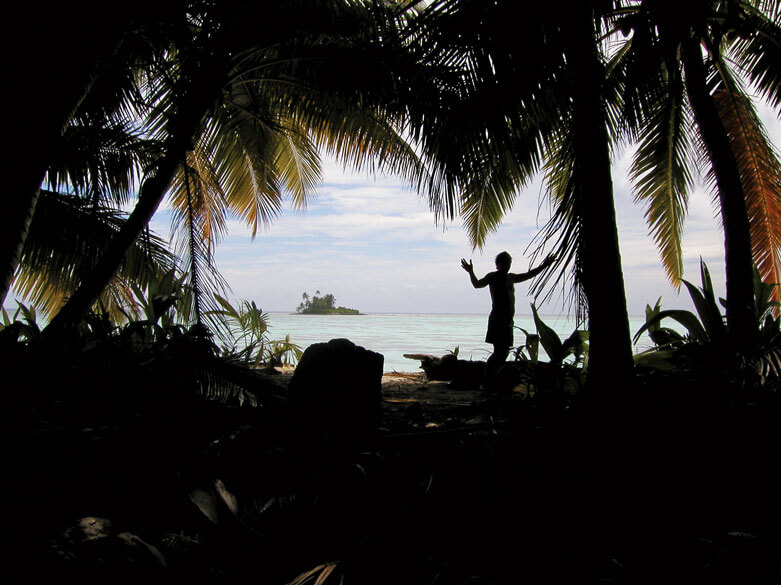
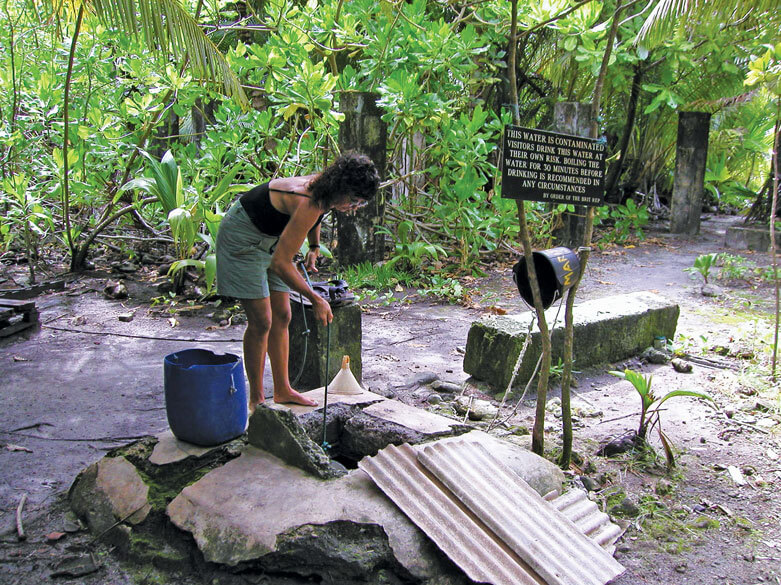
In mid 2003, my wife Carolyn and I spent four and a half delightful months in deserted Chagos aboard our $3,000 Hughes 38 Wild Card. However, being unable to reprovision, our food lockers were almost empty prior to our 1,500 mile passage to Madagascar.
Back then, Chagos was rarely visited—except during the monsoonal shift—when the Tradewind-type winds in the area reverse. This reversal allows sailors from Indonesian, Singapore, Malaysia and Thailand to sail to Africa and back without ever sailing to windward if they transited during the correct monsoonal months.
Thus, in a two-week period, a dozen experienced South African crews joined us at Salomon Island in Chagos to await the shift. I spoke with each crew—and each man went silent as I told them I intended to sail around the north tip
of Madagascar.
Now, South African sailors are notoriously tough and highly experienced. And they don’t tell others what to do nor allow others to tell them what to do. They’re stoic. They’re closed-mouthed. But, as we gradually became friends, I finally managed to get them to open up—and they all said the same thing: the north tip of Madagascar is a no-go zone.
“More boats have been lost, broached, capsized, rolled, and/or pitchpoled rounding Cap d’Ambre on the north tip of Madagascar—than anywhere else in the Indian Ocean,” said the highly experienced Colin Craig of the 60-foot aluminum ocean racer Déjà vu.
Gulp!
“…but you’ve done it, right?” I asked.
“…yeah,” he said, “but… but there’s a bit of breeze down there—and some seas, too.”
Now, when an ocean racer, boatbuilder, and a multi-season veteran of the Indian Ocean like Colin Craig utters the phrase ‘bit of a breeze,’ you’d best believe it.
I did not doubt him for one second. Nonetheless, I was intrigued. I’m drawn to such a challenge, despite all logic and common sense. Heavy weather is like catnip to me—for better or worse, I’m intrigued by it.
Few people in the world have seen a mature, Indian Ocean gale from the deck of a small craft—fewer still, have lived to tell the tale. And what’s the saying—that which doesn’t kill me, makes me stronger?
“But there’s a way, right? I mean, you did it, didn’t you?” I said, continuing to press Colin Craig.
“Yes,” he said, “but not how you think. Most sailors, hearing its reputation, stand well off. Don’t! That’s the no-go zone. Instead, sail 15 miles south of the tip, head toward the beach, and drag a toe in the sand northward.”
“What the hell does that mean?” I asked, struggling to visualize it.
“What it means is that you have to sail through breaking 20-plus-footers crashing on your port beam—then, when you’re on the swallow shelf of Madagascar itself and just about to run aground on the beach, you turn 90 degrees northward, hug the shore as close as possible, and round the tip in relative calm… if you’ve got the balls… with the frothing rocks just to port and the massive breaking seas just to starboard in the deep water… knowing that, with each mile traveled northward, the seas will dramatically increase.”
…I missed some of that last part because I was mentally congratulating myself on not having brought my wife Carolyn, a sensible human being, along for our cozy little mano-mano chat.
Here’s my reality in a nutshell: I always sail the right ocean at the right time—and, thus, figure that there’s nothing out there that will hurt me on a well-handled, well-found vessel such as Wild Card. And I’m almost always right—except when wind and current oppose.
We left Chagos at dawn on June 9th, 2003, and beam reached down to 12S—then turned westward for Madagascar. This kept us in strong winds the whole way. Thus, with a boost from the wind driven current, we averaged 150 mile days on a boat with a 26-foot waterline—not too shabby.
But by day five, we were beginning to struggle in building seas and 28 knots (apparent!) of breeze. A strong high-pressure system reinforced the trades. We were down to a double reefed main and a tiny storm staysail. And the motion inside our modest, 13,000-pound plastic vessel was the worst we’d ever experienced.
Why?
Simple. The high winds and massive seas are unimpeded from Australia, many thousands of miles distant. They’re large. And, the closer a sailor gets to the Cape of Storms (aka Cape of Good Hope), the more a wicked sou’easterly swell works its way around the south tip of Africa.
…plus, numerous other ocean currents reinforce, oppose, and tussle with each other in the Madagascar to the Cape of Good Hope region. How many? It’s difficult to say because so many different names are bandied about. But the names which I remember (with more than a little dread) twenty years later are the (mighty & mighty fast) Agulhas (which is notorious for snapping freighters in half along the 100-line of the Wild Coast), the South Equatorial, the Equatorial Counter Current, the East African Coastal Current, East Madagascar Current, South Indian, and (as you approach the Cape of the Storms), the powerful spurs and deadly meanderings of the Benguela.
The Benguela and the Agulhas (and their related weather systems) collide directly at the Cape of Good Hope, that’s why early sailors dubbed it the Cape of Storms.
Just to spice things up further, along Madagascar and the dreaded Wild Coast of South Africa, the seas are large and far apart because of the regular northerly winds—but are, occasionally, struck by massive Sou’weaterly Busters in the 45 to 65 knot range.
…with the life-and-death transition being in the 15 to 20-minute range—not much time for anything save Last Rites.
In the blink of an eye, the long swells flowing southward are humped up into breaking waves of lurid height… waves that, well, swallow modern, state-of-the-art, 100-foot aluminum pilot boats without a trace. (The last time this happened wasn’t so long ago—the state-of-the-art pilot boat from Durbin was lost with all hands during a too-swift arrival of a Sou’westerly Buster.)
These wave-trains (and related currents) collide erratically and unpredictably—with growing ferocity as you close with Madagascar. We weren’t just experiencing breaking seas—we were experiencing large seas from two different directions at the same time—and the first time my bow disappeared under a wave from the southwest while my cockpit was pooped by a breaking comber from the east, I inadvertently yelled aloud, “Hey, not FAIR, guys!”
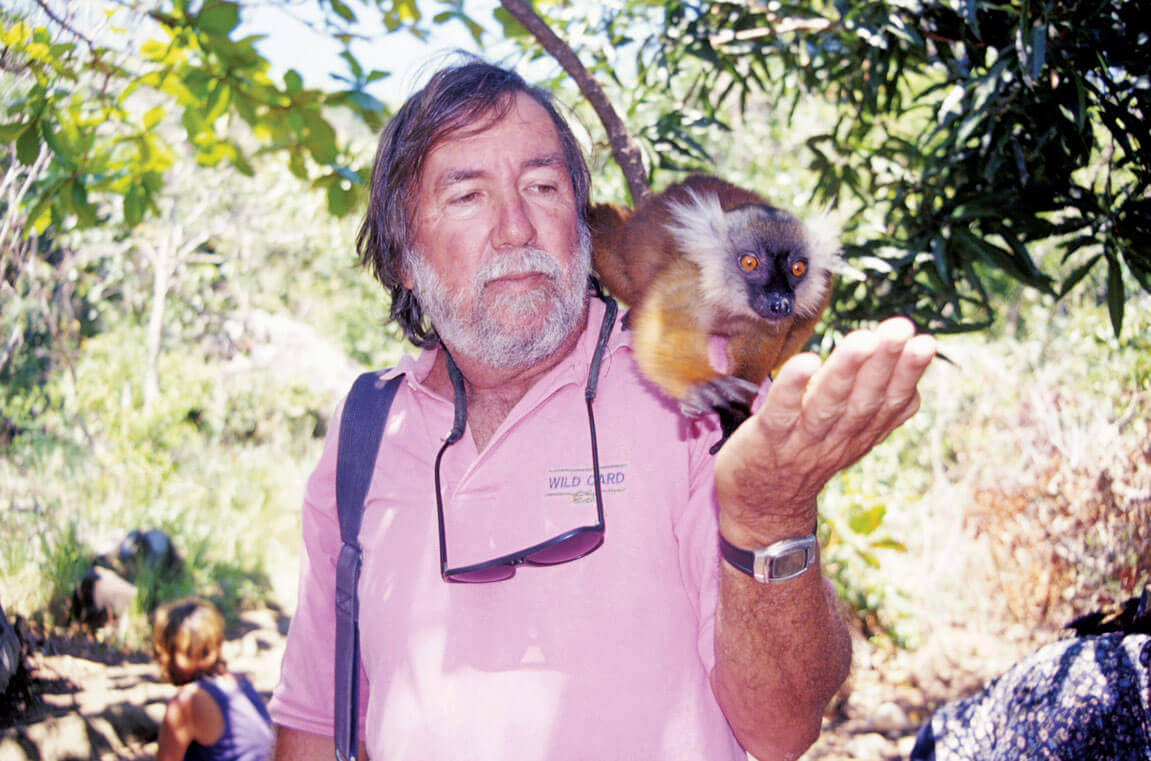
Nonetheless, we had our first—and only—170-mile day in the 23 years (and 2 circs and 23 years) we owned our salvaged Wild Card.
Nonetheless, we were still making steady progress. Well, until we were passing between the Mascarene Plateau and the Caragados Carajos Shoals at 12S and 61E… where the soundings went from 800 to 10,000 feet in the blink of an eye…
…and some sort of weird, brutal, ocean-current-upwelling took place.
…it suddenly appeared as if we were in a war zone—with vertical explosions of water where the different wave-trains collided… like individual members of an army tussling with each other.
Strange! And more than a little terrifying.
…hand grenades!
In a lifetime at sea, I’d never seen anything like it. Instantly we were deck-swept by a massive sea—and when we popped back to the surface, all our fuel jugs were gone. Hell, everything lashed on deck was gone! The bitter ends of our running rigging were also trailing astern. All of our MOB equipment was overboard—and this is after 50,000 ocean miles sailed!
It was disorienting—and disconcerting as well.
We were getting pooped from astern repeatedly. A large piece of blue Sunbrella was streaming aft—a ripped sailcover or our awning, I knew not.
…ah! So this is what a South African sailor means when he winks while hoisting a pint at the Darwin Yacht Club, and says, “…bit o’ breeze down there, Fatty!”
Here’s what happens in the Indian—too many things go wrong at the same time. You don’t have time to fix ‘em all before new, more critical things break. This wears you down. You can’t sleep because you’re too busy surviving. And, thus, you become a numbskull.
…or, in my case, more of a numbskull!
All around us, where these major currents collided, spouts of water shot up directly into the air—kinda ‘clapped’ exuberantly into the air—as if firehoses were just beneath the surface, aiming wickedly for the stars.
Damn!
Here’s another ‘don’t-tell-anyone’ secret—the more concerned and scared I get, the sillier I act.
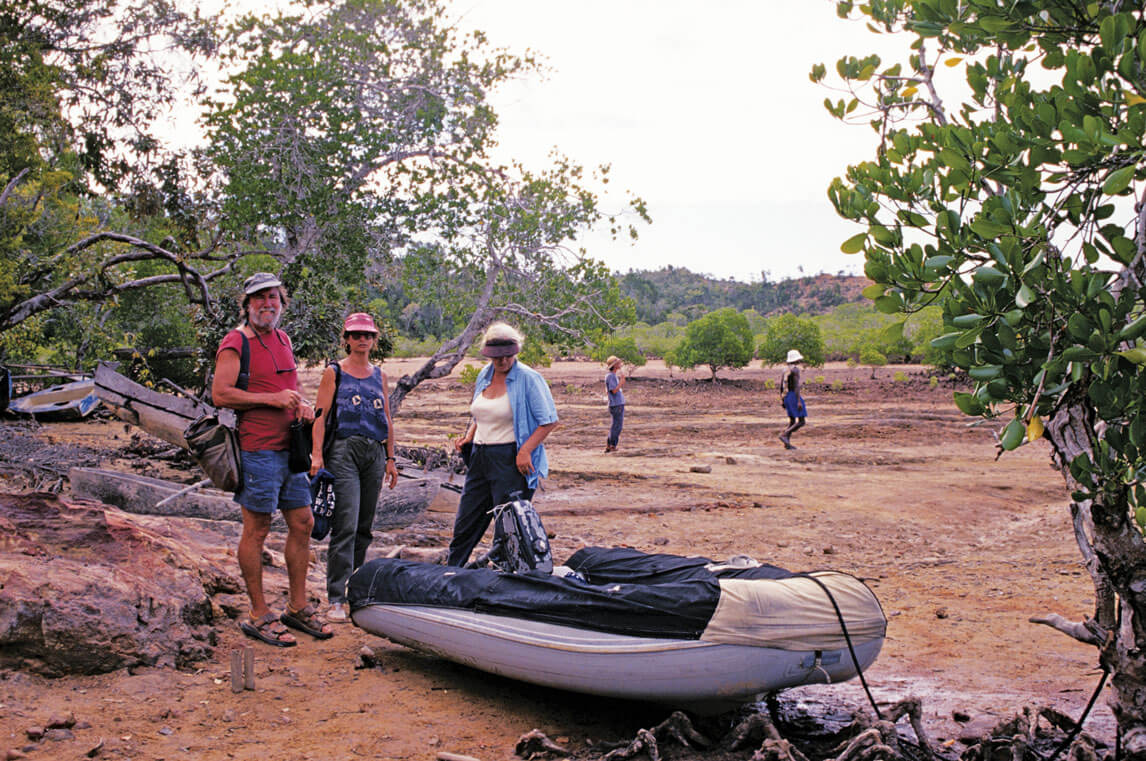
…to put as positive of a face on the situation as I could, I sang out gayly, “…spring cleaning, Indian Ocean-style!”
Carolyn was not amused.
Again and again our cockpit filled to its brim with saltwater—thank gosh I’d increased the scupper size! I was so nervous, I had to pee—easy enough to do while attempting to hand steer in a saltwater swimming pool!
Within 45 minutes, however, the sea state was back to normal—I wish I could say the same for my mental health.
…and my underwear.
Normally, I attempt to fly as little canvas as possible in these situations—but the sea was so confused and the waves so sloppy that I had to show far more sail than I intended in order to bully my way through the chaotic, lumpy seas.
Carolyn and I started getting super polite with each other—a sure sign we were both worried. (Pro tip: if you think your spouse might be swept overboard any second, go easy on yelling at her for over-cooking the eggs.)
Fred, our South African weather router, cheerfully informed us via SSB radio that we were going to experience “…gale force winds with six-meter building seas offshore—increasing steadily as you approach Madagascar.”
…sadists—South African weather forecasters are all gleeful sadists!
“…tell him we’re Americans,” Carolyn quipped, “And that we’re cool with six-footers—not six meters!”
“…meters, feet,” I yawned, “what’s the dif, babe! We’re low IQ sailors—we take the bitter with the sweet.”
“…you’re half right,” she agreed, deadpan.
One more thing: with constant changes in wind-and-current velocity/direction, sleep becomes difficult or impossible. I was getting too wired—almost zombie-like.
Now, when I’d salvaged Wild Card off the beach in October 1989 after Hurricane Hugo, she’d had a single inner and outer steering cable—totally unsuited for offshore. I’d replace that toy steering system with a tiller. Alas, being poor, I’d used all scrounged materials off various hurricane wrecks.
Now, just when I didn’t need any more stress in the middle of the world’s roughest ocean, I heard a loud crack!—and suddenly my tiller felt different on one side. I looked down. The tang on the starboard side (with the three bolts at the butt of the tiller) had cracked clean through. (Yes, I’d noticed a tiny, rusty crack in Chagos—but stupidly hadn’t investigated further.)
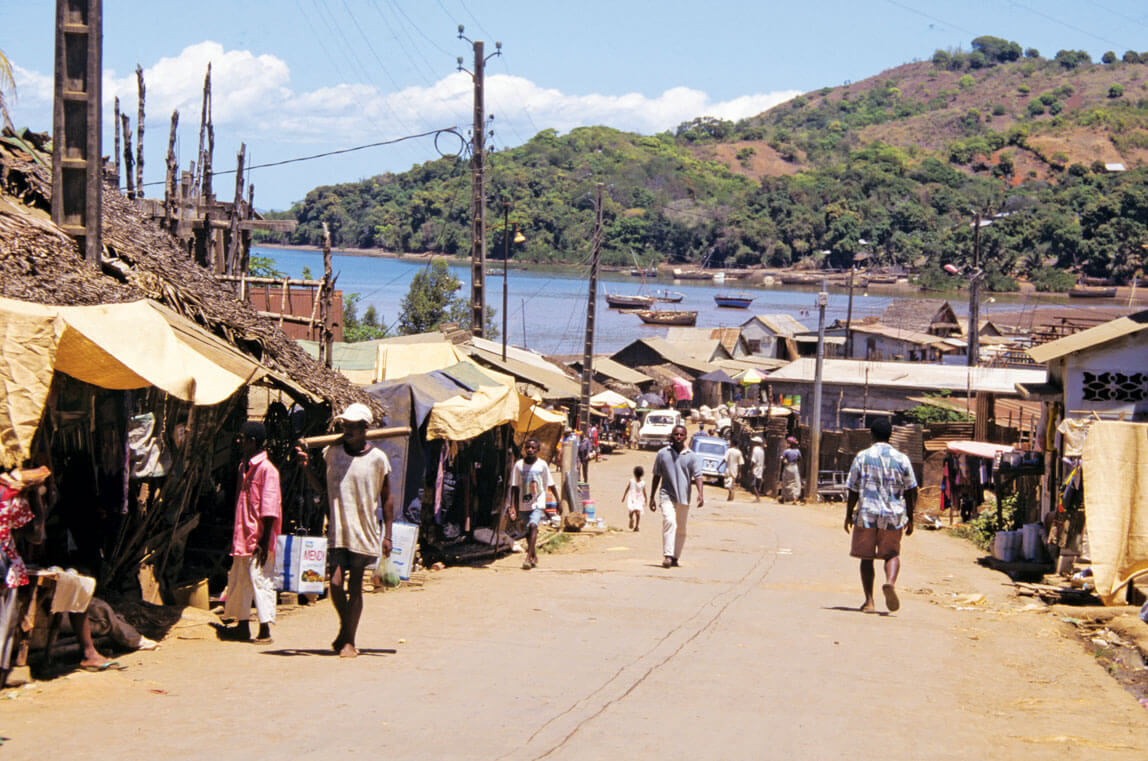
I only had minutes before I’d lose my steering completely.
“…never a dull moment,” I chuckled to Carolyn, “our tiller bracket—that silly piece of stainless that connects our tiller to our rudder—that goofy, half-assed gizmo—just broke.”
“What do you need, Skip,” she asked matter-of-factly.
…’skip’ is short for skipper… and when she calls me ‘Skip,’ what my wife is really asking is, “…how did I allow you to talk me into this, you rotten bastard!”
“I need a handsaw, two pieces of hard wood, a drill, some 5-inch SS bolts—and a ton of luck.”
“…no problem on the first four,” she said, ducking below.
It took less than five minutes for me to fabricate a clumsy (but strong) four-bolt clamp to sandwich-clamp the tiller bracket together temporarily.
“…you’re kidding me,” Carolyn said, looking at my bulky, crudely-finished splint.
“…better than chewing gum,” I parried.
“…that’s weaker than your morals!” she said.
Ouch. ;-(
By this point, we were down to storm staysail and a triple-reefed mainsail. Normally, I’d heave-to under the circumstances—but much worse weather was on the way. And the Indian Ocean is no place to lollygag. (South Africa is the only place I’ve heard an official marine WX forecast use the phrase ‘phenomenal seas’… meaning sixty-foot plus waves.)
“Land-ho,” cried Carolyn. “…and sail-ho too!”
Now, bear in mind that we’d been at sea for nearly two weeks at this point—with limited provisions, in extreme conditions, and with non-stop action. Tired? Yes, a tad.
As we closed with the coast 15 miles south of the northern tip of Madagascar, we discovered our friends Jeremy of the O’Day 37 Forever Young and Greg and Denise of the Bob Perry-designed CT37 Four Winds milling about, attempting to decide what to do.
Jeremy, a gung-ho Aussie sailor, went first. I was happy to let him. I and Greg held back, awaiting a report. In an hour or so, Jeremy radioed back, “Doable.” I went next—and promised Greg I’d keep him posted on our progress.
Now here’s the problem—as stated, when wind and current oppose each other, the resulting seas hump up. The stronger the current and the wind, the higher the breaking seas. And Madagascar was a giant wind-and-current fence—forcing both northward at a much higher velocity than normal.
…which would have been horrible enough—but wait, it gets worse.
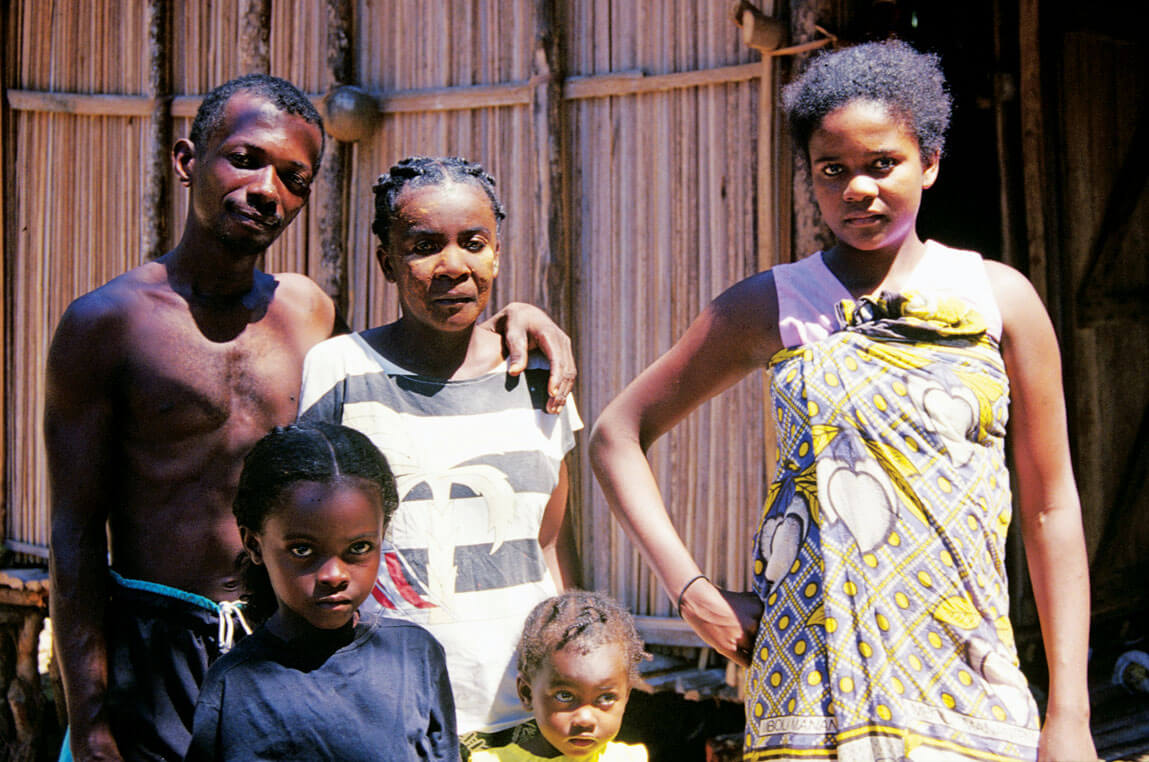
At the very tip of Madagascar, this accelerated wind and current flowing to the north collides with the south-flowing Agulhas current flowing down the coast of Africa—making the tip of Cap d’Ambre untenable, literally a no-go zone for recreational craft less than 100 feet… especially during certain weather combos… combos exactly like we were experiencing at that very moment.
To simplify, I wasn’t merely heading into an area where the wind opposed the current. I was heading into an area where two strong currents opposed each other. This is rare. And since water is more than 775 times thicker than air, the seas would be much worse—not to mention the effect of the 40+ knots of howling breeze reinforcing one current while opposing the other… damn!
Now, if the conventional wisdom is to enter 15 miles down the coast from the tip, this means that you have to then sail 15 miles back up, northward, in an increasingly narrow patch of water between hard rocks to port and breaking seas to starboard.
…easier said than done.
This is mentally wearying—and requires a tight sphincter and balls the size of weather balloons. I’ve totally blacked out the memory of running beam-to those breaking seas up to the coast—but vividly remember seeing the beach just ahead and the smoother patch of water just ahead… while wildly careening westward at 8+ knots… wondering which we’d hit first.
Suddenly, what seemed like yards off the beach, the water smoothed out a bit, and I turned northward… zooming along crazily just off the frothing, terrifyingly-close beach.
Now, any sailor who has hand-steered in truly heavy weather knows how important it is to be dead-down—to be 90 degrees from the breaking sea as it explodes over your transom and floods your cockpit. Normally, in the deep ocean, this isn’t a problem.
But here, it was a problem—and because I couldn’t error on the ‘hard’ side of the beach to port—caution kept veering back into the worst of the breaking seas.
I steered a zig-zag course—hopefully, not a zig-zag of death.
And we were totally committed at this point—or, more accurately, should be committed as Carolyn says.
Worse, about six or seven miles from the Cap d’ Ambre, a jutting headland appeared before me—and I couldn’t turn Wild Card enough to starboard to avoid it without broaching.
Oh, dear!
I roughly estimated most of the seas at 28-footers, but a few were noticeably higher—I have no idea how much.
And the jagged headland was coming at me fast. And I was in 44 knots of breeze. And 28-foot seas. And I was happily married and didn’t want to drown my wife—nor to lose my own life. (Doctor James Clayton of the Red Hook Medical Practice on St. Thomas told me, when I left the USVI to circumnavigate, a truly sobering fact: “…if you drown, Fatty—no more sex!”)
Yikes!
Thus, I now squared-up to be 100% dead-downwind with, and 90 degrees from, the huge overtaking seas—and the moment they flooded our cockpit, jerked my tiller to port to veer my bow to starboard and momentarily gain as much sea room as possible… in the few seconds before the next breaking wave smothered us.
…and, yes, I was winning. But only a few feet at a time. And here came that iron-bound headland—which sent spumes of water hundreds of feet in the air as each massive wave struck its base.
…by this point, I had little protection from the sea—the band of calmer water was getting too narrow to hide in.
…and my nerves were strung tighter than a banjo.
“…yes, Lord, I’m feeling alive now,” I shouted—the howling breeze snatching away my defiant words.
Here’s my philosophy of life, the way I’ve managed to be a stupid man while doing things others only dream of—I put one foot in front of the other. That’s it—that’s the full extent of my (admittedly dim) intellectual prowess.
And so I steered—second by second, minute by minute, and hour by hour—I just ‘kept on keeping on’ until I cleared the headland. My life became simple and focused: survive the next wave. And the next. And the next. The last half an hour was the worst.
As each massive sea would break over our transom and fill our cockpit, the added weight would make the rudder feel slow-and-sticky as our bow skyed and transom squatted. Down, down, down we’d slide down the wave’s back side… with wind and wind noise doppling-downward as well.
As we’d bottom out in the trough, the wind might subside to 28 knots or so… but only for an instant. (Also, in the trough, I could sometimes hear my cockpit scuppers loudly suck, indicating the cockpit was empty and ready, in a few more seconds, for another multi-ton load.)
Then we’d be on the ‘up’ elevator on the front of the overtaking sea…. bow-down now, racing and carving and veering in front of the 28-foot, five-zillion-metric-ton breaking crest…. like skiing far too fast down an approaching, unstoppable mountainside… a screaming, shrieking, frothy mountain of liquid granite.
At this point I’d have to square up and be 90-degrees to the crest, or we’d carve out and broach or… worst case, pitchpole. (I’ve never pitchpoled and would prefer not to, thanks.)
…there would then be a horrible moment which I began to think of as the ‘wobble’ when my vessel would be parallel with the surface and my transom in air with a mountain of foaming spume on each side—while the top of the breaking seas would be hitting the mizzen mast above my head.
…how much fun can one sailor stand!
…the wobble made me want to throw up—but there was no time for silly-boy theatrics now.
Then the solid water of the onrushing sea would strike my transom within a millisecond of the water above falling on my vessel. It was like getting hit by a large truck made of foam rubber… a heavy blow that dramatically shoved us forward… but, for all its implacable force, it was a soft blow as well.
I’d have to be braced and holding on extremely tight or I’d be ripped from the tiller and/or tossed overboard as the sea exploded all around me.
For one second, I’d be steering in a chilly swimming pool—then the extreme motion would toss much of the seawater out of the cockpit… my bow would begin to sky again… and the sequence would repeat… for hours… for what seemed like, to me, forever!
…Carolyn was screaming something below. It took me a while to understand her words. “…one more mile, Fatty—only one more mile!”
Huh?
“…you’ve got this!” she yelled through the closed and locked companionway.
What?
I was too tired to think, too tired to understand—almost (but not quite) too tired to care. Then smooth, empty water to port—and I instinctively jibed my bullet-proof storm jib… and sailed into s-u-m-m-e-r. Palms waved. Sea gulls flew. Fish jumped.
It seemed a miracle—maybe it was a miracle.
…or just the worst nightmare of my nautical life coming to a successful conclusion.
…one foot in front of the other!
That’s the key to survival.
It was if, during that jibe, I sailed from Satan’s Lair (within King Neptune’s Realm) into a lovely, safe, summer’s day.
“Anchor down,” I said to Carolyn, while blinking in mental confusion.
As the chain rattled out, I dashed below and called Four Winds. Greg just happened to be below at his nav station at the time. They were, gulp, headed in—getting ready to cross the worse of the treacherous seas beam-on.
…in what might be even worse conditions than we’d just experienced.
“How was it?” asked Greg.
I was conflicted. Greg and Denise are wonderful, warm, loving people whom I admire greatly—the last sort of people I’d want to discourage. Yet, on the other hand, I had to tell them the truth—so I blurted it out.
“…pretty God-damn rough,” I said. “Honestly? That’s the most… the most maxed-out I’ve ever been.”
I don’t know why I said it that way—but that was the phrase that popped out of my mouth, maxed out.
Three weeks after this moment, I met musician Greg between sets in Cape Town. He was sitting in with a local blues band. He’s a blues harp player—a good one.
…and the only white face in a sea of black.
“When you said that about being ‘maxed out,’” Greg said, “I told Denise that, “…you know Fatty, honey—he’s a writer. He always exaggerates…”
We had a good, nervous laugh about that because, in reality, a couple of minutes after hanging up the mic—while Greg was still below and Denise still outside in the howling, spume-filled cockpit… and Carolyn and I were making goo-goo eyes at each other and tossing are discarded clothes around the cabin while professing our undying love and eternal lust…
…Four Winds s-l-o-w-l-y turtled.
Greg managed to stand up and run vertically & sideways with the roll until the CT37 stopped upside down. He couldn’t believe what he was experiencing. His mast was pointing down, not up! Seawater was fire-hosing into the boat from a dozen places—mainly squirting in through the gaps of the closed companionway. Meanwhile, outside, Denise’s world literally turned upside down. One minute she was steering in extreme weather—and the next, blackness.
WTF?
She popped to the surface, tethered next to the boat by her safety harness… its keel halted about 10 degrees from vertical. (The boat didn’t roll completely—a moot point at the time.) Denise couldn’t believe it. Their 20,000-pound boat—one of the most seaworthy designs ever penned—just seemed frozen there.
“…come back up,” she prayed calmly, more bewildered than scared, “…honey, come back up!”
Below, Greg, too, was confused. The boat seemed motionless. How could that be? The wind had been howling; now it was silent. The seas had been huge; now the boat seemed eerily steady.
By this point, the upside down Four Winds had considerable water in her—many tons, in fact. Everything loose in the main cabin was floating above, and Greg was standing on what had been the underside of the deck a few seconds ago.
Greg sloshed sideways in the swirling water—and realized that, degree-by-tiny-degree, Four Winds (with her massive keel) was beginning to right herself. As she slowly turned back upright, the two-and-a-half feet of sea water and Greg crab-walked sideways—the rotating water ruining every-single-thing (and all the electrics/electronics) on one side of the boat… but one side only.
…some books on the other side of the vessel didn’t even get splashed!
Weird!
Greg was crying now, thinking of Denise tethered in the upside-down cockpit—either drowning or drowned.
Outside, on the surface next to Four Winds, Denise’s prayers were answered. The keel started to lower… slowly at first, then faster and faster as the righting moment increased.
As the cockpit broke the surface, she just swam into it like a grateful, half-drown whale.
…all is well that ends well.
And, no, neither Greg nor Denise ever accused me of exaggerating again.
Editor’s Note: Fatty and Carolyn are both too old to remember their exact age—and happy as clams to be living aboard in windless, flatwater Singapore.
Author’s note: Since that time, we’ve sailed an additional 100,000 ocean miles or so—and are happy to report that our second transit of the Cape of Good Hope eleven years later (passing well south of Madagascar) was delightfully uneventful.
What This Means for Offshore Sailors
Stories like this highlight an important reality of passagemaking: not all dangerous weather comes from storms alone. Some of the world’s worst sea states occur where strong currents, shallow shelves, and opposing wind systems collide.
Cap d’Ambre, on Madagascar’s northern tip, remains infamous because:
- Multiple current systems converge there
- Wind acceleration funnels around the island
- Breaking seas form unpredictably
- Safe routing often requires sailing dangerously close to shore
The article also underscores another truth experienced offshore sailors understand well: fatigue becomes cumulative. Gear failures, sleep deprivation, steering challenges, and constant exposure compound decision-making pressure rapidly.
Quick Takeaways
- Opposing wind and current create the most dangerous seas
- Heavy weather seamanship depends on preparation and focus
- Small steering failures escalate quickly offshore
- Local routing knowledge can be lifesaving
- Offshore survival often becomes “one wave at a time”
What to Do Next
- Study regional current systems before offshore passages
- Inspect steering systems thoroughly before long crossings
- Avoid notorious capes during unfavorable wind/current combinations
- Develop heavy-weather steering and sail-handling skills
- Learn from experienced regional sailors whenever possible
Why is Cap d’Ambre dangerous for sailors?
Cap d’Ambre is dangerous because strong ocean currents collide with opposing winds around northern Madagascar, creating steep breaking seas, violent wave interactions, and extreme offshore conditions capable of broaching or capsizing vessels.
Cap'n Fatty Goodlander has written for ALL AT SEA since 2005.
Worth your time?
Thanks — noted.




JAGA II did this in 2019 on a pitch black night screaming along under staysail with a low lighthouse blinking on the port side Way too close for mental comfort….. because I wanted to keep my toe in the sand as Cap’n Fatty advised, his description is spot on and far better than I can share forward.