NOAA and Partners Test Dual DriX Uncrewed Vessels for Ocean Mapping in the Gulf of Maine
NOAA and the University of New Hampshire are testing two DriX uncrewed vessels to enhance ocean mapping efficiency in the Gulf of Maine. The mission aims to improve ocean exploration and data collection for fisheries, wind-farms, and habitat conservation.

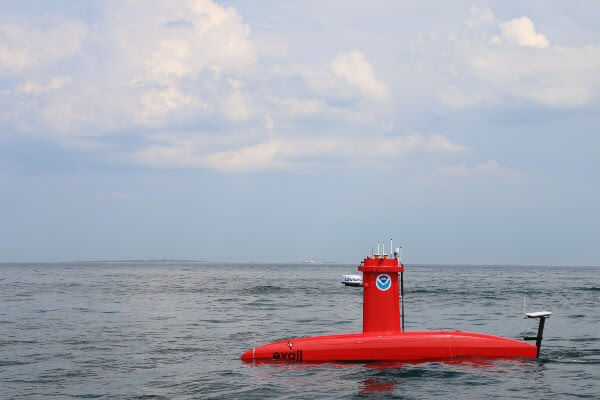
In October, NOAA, in collaboration with the University of New Hampshire Center for Coastal and Ocean Mapping/Joint Hydrographic Center and additional partners, will conduct a groundbreaking mission in the Gulf of Maine. The mission will test the simultaneous remote operation of two DriX uncrewed surface vessels to map and explore the seafloor.
Expanding the Scope and Efficiency of Ocean Mapping
This research and development effort aims to significantly enhance the efficiency, safety, and cost-effectiveness of ocean mapping. The data collected from these previously unmapped areas will benefit sectors such as fisheries, offshore wind-farm development, and habitat conservation. The successful operation of multiple uncrewed vehicles could open new opportunities for ocean exploration, increasing both the scope and quality of the data collected.
DriX Uncrewed Surface Vessels: Key Capabilities
The DriX uncrewed surface vehicles used in this mission are autonomous and powered by diesel. They can carry multiple scientific sensors and perform various operations based on pre-programmed instructions. All operations will be conducted under remote human supervision. This mission marks the first time multiple DriX vehicles will be remotely operated simultaneously from shore-based operation centers.

Increased Productivity and Reduced Environmental Impact
Previous tests involving a single DriX vehicle resulted in a 20% increase in the productivity of NOAA survey vessels. The addition of a second DriX vehicle could further boost productivity, allowing more area to be mapped and explored in less time. This would not only reduce operational costs and environmental impacts, but also enhance the quality of lifefor personnel traditionally required to spend months at sea. Increased data volume and quality from these operations will support sectors vital to the nation’s economic health.
Mission Location and Specifications
The mission will take place approximately 65 nautical miles east of Boston in the Gulf of Maine. Each DriX vessel is equipped with high-resolution multibeam sonar, capable of mapping the seafloor and detecting objects. The vehicles can operate for up to three days before requiring a return to shore for checks and refueling.
Project Leadership and Collaboration
This innovative project is led by the University of New Hampshire, with support from the NOAA Ocean Exploration Cooperative Institute, NOAA, the Bureau of Ocean Energy Management, and Exail. The mission emphasizes a collaborative effort between government, academia, and the private sector.
Stay Updated on the Project
For more information, including regular updates and responses to frequently asked questions, visit the project web page. Reporters interested in learning more or visiting the mission operation center can contact Monica Allen([email protected]) or Emily Crum ([email protected]).
About NOAA
NOAA’s mission is to understand and predict our changing environment, from the deep sea to outer space, while managing and conserving America’s coastal and marine resources. Visit noaa.gov for the latest news and features, and follow NOAA on social media for updates.
captain has written for ALL AT SEA since 2020.
Worth your time?
Thanks — noted.