The Long Way Round: Why Caribbean Distance Racing Is Back
The Caribbean spent two decades shrinking its racecourses to fit an afternoon. Now the islands are setting the course again.

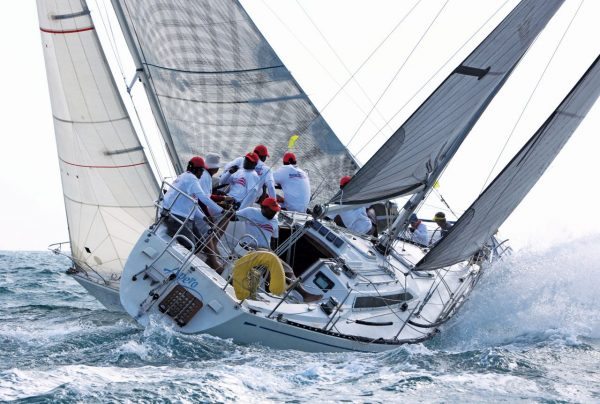
Distance racing – from multi-day courses to round-the-island and point-to-point races with an overnight – has rebounded in popularity in the Caribbean over the last decade or two. Witness the popularity of the RORC Caribbean 600, a 600 nautical mile race around 11 islands. The St. Thomas Yacht Club introduced its Round the Rocks Race in 2016 around neighboring St. John as a tune-up for its St. Thomas International Regatta. In 2022, post-COVID, Grenada Sailing Week transitioned to a destination-based format, including Carriacou. Newer events, such as the Caribbean Multihull Challenge (CMC), introduced a 60-nautical-mile sprint around St. Barths, Tintamarre, and St. Maarten for the Big Boat class during its second edition in 2020. Last year, the newly launched SVG Sailing Week made a point of including island-to-island courses rather than solely sprints around the buoys in its inaugural format.
The Evolution
Caribbean yacht racing did not begin with inflatable marks and three-lap windward-leeward courses. It started with geography. Islands dictated the courses, trade winds set the rhythm, and races unfolded over hours rather than minutes. From Antigua to Barbados, the earliest regattas were exercises in seamanship, patience, and preparation—long coastal routes and full circumnavigations that reflected how boats moved through this region.
The first Antigua Sailing Week, staged in June 1968, captured that reality. The fleet was a mix of classic charter yachts and local workboats, and the courses followed the island rather than a race officer’s grid. Coastal legs, point-to-point passages, and long days on the water defined success. These were not repetitive drills; they were journeys, where strategy played out against headlands, current lines, and squalls rather than between two colored buoys.

Barbados shared the same DNA. Distance racing was foundational, not optional. The original Around Barbados Race, launched on January 1, 1936, with five trading schooners, was never intended as a technical contest, according to Marianna Polacka, regatta director of Barbados Sailing Week. “It was designed as a true test of seamanship, endurance, and preparation—an honest race around a real island, in real conditions, where crews had to manage changing seas, shifting winds, and long hours on the water.”
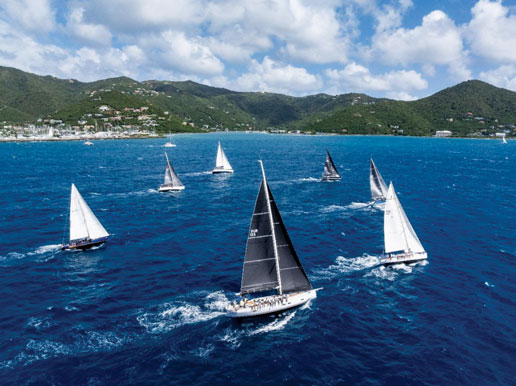
As the Caribbean circuit matured, however, global influences reshaped local racing. By the 1990s and early 2000s, many regattas embraced shorter coastal races and windward-leeward formats. These courses were easier to manage, fit compressed schedules, and delivered clear results in a single afternoon. Visiting fleets grew larger and more standardized, often dominated by 40- to 60-foot yachts whose owners favored multiple races per day and shoreside social schedules that rewarded predictability.
The BVI Spring Regatta illustrates that shift. From its founding in 1972 until the early 2000s, the event typically featured one longer race per day, sometimes moving the fleet between islands and anchoring post-race parties. Between 2001 and 2003, the regatta adopted a new spinnaker-driven course design that enabled multiple shorter races each day. By 2004, intensive windward-leeward programs had become the norm. This transformation was not a mistake; it was a response. Shorter courses expanded participation, particularly for smaller local boats under 30 feet that were never designed for full island circumnavigations. Coastal racing kept competition accessible, safe, and inclusive, so that everyone could participate.
But as yachts evolved again, the limits of uniform formats became increasingly clear—especially with the rise of performance multihulls, especially Gunboats and Leopards from 50 to 70-plus foot. “Cats and tris are excellent candidates for long legs,” explains Stephen Burzon, volunteer director of marketing for the CMC. “They’re slower to accelerate and far less exciting on short, multi-tack courses. They are inherently fast on reaches. That’s where the fun lives.”
From its earliest editions, the CMC was designed around that understanding—long start lines, reaching starts, and reduced short-tacking defined the format. Over time, organizers leaned even more heavily into the region’s layout, adding a 52-mile dash using St. Maarten and Saba, and a 27-mile circle race, in addition to the 60-mile race around St. Barths. “We stopped trying to force multihulls into monohull templates,” Burzon says. “Participation and enjoyment followed naturally.”
The RORC Caribbean 600 Effect
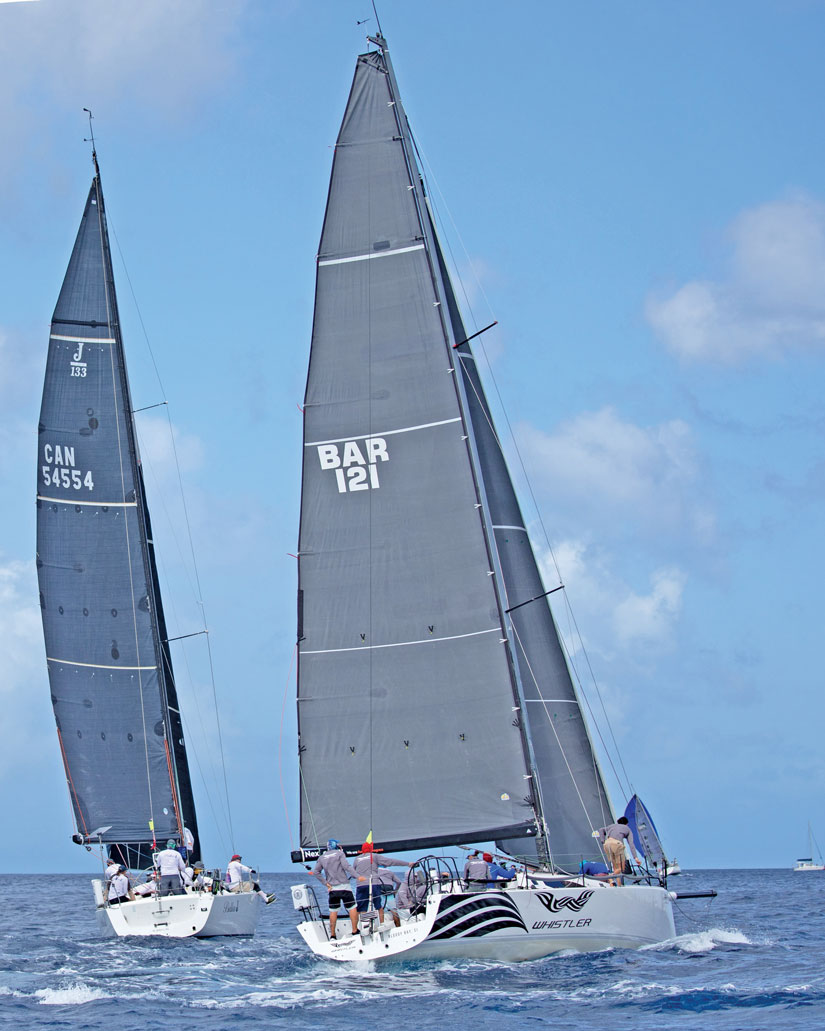
While many regattas adjusted incrementally, one event marked a decisive return to offshore distance racing in a whole new way. The RORC Caribbean 600, launched in 2009 by the Royal Ocean Racing Club in association with the Antigua Yacht Club, established the Caribbean’s first purpose-built offshore challenge. Its non-stop 600-nautical-mile course weaves around 11 islands, creating a tactical, trade-wind ‘giant slalom’ that tests navigation, endurance, and decision-making. Since its inception, the race has grown from a regional experiment into an international fixture, now attracting fleets of 60 to 80 boats and sailors from more than 30 countries.
The influence of that success is now visible across the region. The Mount Gay Round Barbados Series, which was rebranded in 2018 as Barbados Sailing Week to encompass a broader range of sailing events, including coastal races and junior dinghy competitions, continues with its Round Barbados Race at center stage. “What we’re seeing is a full-circle moment,” says Polacka. “Crews are looking for races that unfold over time, where decisions accumulate, and the finish line feels earned.”
That appetite has also driven new connectivity. The Rum to Spice Race from Barbados to Carriacou Race, 120 nautical miles, began in 2024 with just three boats and has grown steadily to 8 in 2026. It reflects a broader interest in distance races that move fleets onward rather than back to the same harbor each night.
Other major regattas are responding with flexibility rather than wholesale reinvention. The St. Maarten Heineken Regatta now runs two race committees with class-specific course design. Smaller sport boats remain on tight windward-leeward tracks, while larger yachts and offshore classes sail longer island courses toward Anguilla or St. Barts. “It depends entirely on boat size,” says Meghan Reilly, marketing chair for the St. Maarten Heineken Regatta. “The Melges and Diam24s want more starts. The bigger boats want more miles.”
Newcomers are also embracing geography from the outset. SVG Sailing Week, launched last year, combined inter-island racing, classic round-island courses, and traditional events rather than relying solely on buoy racing. Organizers see it as a way to showcase both modern performance sailing and regional boat-building heritage across multiple islands.
Looking Ahead
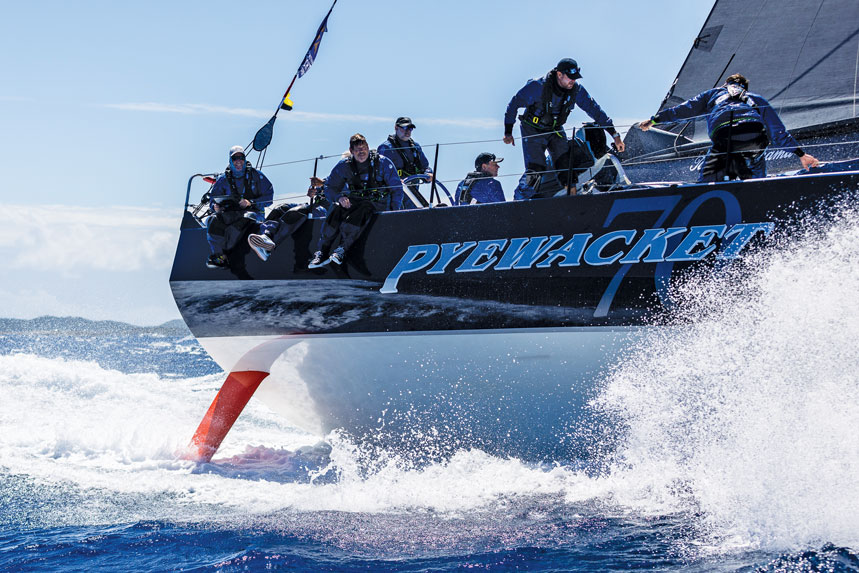
Looking ahead, few, if any, organizers frame the discussion as a choice between distance racing and round-the-buoys racing. The reality is layered. Smaller one-designs and youth fleets thrive on short courses that reward precision and repetition. Larger offshore-capable yachts and modern multihulls are built to sustain speed over hours, not minutes. As Chris Haycraft, chairman of the BVI Spring Regatta, puts it, “You can’t put a MOD70 on a sport-boat course and expect magic.”
That thinking is influencing some of the Caribbean’s longest-running events. Antigua Sailing Week (ASW), long synonymous with buoy racing off the south coast, will operate in two distinct formats for 2026. The Antigua Racing Cup preserves traditional short-course racing for dedicated racing yachts and cruiser-racers, with class-specific courses ranging from tight windward-leewards to longer tracks for big boats and performance multihulls.
Alongside it, the ‘new’ ASW will be a coastal-destination cruise-in-company event geared toward cruising boats and live-aboards. For those cruisers with a thirst for friendly competition, it will also offer optional simple racecourses to spice up the cruise to the different destinations around Antigua,” says Rana Jamila-Lewis, ASW’s event and marketing manager.
This shift does not signal the end of buoy racing. Regattas built around multiple short races per day will continue to thrive. What is changing is a willingness to offer variety—point-to-point courses, overnight legs, and island loops—that better reflect the boats that arrive and the experiences sailors seek when they come to the Caribbean. By drawing on islands rather than ignoring them, the region continues to deliver both—adapting as yachts evolve, with a clear focus on how to keep those boats and sailors coming back year after year.
Carol Bareuther has written for ALL AT SEA since 2004.