Caribbean Regattas Are Evolving: Market Forces, Specialization, and New Realities

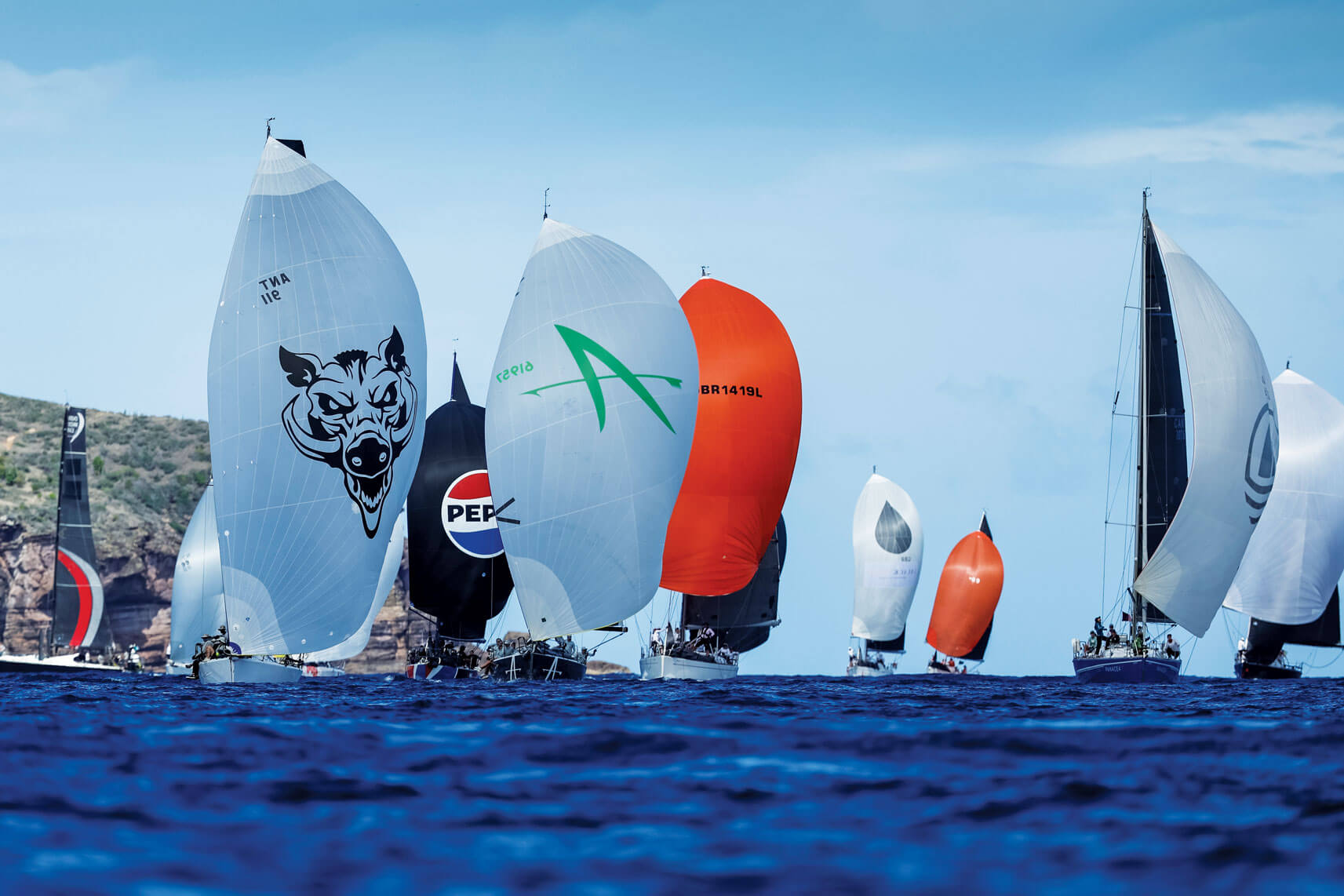
The original “major league” of Caribbean Regattas has changed considerably and “market forces “ are continuing to drive more change . The “market forces” drive greater and lesser participation by the different groups. The participants include local boats, foreign owned boats that stay in the Caribbean and foreign boats that visit for one or multiple seasons from North America or Europe.
In the early years most boats remained in the Caribbean. Very few transited the Atlantic between seasons. Today the top boats that set the trends transit the Atlantic and expect to enjoy the European summer as well as the Caribbean “winter season” and this transit is often done on the deck of large ships . In order to enjoy both of these seasons, you cannot stay too long at the end of the season, and this has been the major challenge of late season regattas, especially in the case of Antigua Sailing Week given their position at the end of the season.
New Niches, New Winners
Long Distance Racing is not a niche that quickly came to mind for Caribbean regatta organizers. They assumed, on the basis of hard evidence, that all yachtsmen visiting the Caribbean wanted to be having a beer at the bar every day rather than sailing through the night with sail changes, long watches and tough conditions . Hence the opportunity was taken by out-of-region organizations who better understood this drive for adventure and using their reputation have managed to attract a large fleet starting from Antigua every February. The Caribbean 600 of the Royal Ocean Racing Club has been the fastest growing regatta. Many of the participating boats have already left the Caribbean by ship transport by the time Antigua Sailing Week comes around at the end of the season.

The ability to attract participants requires marketing. But marketing in this “line of business” is not like selling consumer products. It is best done by organizations who enjoy a strong reputation in the field of high end yachting globally and who are trusted by the owners who make the decision on which regatta to participate in. Hence the success of some regattas who enjoy the necessary stature and the struggles of regatta organizers who lack the status. Selling their destination on the basis of touristic attractions of their Caribbean island does not achieve the results in the niche sailing field. Insight into participants’ interests is crucial when it comes to event decision makers.
Another development is the greater “specialization “ of regattas . The successful Antigua Classics regatta is an example of an event that matches the interest of a very specific interest group; classic yachts. This event has matched their interests with the classic surroundings of English Harbour with the authentic classic vessels and the yacht owners who are looking for something very different to the seriously competitive regattas. The Superyacht regattas have done the same with their customer base.
The Heineken regatta in Sint Maarten has managed to project itself as offering both serious racing and high end parties. This would appear to have sold well and may well explain their current large participation base.
In the case of the St Thomas International regatta they have ensured a strong one design fleet of the locally owned IC24 sailboats. Anybody who wants super competitive sailing will look to that event to be at the top of their list . No other Caribbean regatta currently offers that niche so completely .
What appeared to be a very successful event targeted at “Grand Prix” boats in St Barths, the “Voiles de St Barth” discontinued. The demand was there but probably local conditions and costs were the reason for the decline and not the market interest.
Multihulls are another specialty category and the focus of a great many is their outstanding level of comfort which does not match racing requirements. They will of course always remain as the best “mother ships” that you could find . Multihulls are the focus of the Caribbean Multihull Challenge in Sint Maarten and a considerable class in the BVI Spring Regatta meets the interest of that niche .
Behind the Scenes: What Makes a Regatta Work
Early Caribbean regattas involved crews living aboard and a lesser emphasis on the weight on the boat . Participating boats were often on anchor . Today boats are expecting to be on docks for at least some crew to enjoy onshore accommodations. This inevitably puts some regatta locations at a disadvantage and others enjoy an advantage. Nanny Cay Marina in the BVI is an example where a symbiotic match is well utilized.
Any regatta that wants to achieve “major league” status needs to operate at a high level. That requires equipment as well as knowledgeable management, race officers and jury members. In the case of Race Officers and jury members World Sailing, our global Sailing Federation provides certification for these roles . When a regatta complies with the number of jury members with international judge certification then their decisions are not subject to appeal, which is particularly suitable for Caribbean jurisdictions where the appeals committees are not always available.
Earning the Trust of the Big Boats
When it comes to creating the trust that big boat owners look for when committing to a regatta, the quality of the jury and race management plays a big role. Regatta organizers do well by ensuring that the international officials they invite are amongst the most trusted and respected globally. It is a necessary investment.
Regattas globally are not often run by corporations. Usually it is clubs that operate some form of “regatta business.” But there are business models that can provide clues on how to run these events in a more optimal or less optimal manner.
Robbie Ferron has written for ALL AT SEA since 2005.
Worth your time?
Thanks — noted.

Always great to read a story by Robbie Ferron, filled with wisdom and insight. He describes the current state of our regattas perfectly. The CSA should start a Caribbean Hall of Fame so we can honor and recognize people like Robbie who have done so much for our region.
Couldn’t agree more…